Fu Yurong, Yi Zhengjun, Li Jianhua, Li Ruifang
Department of Medical Microbiology, Weifang Medical University, Weifang, China; Department of Laboratory Medicine of Affiliated Hospital of Weifang Medical University, Key Laboratory of Clinical Laboratory Diagnostics in Universities of Shandong, Weifang, China.
J Cell Mol Med. 2014 Mar;18(3):503-13. doi: 10.1111/jcmm.12205. Epub 2013 Dec 25.
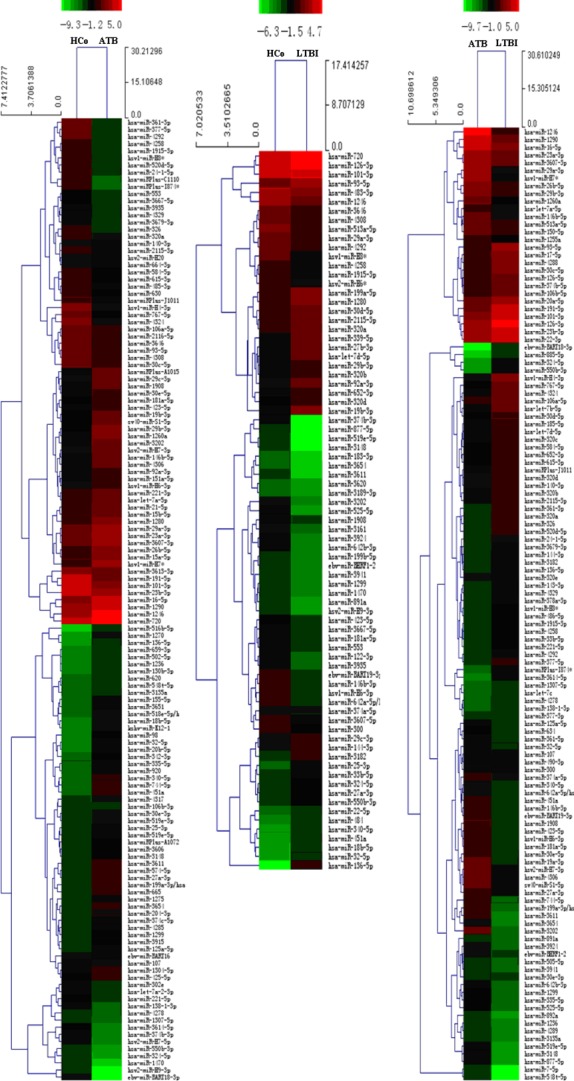
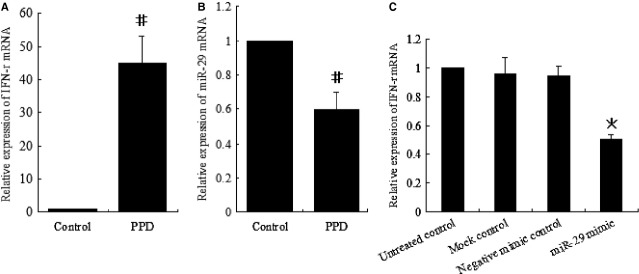
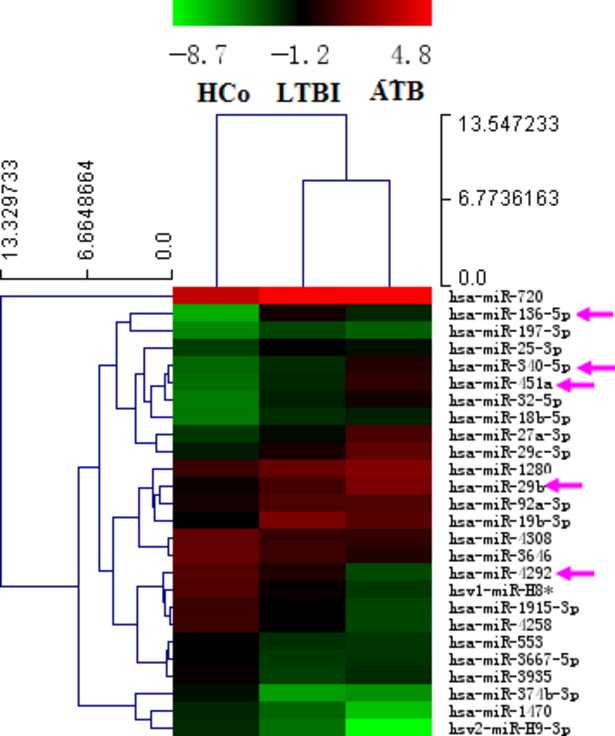
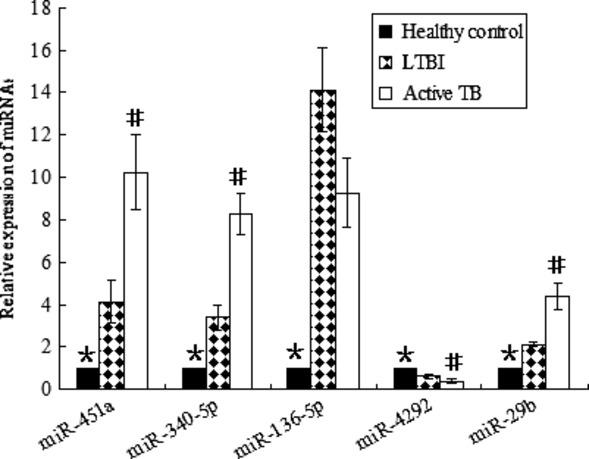
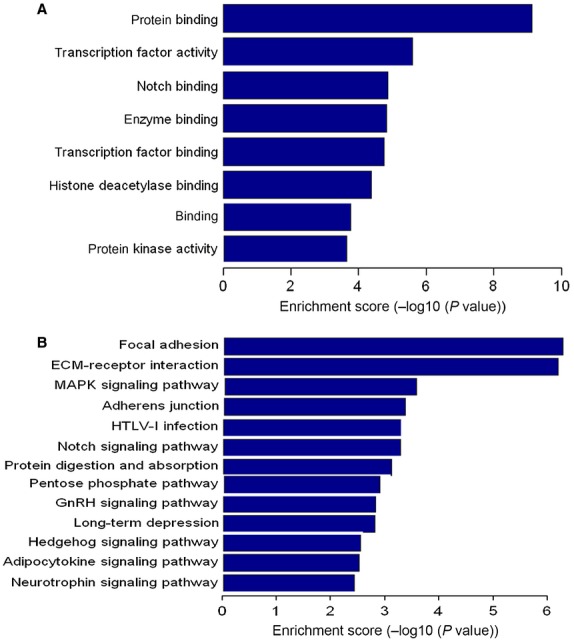
The mechanisms of latent tuberculosis (TB) infection remain elusive. Roles of microRNA (miRNA) have been highlighted in pathogen-host interactions recently. To identify miRNAs involved in the immune response to TB, expression profiles of miRNAs in CD4(+) T cells from patients with latent TB, active TB and healthy controls were investigated by microarray assay and validated by RT-qPCR. Gene ontology (GO) and Kyoto Encyclopedia of Genes and Genomes (KEGG) pathway analysis were used to analyse the significant functions and involvement in signalling pathways of the differentially expressed miRNAs. To identify potential target genes for miR-29, interferon-γ (IFN-γ) mRNA expression was measured by RT-qPCR. Our results showed that 27 miRNAs were deregulated among the three groups. RT-qPCR results were generally consistent with the microarray data. We observed an inverse correlation between miR-29 level and IFN-γ mRNA expression in CD4(+) T cells. GO and KEGG pathway analysis showed that the possible target genes of deregulated miRNAs were significantly enriched in mitogen-activated protein kinase signalling pathway, focal adhesion and extracellular matrix receptor interaction, which might be involved in the transition from latent to active TB. In all, for the first time, our study revealed that some miRNAs in CD4(+) T cells were altered in latent and active TB. Function and pathway analysis highlighted the possible involvement of miRNA-deregulated mRNAs in TB. The study might help to improve understanding of the relationship between miRNAs in CD4(+) T cells and TB, and laid an important foundation for further identification of the underlying mechanisms of latent TB infection and its reactivation.
潜伏性结核病(TB)感染的机制仍不清楚。近年来,微小RNA(miRNA)在病原体与宿主相互作用中的作用受到了关注。为了鉴定参与结核病免疫反应的miRNA,我们通过微阵列分析研究了潜伏性结核病患者、活动性结核病患者和健康对照者CD4(+) T细胞中miRNA的表达谱,并通过RT-qPCR进行了验证。利用基因本体论(GO)和京都基因与基因组百科全书(KEGG)通路分析来分析差异表达miRNA的重要功能及其在信号通路中的参与情况。为了鉴定miR-29的潜在靶基因,通过RT-qPCR检测了干扰素-γ(IFN-γ)mRNA的表达。我们的结果表明,三组之间有27种miRNA表达失调。RT-qPCR结果与微阵列数据总体一致。我们观察到CD4(+) T细胞中miR-29水平与IFN-γ mRNA表达呈负相关。GO和KEGG通路分析表明,表达失调的miRNA的潜在靶基因在丝裂原活化蛋白激酶信号通路、粘着斑和细胞外基质受体相互作用中显著富集,这可能与潜伏性结核病向活动性结核病的转变有关。总之,我们的研究首次揭示了潜伏性和活动性结核病患者CD4(+) T细胞中的一些miRNA发生了改变。功能和通路分析突出了miRNA失调的mRNA在结核病中的可能作用。该研究可能有助于增进对CD4(+) T细胞中miRNA与结核病之间关系的理解,并为进一步鉴定潜伏性结核病感染及其再激活的潜在机制奠定重要基础。