Ostrove J M, Leonard J, Weck K E, Rabson A B, Gendelman H E
Laboratory of Clinical Investigation, National Institute of Allergy and Infectious Diseases, Bethesda, Maryland 20892.
J Virol. 1987 Dec;61(12):3726-32. doi: 10.1128/JVI.61.12.3726-3732.1987.
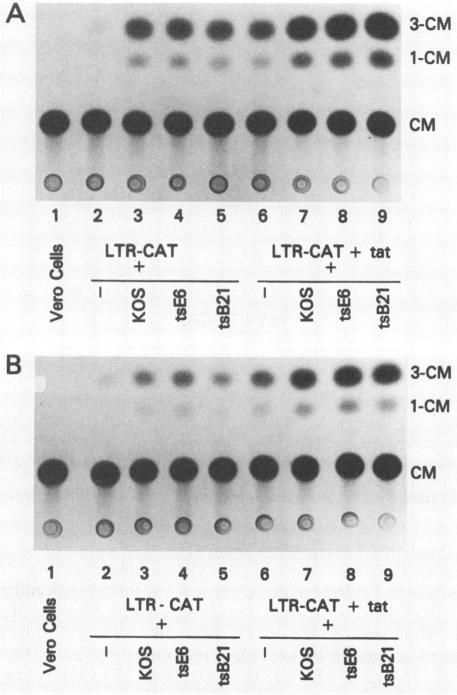
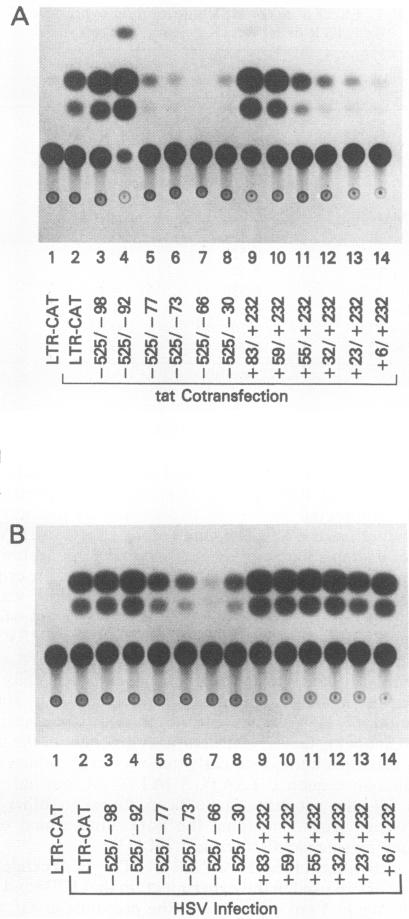
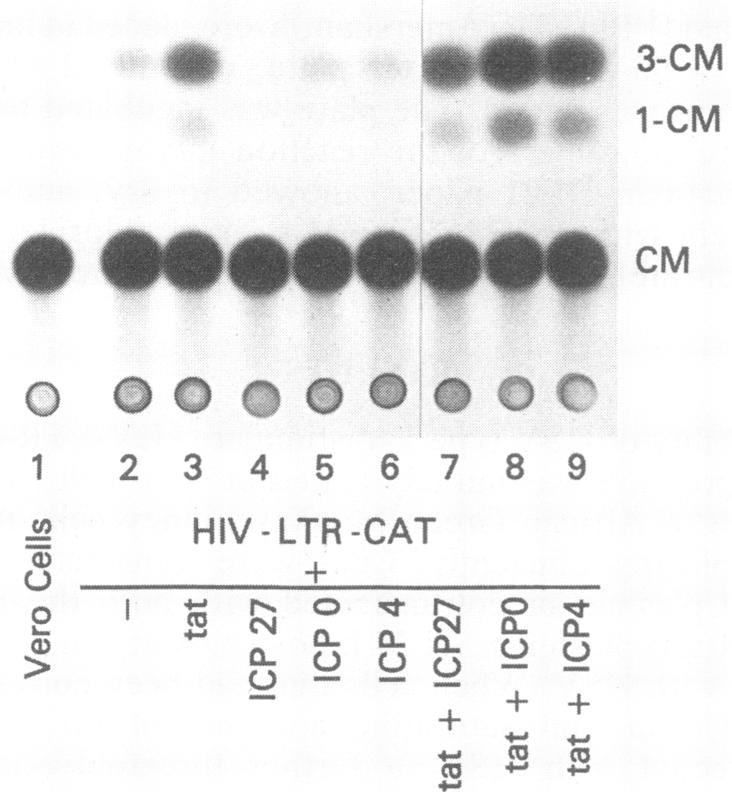
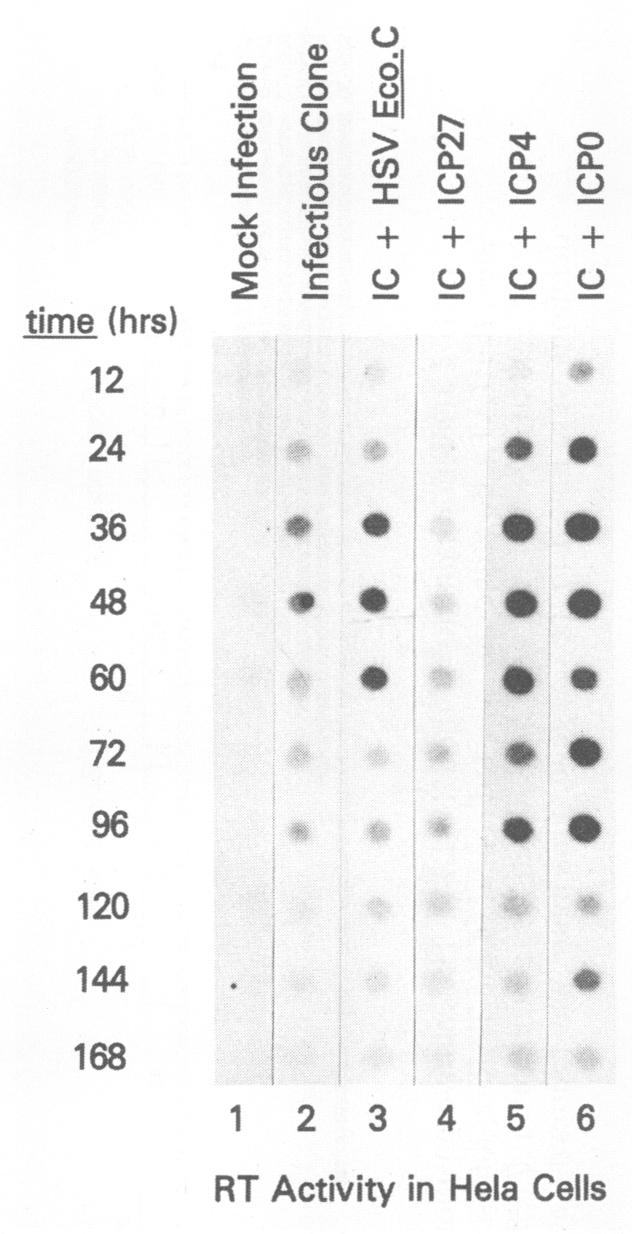
Herpes simplex virus type 1 (HSV-1) and some of its immediate-early genes stimulate expression of the human immunodeficiency virus (HIV) long terminal repeat (LTR) sequences and the replication of HIV itself. To demonstrate this, the HIV LTR was linked to the indicator gene chloramphenicol acetyltransferase (CAT) and transfected into Vero cells with or without the trans-activating gene (tat) of HIV. Infection of these cells with HSV-1 strain KOS or temperature-sensitive mutant tsB21 or tsE6 resulted in a large increase in CAT activity in the absence of tat and further augmentation in the presence of tat. This stimulation was seen at both their permissive (34 degrees C) and nonpermissive (39 degrees C) temperatures, implying either that HSV-1 infection or immediate-early gene expression is all that is required. In cotransfection assays in Vero cells, cloned HSV-1 immediate-early genes ICP0 and ICP4 stimulated CAT activity in the presence of tat, while ICP27 had no effect. On the other hand, in SW480 cells, ICP4 and, to a lesser extent, ICP0 genes caused stimulation of CAT activity in the absence of tat. Deletion mutants within the HIV LTR showed that the target for HSV stimulation is distinct from the tat-responsive area and maps near the SP1 binding sites. In Hela cells, ICP0 or ICP4 stimulated the replication of a cotransfected clone of HIV, as shown by an increase in reverse transcriptase activity in the culture supernatant.
1型单纯疱疹病毒(HSV-1)及其一些立即早期基因可刺激人类免疫缺陷病毒(HIV)长末端重复序列(LTR)的表达以及HIV自身的复制。为证明这一点,将HIV LTR与指示基因氯霉素乙酰转移酶(CAT)相连,并在有或无HIV反式激活基因(tat)的情况下转染至非洲绿猴肾细胞(Vero细胞)中。用HSV-1 KOS株或温度敏感突变体tsB21或tsE6感染这些细胞,在无tat的情况下可导致CAT活性大幅增加,而在有tat的情况下则进一步增强。在其允许温度(34℃)和非允许温度(39℃)下均观察到这种刺激作用,这意味着仅HSV-1感染或立即早期基因表达即可。在Vero细胞的共转染试验中,克隆的HSV-1立即早期基因ICP0和ICP4在有tat的情况下可刺激CAT活性,而ICP27则无此作用。另一方面,在人结肠癌细胞(SW480细胞)中,ICP4以及程度较轻的ICP0基因在无tat的情况下可刺激CAT活性。HIV LTR内的缺失突变体表明,HSV刺激的靶点不同于tat反应区,且定位在SP1结合位点附近。在人宫颈癌细胞(Hela细胞)中,ICP0或ICP4可刺激共转染的HIV克隆的复制,培养上清液中逆转录酶活性的增加即表明了这一点。