BMC Bioinformatics. 2014;15 Suppl 1(Suppl 1):S5. doi: 10.1186/1471-2105-15-S1-S5. Epub 2014 Jan 10.
Prioritization methods have become an useful tool for mining large amounts of data to suggest promising hypotheses in early research stages. Particularly, network-based prioritization tools use a network representation for the interactions between different biological entities to identify novel indirect relationships. However, current network-based prioritization tools are strongly tailored to specific domains of interest (e.g. gene-disease prioritization) and they do not allow to consider networks with more than two types of entities (e.g. genes and diseases). Therefore, the direct application of these methods to accomplish new prioritization tasks is limited.
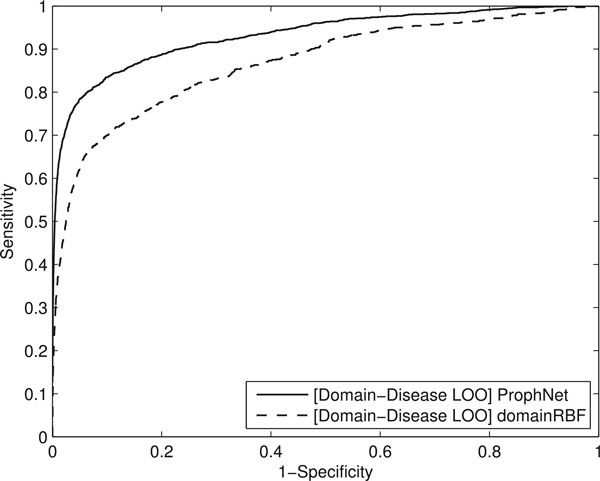
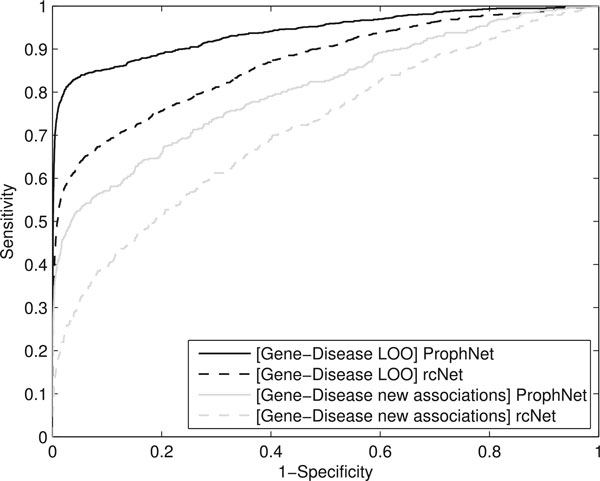
This work presents ProphNet, a generic network-based prioritization tool that allows to integrate an arbitrary number of interrelated biological entities to accomplish any prioritization task. We tested the performance of ProphNet in comparison with leading network-based prioritization methods, namely rcNet and DomainRBF, for gene-disease and domain-disease prioritization, respectively. The results obtained by ProphNet show a significant improvement in terms of sensitivity and specificity for both tasks. We also applied ProphNet to disease-gene prioritization on Alzheimer, Diabetes Mellitus Type 2 and Breast Cancer to validate the results and identify putative candidate genes involved in these diseases.
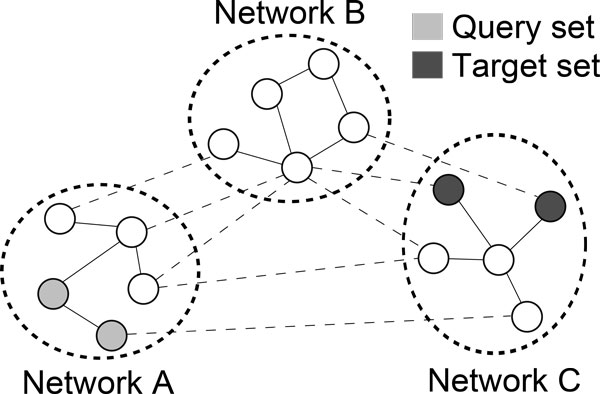
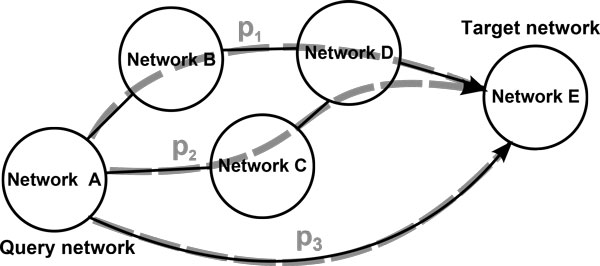
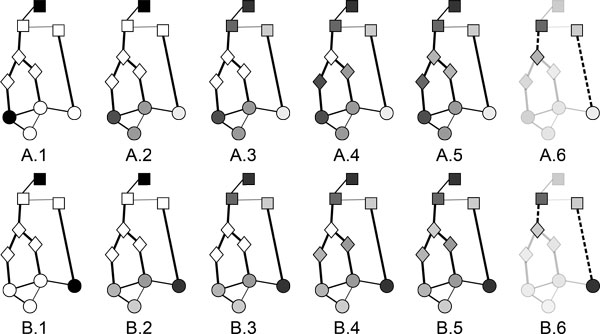
ProphNet works on top of any heterogeneous network by integrating information of different types of biological entities to rank entities of a specific type according to their degree of relationship with a query set of entities of another type. Our method works by propagating information across data networks and measuring the correlation between the propagated values for a query and a target sets of entities. ProphNet is available at: http://genome2.ugr.es/prophnet. A Matlab implementation of the algorithm is also available at the website.
优先级排序方法已成为挖掘大量数据以在早期研究阶段提出有前途的假说的有用工具。特别是基于网络的优先级排序工具使用不同生物实体之间的相互作用的网络表示来识别新颖的间接关系。然而,当前基于网络的优先级排序工具强烈针对特定的感兴趣的领域(例如基因-疾病优先级排序),并且不允许考虑具有超过两种类型的实体的网络(例如基因和疾病)。因此,这些方法的直接应用在完成新的优先级排序任务方面受到限制。
本研究提出了 ProphNet,这是一种通用的基于网络的优先级排序工具,允许整合任意数量的相互关联的生物实体来完成任何优先级排序任务。我们测试了 ProphNet 的性能,与领先的基于网络的优先级排序方法(即 rcNet 和 DomainRBF)进行了比较,分别用于基因-疾病和域-疾病优先级排序。ProphNet 获得的结果在两种任务的敏感性和特异性方面均有显著提高。我们还将 ProphNet 应用于阿尔茨海默病、2 型糖尿病和乳腺癌的疾病-基因优先级排序,以验证结果并确定涉及这些疾病的潜在候选基因。
ProphNet 可在任何异构网络上运行,通过整合不同类型的生物实体的信息,根据它们与查询集的另一类型实体的关系程度对特定类型的实体进行排名。我们的方法通过在数据网络中传播信息并测量查询和目标实体集之间传播值之间的相关性来工作。ProphNet 可在 http://genome2.ugr.es/prophnet 上获得。该算法的 Matlab 实现也可在网站上获得。