Department of Rehabilitation Medicine, University of Washington Seattle, WA, USA ; Department of Neurological Surgery, University of Washington Seattle, WA, USA ; Center for Sensorimotor Neural Engineering, University of Washington Seattle, WA, USA.
Department of Rehabilitation Medicine, University of Washington Seattle, WA, USA.
Front Neurosci. 2014 Feb 27;8:21. doi: 10.3389/fnins.2014.00021. eCollection 2014.
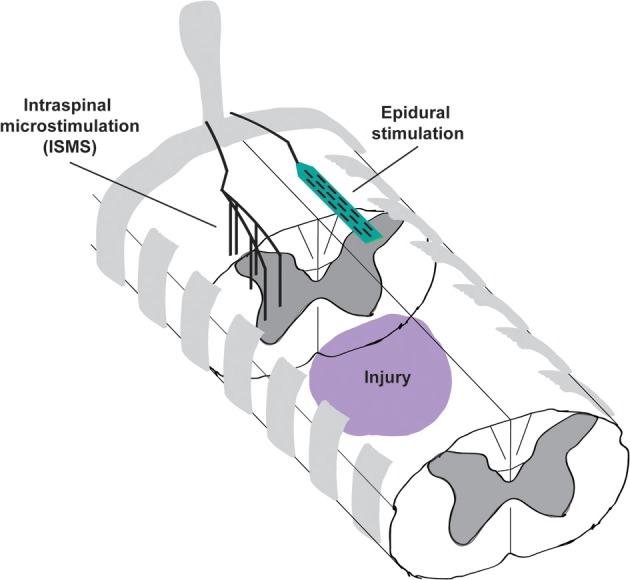
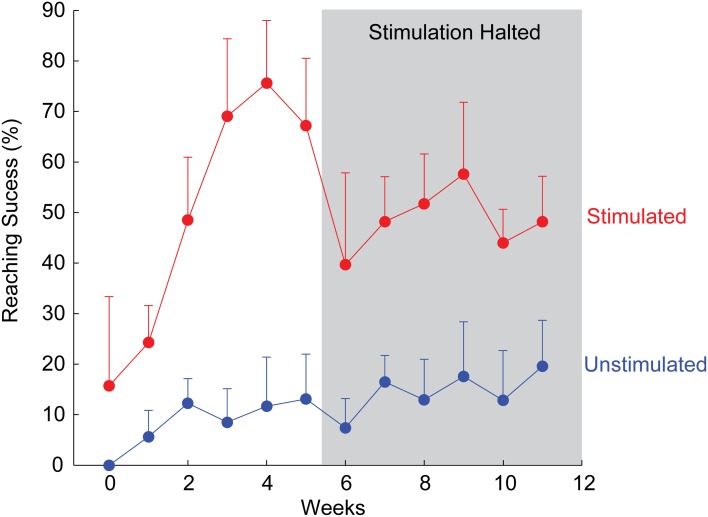
Neuroprosthetic approaches have tremendous potential for the treatment of injuries to the brain and spinal cord by inducing appropriate neural activity in otherwise disordered circuits. Substantial work has demonstrated that stimulation applied to both the central and peripheral nervous system leads to immediate and in some cases sustained benefits after injury. Here we focus on cervical intraspinal microstimulation (ISMS) as a promising method of activating the spinal cord distal to an injury site, either to directly produce movements or more intriguingly to improve subsequent volitional control of the paretic extremities. Incomplete injuries to the spinal cord are the most commonly observed in human patients, and these injuries spare neural tissue bypassing the lesion that could be influenced by neural devices to promote recovery of function. In fact, recent results have demonstrated that therapeutic ISMS leads to modest but sustained improvements in forelimb function after an incomplete spinal cord injury (SCI). This therapeutic spinal stimulation may promote long-term recovery of function by providing the necessary electrical activity needed for neuron survival, axon growth, and synaptic stability.
神经假体方法通过在原本紊乱的电路中诱导适当的神经活动,具有治疗脑和脊髓损伤的巨大潜力。大量工作已经证明,对中枢和周围神经系统的刺激会在损伤后立即产生,并在某些情况下持续产生益处。在这里,我们专注于颈椎脊髓内微刺激(ISMS)作为一种有前途的方法,可在损伤部位远端激活脊髓,以直接产生运动,或者更有趣的是,改善对麻痹肢体的随后自主控制。在人类患者中,最常见的是不完全性脊髓损伤,这些损伤绕过了可能受神经装置影响以促进功能恢复的病变部位,从而保留了神经组织。事实上,最近的研究结果表明,治疗性 ISMS 可导致不完全性脊髓损伤(SCI)后前肢功能适度但持续改善。这种治疗性脊髓刺激可能通过提供神经元存活、轴突生长和突触稳定性所需的必要电活动来促进长期功能恢复。