Department of Viroscience, Erasmus Medical Center, Rotterdam, The Netherlands.
Department of Viroscience, Erasmus Medical Center, Rotterdam, The Netherlands.
Curr Opin Virol. 2014 Apr;5:58-62. doi: 10.1016/j.coviro.2014.01.010. Epub 2014 Feb 28.
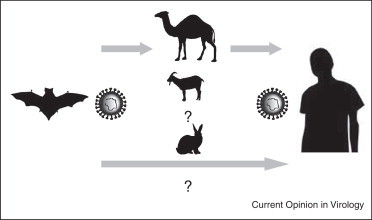
A novel coronavirus (CoV) that causes a severe lower respiratory tract infection in humans, emerged in the Middle East region in 2012. This virus, named Middle East respiratory syndrome (MERS)-CoV, is phylogenetically related to bat CoVs, but other animal species like dromedary camels may potentially act as intermediate hosts by spreading the virus to humans. Although human to human transmission has been demonstrated, analysis of human MERS clusters indicated that chains of transmission were not self-sustaining, especially when infection control was implemented. Thus, timely identification of new MERS cases followed by their quarantine, combined with measures to limit spread of the virus from the (intermediate) host to humans, may be crucial in controlling the outbreak of this emerging CoV.
一种新型冠状病毒(CoV)导致人类出现严重的下呼吸道感染,于 2012 年在中东地区出现。这种病毒被命名为中东呼吸综合征(MERS)-CoV,与蝙蝠 CoV 在系统发生上相关,但其他动物物种,如单峰骆驼,可能通过将病毒传播给人类而充当中间宿主。虽然已经证明存在人与人之间的传播,但对人类 MERS 集群的分析表明,传播链不是自我维持的,尤其是在实施感染控制时。因此,及时识别新的 MERS 病例并对其进行隔离,结合限制病毒从中(中间)宿主传播给人类的措施,可能是控制这种新兴 CoV 爆发的关键。