Gingold Daniel B, Strickland Matthew J, Hess Jeremy J
Department of Epidemiology, Rollins School of Public Health, Emory University, Atlanta, Georgia, USA.
Environ Health Perspect. 2014 Jun;122(6):580-6. doi: 10.1289/ehp.1307196. Epub 2014 Mar 11.
Warm sea surface temperatures (SSTs) are positively related to incidence of ciguatera fish poisoning (CFP). Increased severe storm frequency may create more habitat for ciguatoxic organisms. Although climate change could expand the endemic range of CFP, the relationship between CFP incidence and specific environmental conditions is unknown.
We estimated associations between monthly CFP incidence in the contiguous United States and SST and storm frequency in the Caribbean basin.
We obtained information on 1,102 CFP-related calls to U.S. poison control centers during 2001-2011 from the National Poison Data System. We performed a time-series analysis using Poisson regression to relate monthly CFP call incidence to SST and tropical storms. We investigated associations across a range of plausible lag structures.
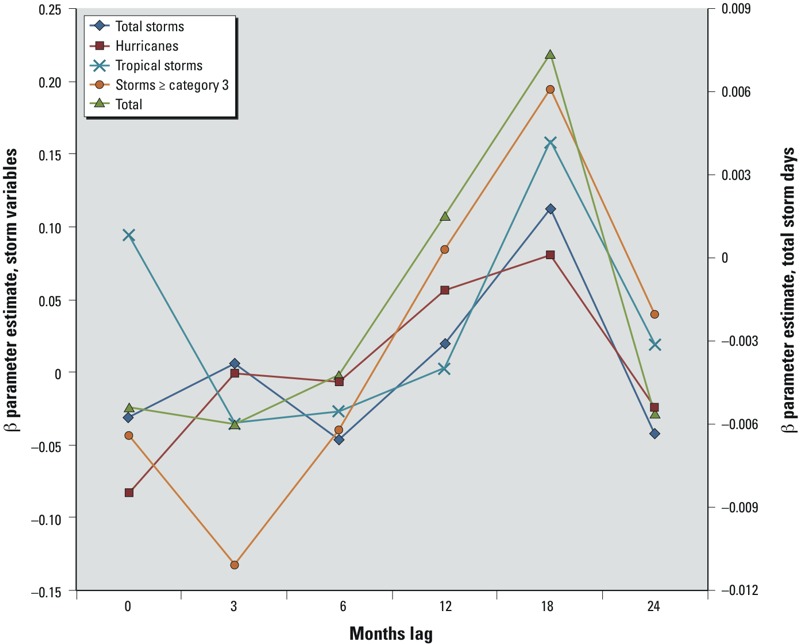
Results showed associations between monthly CFP calls and both warmer SSTs and increased tropical storm frequency. The SST variable with the strongest association linked current monthly CFP calls to the peak August SST of the previous year. The lag period with the strongest association for storms was 18 months. If climate change increases SST in the Caribbean 2.5-3.5 °C over the coming century as projected, this model implies that CFP incidence in the United States is likely to increase 200-400%.
Using CFP calls as a marker of CFP incidence, these results clarify associations between climate variability and CFP incidence and suggest that, all other things equal, climate change could increase the burden of CFP. These findings have implications for disease prediction, surveillance, and public health preparedness for climate change.
温暖的海表温度(SST)与雪卡毒素中毒(CFP)的发病率呈正相关。严重风暴频率的增加可能会为产生雪卡毒素的生物创造更多栖息地。尽管气候变化可能会扩大CFP的流行范围,但CFP发病率与特定环境条件之间的关系尚不清楚。
我们估计了美国本土每月CFP发病率与加勒比海盆地的海表温度和风暴频率之间的关联。
我们从国家毒物数据系统获取了2001年至2011年期间美国毒物控制中心接到的1102个与CFP相关电话的信息。我们使用泊松回归进行时间序列分析,以将每月CFP电话发病率与海表温度和热带风暴联系起来。我们研究了一系列合理滞后结构的关联。
结果显示每月CFP电话与较温暖的海表温度和热带风暴频率增加之间存在关联。关联最强的海表温度变量将当前每月CFP电话与上一年8月的海表温度峰值联系起来。风暴关联最强的滞后期为18个月。如果气候变化如预测的那样在未来一个世纪使加勒比海的海表温度升高2.5 - 3.5摄氏度,该模型意味着美国的CFP发病率可能会增加200 - 400%。
以CFP电话作为CFP发病率的指标,这些结果阐明了气候变异性与CFP发病率之间的关联,并表明在其他条件相同的情况下,气候变化可能会增加CFP的负担。这些发现对疾病预测、监测以及气候变化的公共卫生准备具有重要意义。