Kusza Szilvia, Podgórski Tomasz, Scandura Massimo, Borowik Tomasz, Jávor András, Sidorovich Vadim E, Bunevich Aleksei N, Kolesnikov Mikhail, Jędrzejewska Bogumiła
Institute of Animal Science, Biotechnology and Nature Conservation, University of Debrecen, Debrecen, Hungary.
Mammal Research Institute, Polish Academy of Sciences, Białowieża, Poland.
PLoS One. 2014 Mar 12;9(3):e91401. doi: 10.1371/journal.pone.0091401. eCollection 2014.
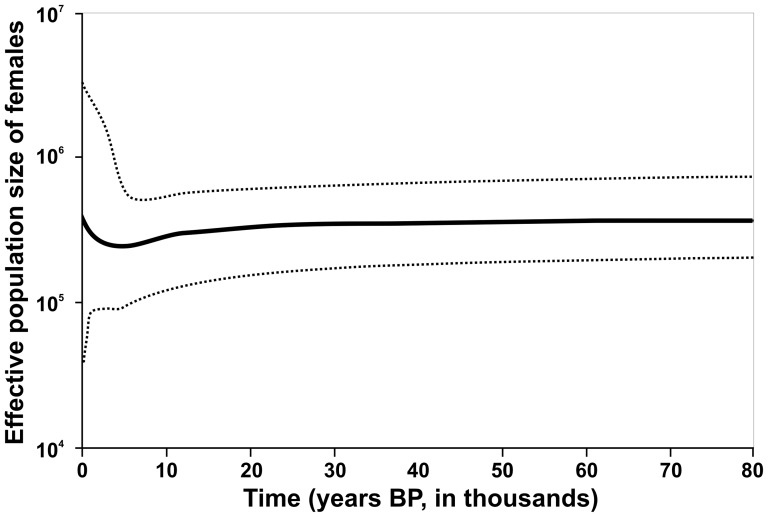
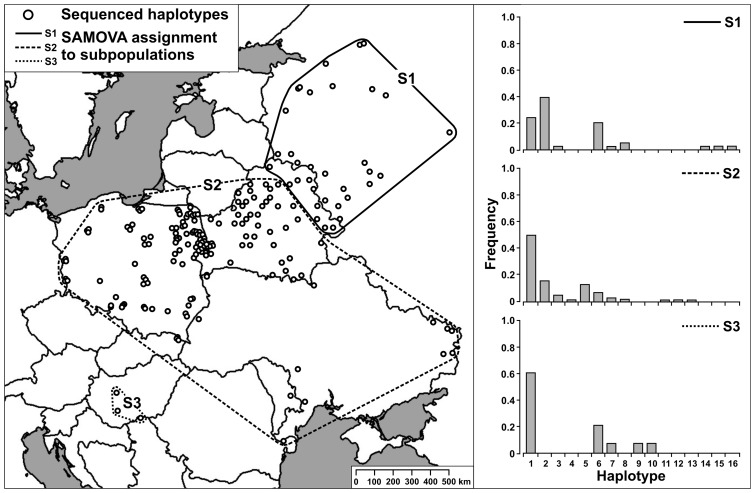
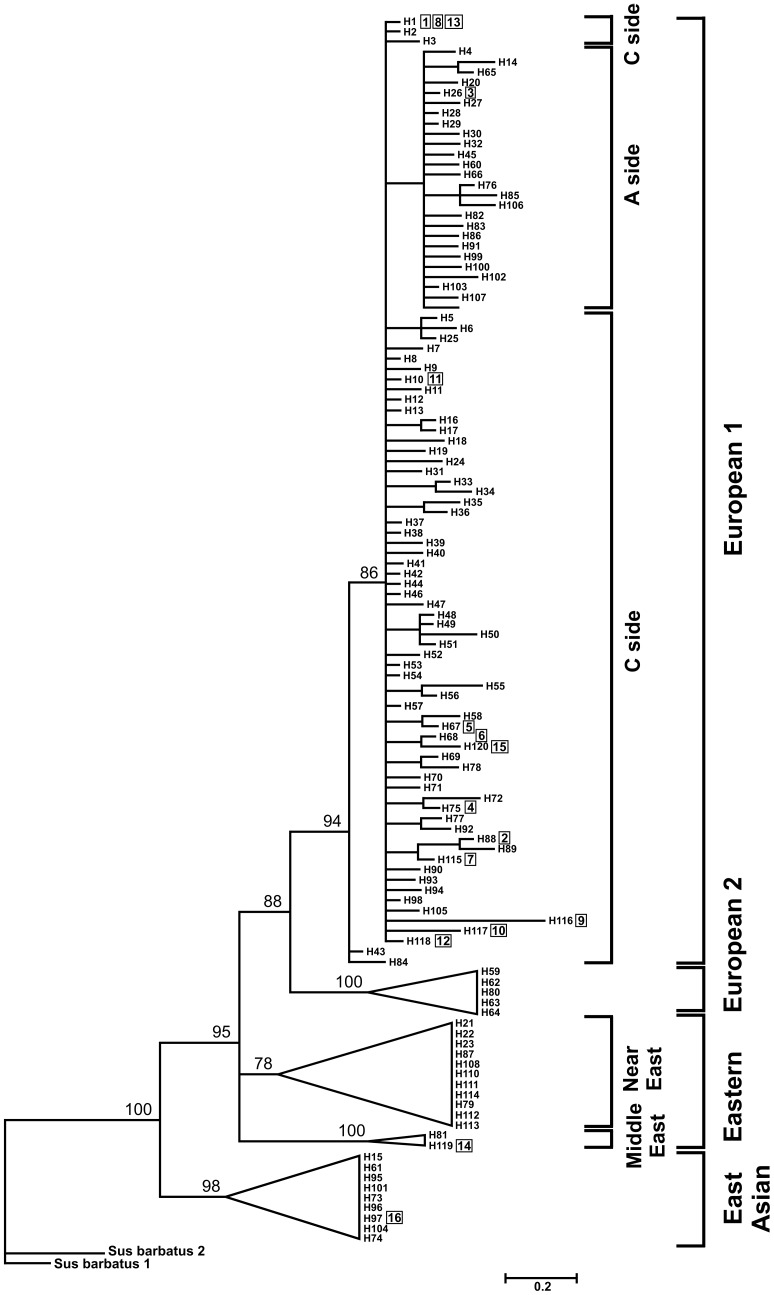
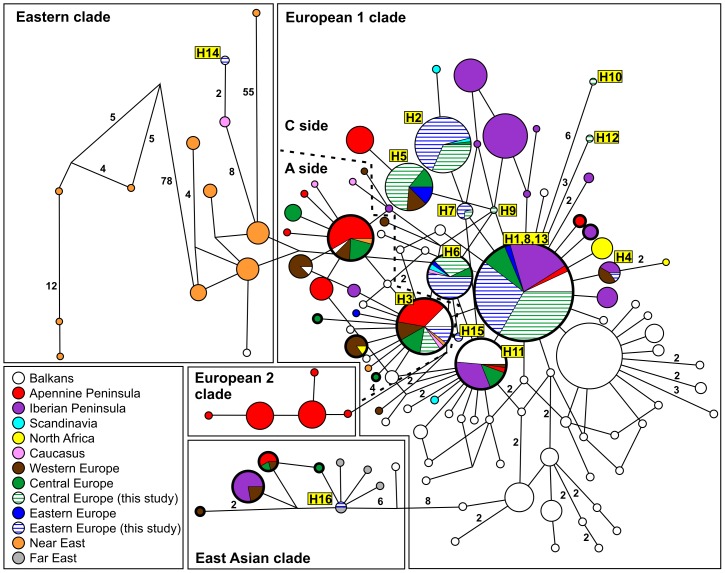
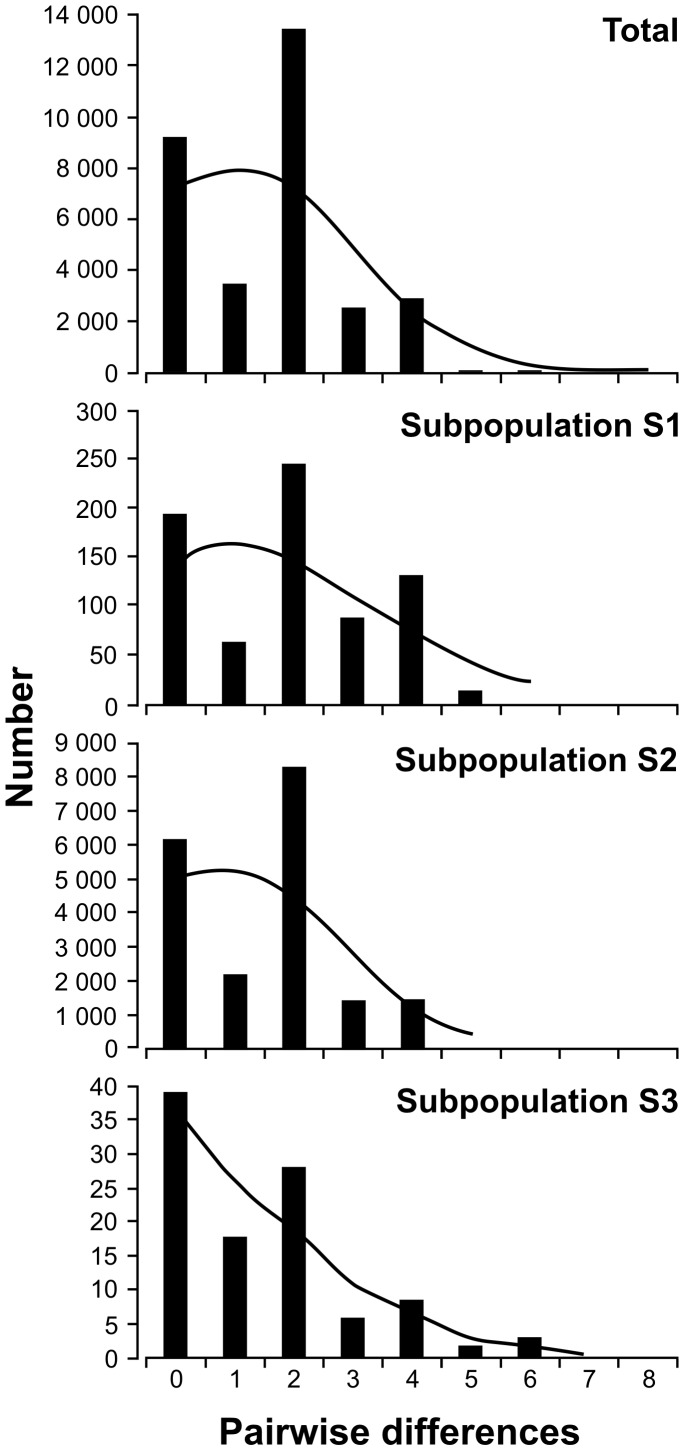
The wild boar (Sus scrofa) is one of the most widely distributed mammals in Europe. Its demography was affected by various events in the past and today populations are increasing throughout Europe. We examined genetic diversity, structure and population dynamics of wild boar in Central and Eastern Europe. MtDNA control region (664 bp) was sequenced in 254 wild boar from six countries (Poland, Hungary, Belarus, Ukraine, Moldova and the European part of Russia). We detected 16 haplotypes, all known from previous studies in Europe; 14 of them belonged to European 1 (E1) clade, including 13 haplotypes from E1-C and one from E1-A lineages. Two haplotypes belonged respectively to the East Asian and the Near Eastern clade. Both haplotypes were found in Russia and most probably originated from the documented translocations of wild boar. The studied populations showed moderate haplotype (0.714±0.023) and low nucleotide diversity (0.003±0.002). SAMOVA grouped the genetic structuring of Central and Eastern European wild boar into three subpopulations, comprising of: (1) north-eastern Belarus and the European part of Russia, (2) Poland, Ukraine, Moldova and most of Belarus, and (3) Hungary. The multimodal mismatch distribution, Fu's Fs index, Bayesian skyline plot and the high occurrence of shared haplotypes among populations did not suggest strong demographic fluctuations in wild boar numbers in the Holocene and pre-Holocene times. This study showed relatively weak genetic diversity and structure in Central and Eastern European wild boar populations and underlined gaps in our knowledge on the role of southern refugia and demographic processes shaping genetic diversity of wild boar in this part of Europe.
野猪(Sus scrofa)是欧洲分布最广泛的哺乳动物之一。其种群数量在过去受到各种事件的影响,如今在整个欧洲都在增加。我们研究了中东欧野猪的遗传多样性、结构和种群动态。对来自六个国家(波兰、匈牙利、白俄罗斯、乌克兰、摩尔多瓦和俄罗斯欧洲部分)的254头野猪的线粒体DNA控制区(664 bp)进行了测序。我们检测到16种单倍型,均为欧洲先前研究中已知的;其中14种属于欧洲1(E1)分支,包括13种来自E1-C和1种来自E1-A谱系。两种单倍型分别属于东亚和近东分支。这两种单倍型都在俄罗斯被发现,很可能起源于有记录的野猪迁移。所研究的种群显示出中等的单倍型多样性(0.714±0.023)和较低的核苷酸多样性(0.003±0.002)。SAMOVA将中东欧野猪的遗传结构分为三个亚种群,包括:(1)白俄罗斯东北部和俄罗斯欧洲部分,(2)波兰、乌克兰、摩尔多瓦和白俄罗斯的大部分地区,以及(3)匈牙利。多峰失配分布、Fu's Fs指数、贝叶斯天际线图以及种群间共享单倍型的高发生率并不表明全新世和全新世以前野猪数量有强烈的种群动态波动。这项研究表明中东欧野猪种群的遗传多样性和结构相对较弱,并强调了我们在欧洲这一地区关于南部避难所的作用以及塑造野猪遗传多样性的种群动态过程方面的知识空白。