Department of Psychiatry, University of California San Francisco, San Francisco, California, United States of America.
Biological Sciences Division, Pacific Northwest National Laboratories, Richland, Washington, United States of America.
PLoS One. 2014 Apr 9;9(4):e89366. doi: 10.1371/journal.pone.0089366. eCollection 2014.
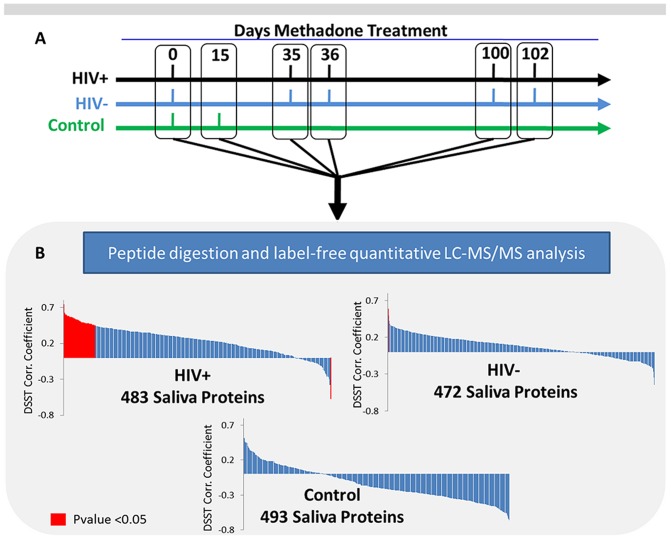
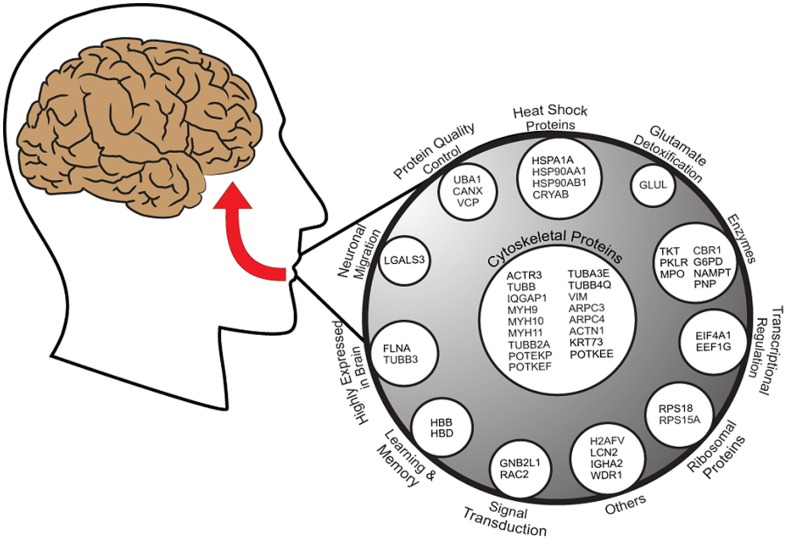
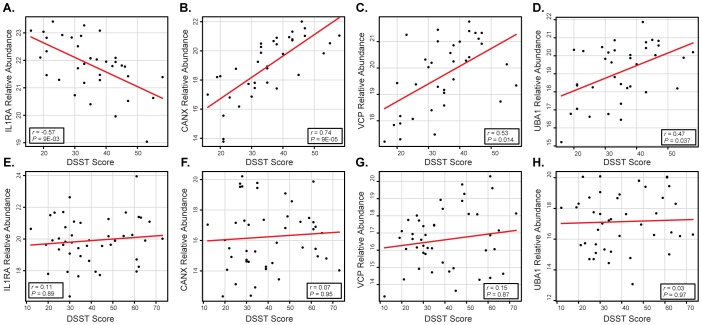
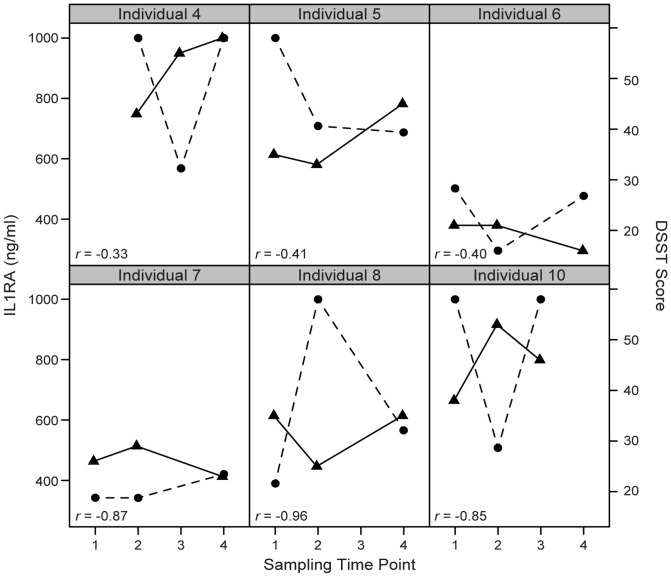
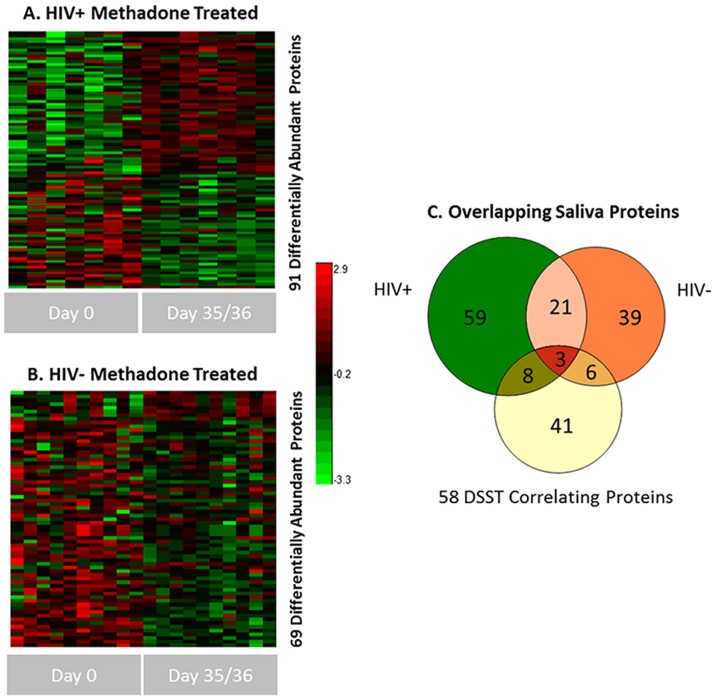
The prevalence of HIV-associated neurocognitive disorders (HAND) remains high despite effective antiretroviral therapies. Multiple etiologies have been proposed over the last several years to account for this phenomenon, including the neurotoxic effects of antiretrovirals and co-morbid substance abuse; however, no underlying molecular mechanism has been identified. Emerging evidence in several fields has linked the gut to brain diseases, but the effect of the gut on the brain during HIV infection has not been explored. Saliva is the most accessible gut biofluid, and is therefore of great scientific interest for diagnostic and prognostic purposes. This study presents a longitudinal, liquid chromatography-mass spectrometry-based quantitative proteomics study investigating saliva samples taken from 8 HIV-positive (HIV+), 11 -negative (HIV-) heroin addicts. In addition, saliva samples were investigated from 11 HIV-, non-heroin addicted healthy controls. In the HIV+ group, 58 proteins were identified that show significant correlations with cognitive scores, implicating disruption of protein quality control pathways by HIV. Notably, only one protein from the HIV- heroin addict cohort showed a significant correlation with cognitive scores, and no proteins correlated with cognitive scores in the healthy control group. In addition, the majority of correlated proteins have been shown to be associated with exosomes, allowing us to propose that the salivary glands and/or oral epithelium may modulate brain function during HIV infection through the release of discrete packets of proteins in the form of exosomes.
尽管有效的抗逆转录病毒疗法已经存在,但 HIV 相关神经认知障碍 (HAND) 的患病率仍然很高。在过去的几年中,已经提出了多种病因来解释这种现象,包括抗逆转录病毒的神经毒性作用和合并物质滥用;然而,尚未确定潜在的分子机制。几个领域的新证据将肠道与脑疾病联系起来,但 HIV 感染期间肠道对大脑的影响尚未得到探索。唾液是最容易获得的肠道生物流体,因此对于诊断和预后目的具有重要的科学意义。本研究介绍了一项基于液相色谱-质谱的纵向定量蛋白质组学研究,该研究调查了 8 名 HIV 阳性(HIV+)、11 名 HIV 阴性(HIV-)海洛因成瘾者的唾液样本。此外,还对 11 名 HIV-、非海洛因成瘾的健康对照者的唾液样本进行了调查。在 HIV+组中,鉴定出 58 种与认知评分显著相关的蛋白质,表明 HIV 破坏了蛋白质质量控制途径。值得注意的是,在 HIV-海洛因成瘾者队列中,只有一种蛋白质与认知评分呈显著相关,而在健康对照组中,没有蛋白质与认知评分相关。此外,大多数相关蛋白质已被证明与外泌体有关,这使我们能够提出,在 HIV 感染期间,唾液腺和/或口腔上皮可能通过以外泌体形式释放离散的蛋白质包来调节大脑功能。