Zhao Man, He Lingli, Gu Yongzhe, Wang Yan, Chen Qingshan, He Chaoying
State Key Laboratory of Systematic and Evolutionary Botany, Institute of Botany, Chinese Academy of Sciences, Beijing, China.
Genome Biol Evol. 2014 Apr;6(4):1000-12. doi: 10.1093/gbe/evu076.
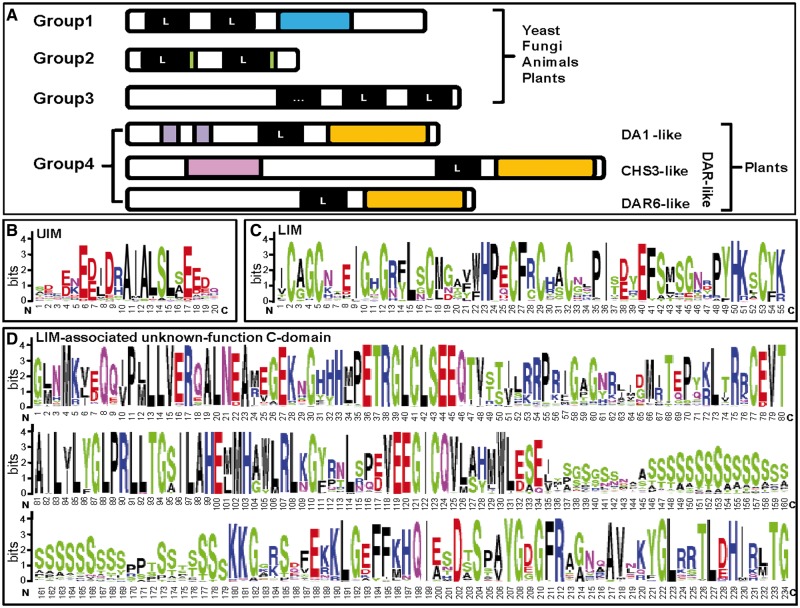
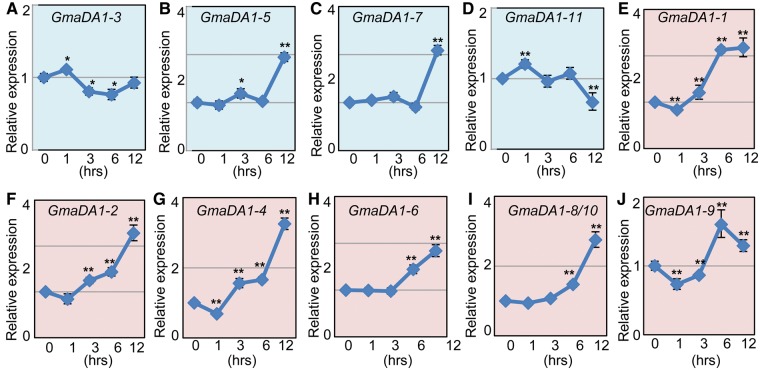
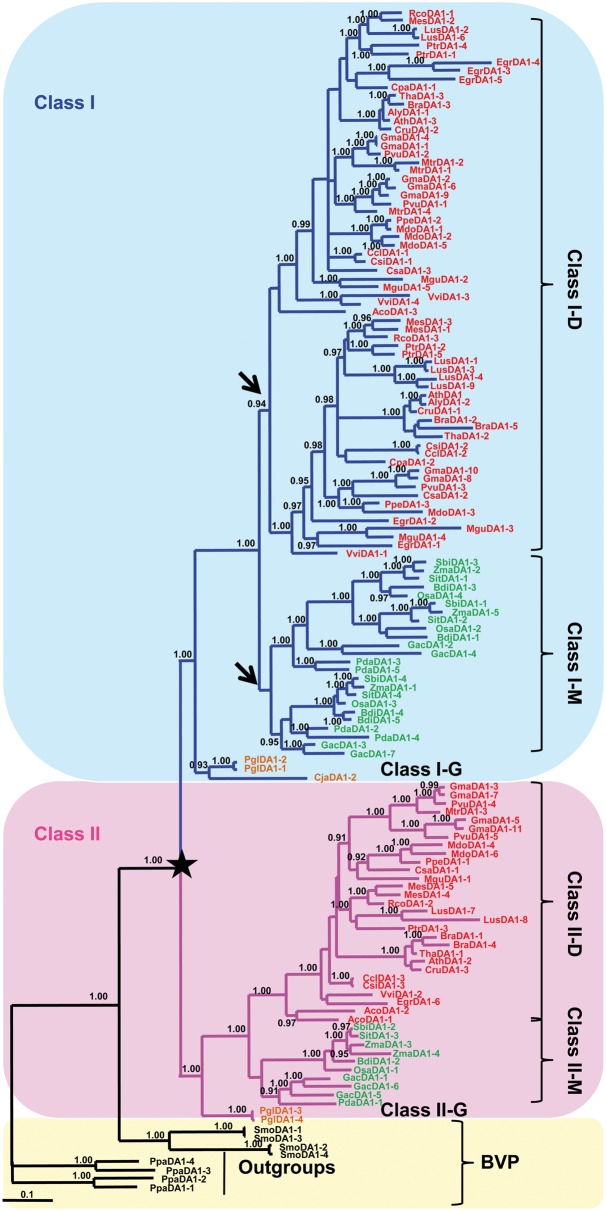
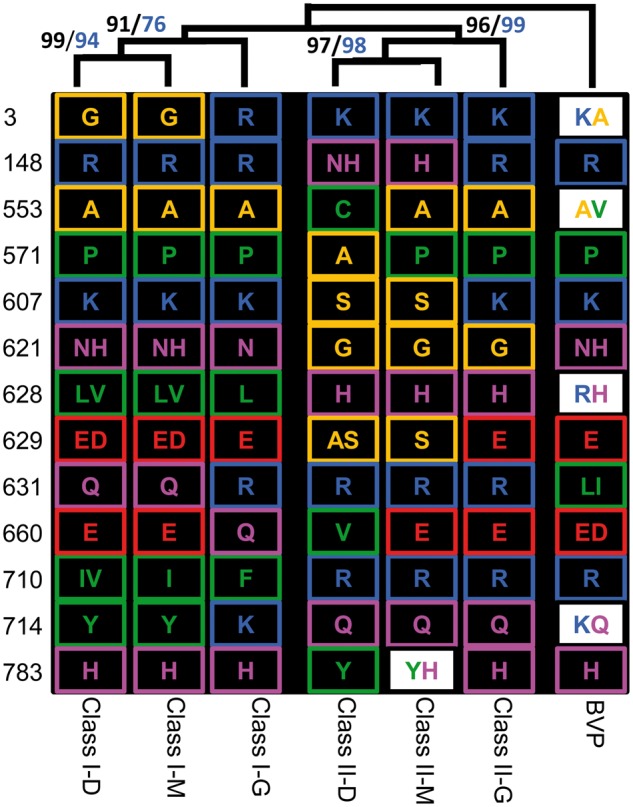
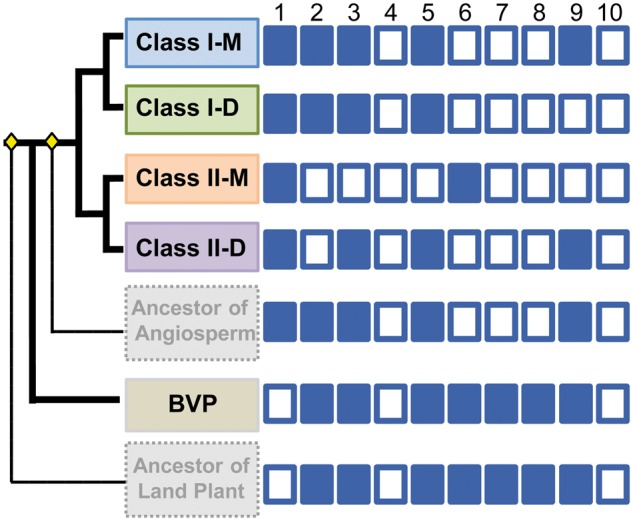
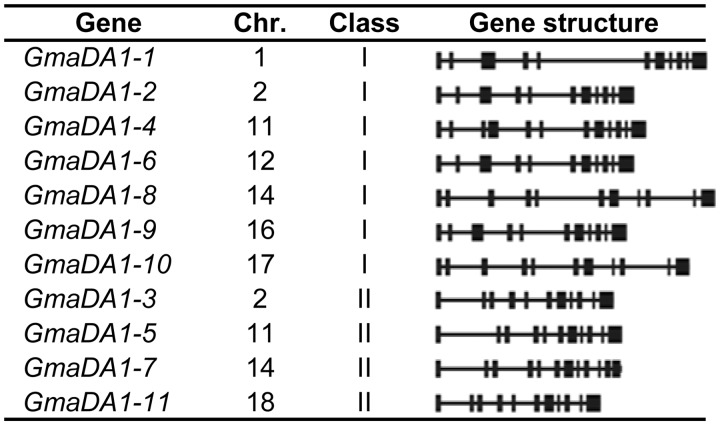
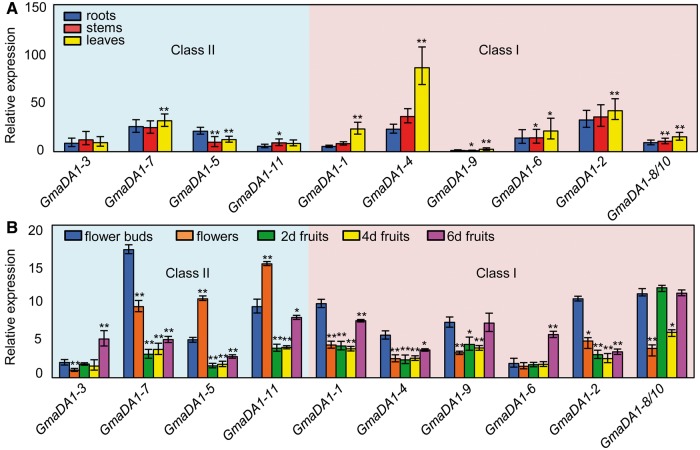
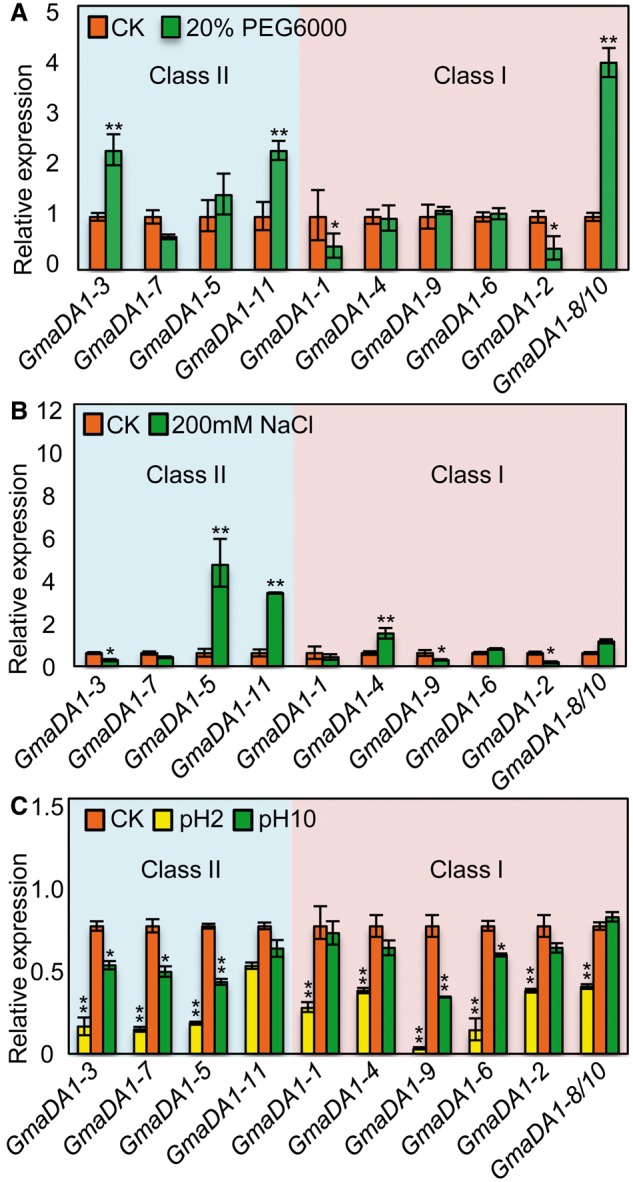
The Arabidopsis DA1 genes appear to have multiple functions in regulating organ size and abiotic stress response, but the biological roles of its closely related genes remain unknown. Evolutionary analyses might provide some clues to aid in an understanding of their functional diversification. In this work, we characterized the molecular evolution and expressional diversification of DA1-like genes. Surveying 354 sequenced genomes revealed 142 DA1-like genes only in plants, indicating plant-specificity of these genes. The DA1-like protein modular structure was composed of two UIMs (ubiquitin interaction motifs), one LIM-domain (from lin-11, isl-1, and mec-3), and a conserved C-terminal, and was distinguishable from the already defined three groups of LIM-domain proteins. We further found that the DA1-like genes diverged into Classes I and II at the ancestor of seed plants and acquired 13 clade-specific residues during their evolutionary history. Moreover, diverse intron size evolution was noted following the transition from size-expandable introns to minimal ones, accompanying the emergence and diversification of angiosperms. Functional diversification as it relates to gene expression was further investigated in soybean. Glycine max DA1 genes showed diverse tissues expression patterns during development and had substantially varied abiotic stress response expression. Thus, variations in the coding regions, intron size, and gene expression contributed to the functional diversification of this gene family. Our data suggest that the evolution of the DA1-like genes facilitated the development of diverse molecular and functional diversification patterns to accompany the successful radiation of plants into diverse environments during evolution.
拟南芥DA1基因在调节器官大小和非生物胁迫响应方面似乎具有多种功能,但其密切相关基因的生物学作用仍不清楚。进化分析可能会提供一些线索,有助于理解它们的功能多样化。在这项研究中,我们对DA1-like基因的分子进化和表达多样化进行了表征。对354个已测序基因组的调查显示,仅在植物中发现了142个DA1-like基因,表明这些基因具有植物特异性。DA1-like蛋白的模块化结构由两个泛素相互作用基序(UIMs)、一个LIM结构域(来自lin-11、isl-1和mec-3)和一个保守的C末端组成,与已定义的三类LIM结构域蛋白不同。我们进一步发现,DA1-like基因在种子植物的祖先中分化为I类和II类,并在其进化历史中获得了13个分支特异性残基。此外,随着被子植物的出现和多样化,从可扩展大小的内含子向最小内含子转变后,观察到了不同的内含子大小进化。在大豆中进一步研究了与基因表达相关的功能多样化。大豆DA1基因在发育过程中表现出不同的组织表达模式,并且对非生物胁迫响应的表达也有很大差异。因此,编码区、内含子大小和基因表达的变化促成了该基因家族的功能多样化。我们的数据表明,DA1-like基因的进化促进了多种分子和功能多样化模式的发展,以伴随植物在进化过程中成功辐射到不同环境中。