Franchini Paolo, Fruciano Carmelo, Frickey Tancred, Jones Julia C, Meyer Axel
Lehrstuhl für Zoologie und Evolutionsbiologie, Department of Biology, University of Konstanz, Konstanz, Germany.
Lehrstuhl für Zoologie und Evolutionsbiologie, Department of Biology, University of Konstanz, Konstanz, Germany; Zukunftskolleg, University of Konstanz, Konstanz, Germany.
PLoS One. 2014 Apr 14;9(4):e95027. doi: 10.1371/journal.pone.0095027. eCollection 2014.
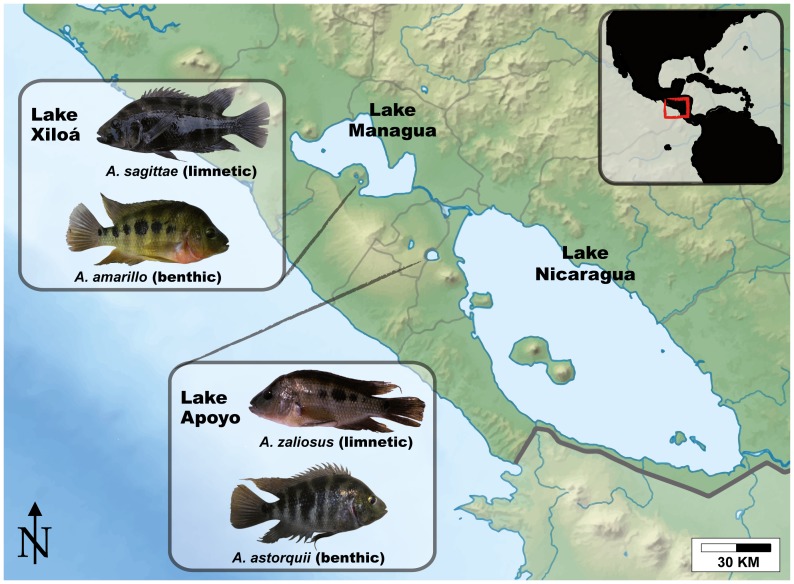
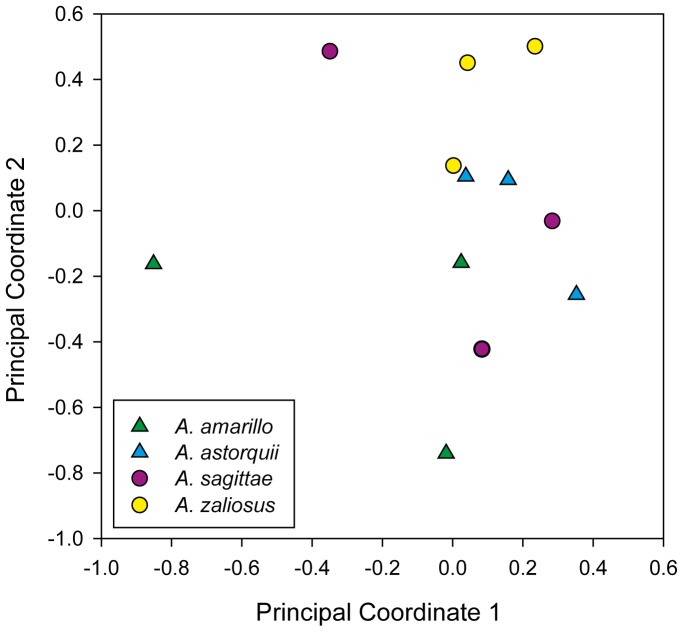
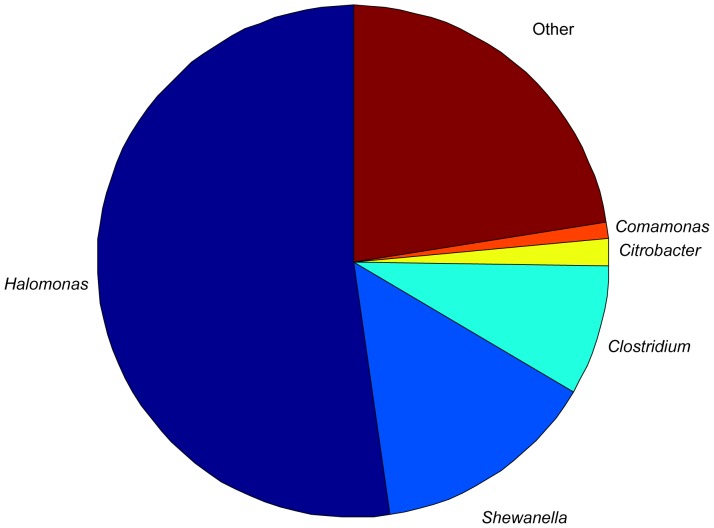
Gut bacterial communities are now known to influence a range of fitness related aspects of organisms. But how different the microbial community is in closely related species, and if these differences can be interpreted as adaptive is still unclear. In this study we compared microbial communities in two sets of closely related sympatric crater lake cichlid fish species pairs that show similar adaptations along the limnetic-benthic axis. The gut microbial community composition differs in the species pair inhabiting the older of two crater lakes. One major difference, relative to other fish, is that in these cichlids that live in hypersaline crater lakes, the microbial community is largely made up of Oceanospirillales (52.28%) which are halotolerant or halophilic bacteria. This analysis opens up further avenues to identify candidate symbiotic or co-evolved bacteria playing a role in adaptation to similar diets and life-styles or even have a role in speciation. Future functional and phylosymbiotic analyses might help to address these issues.
如今已知肠道细菌群落会影响生物体一系列与健康相关的方面。但在亲缘关系密切的物种中,微生物群落的差异程度如何,以及这些差异是否可被解释为适应性变化,目前仍不清楚。在本研究中,我们比较了两组亲缘关系密切的同域火山口湖丽鱼物种对中的微生物群落,这些物种对在沿岸带-底栖生物轴上表现出相似的适应性。在栖息于两个火山口湖中较古老湖泊的物种对中,肠道微生物群落组成有所不同。与其他鱼类相比,一个主要差异在于,在这些生活在高盐火山口湖的丽鱼中,微生物群落主要由嗜盐或耐盐细菌——海洋螺菌目(占52.28%)组成。该分析为识别在适应相似饮食和生活方式甚至物种形成过程中发挥作用的候选共生或共同进化细菌开辟了更多途径。未来的功能和系统共生分析可能有助于解决这些问题。