Organic Chemistry Department, Institute of Chemistry, São Paulo State University (UNESP), 14800-900 Araraquara, SP, Brazil.
Department of Biological Sciences, Faculty of Pharmaceutical Sciences, São Paulo State University (UNESP), 14801-902 Araraquara, SP, Brazil.
Evid Based Complement Alternat Med. 2014;2014:676902. doi: 10.1155/2014/676902. Epub 2014 Mar 9.
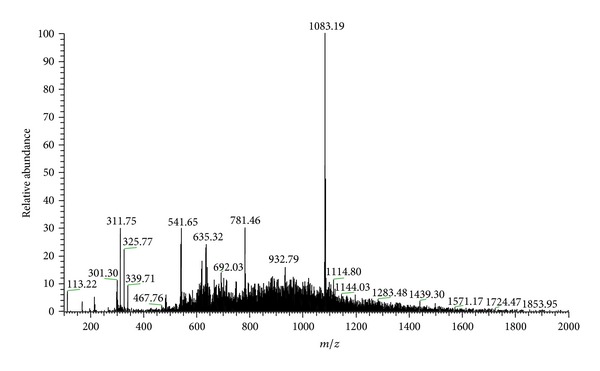
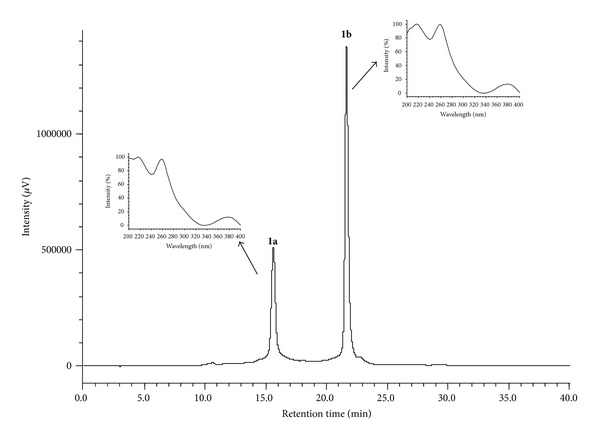
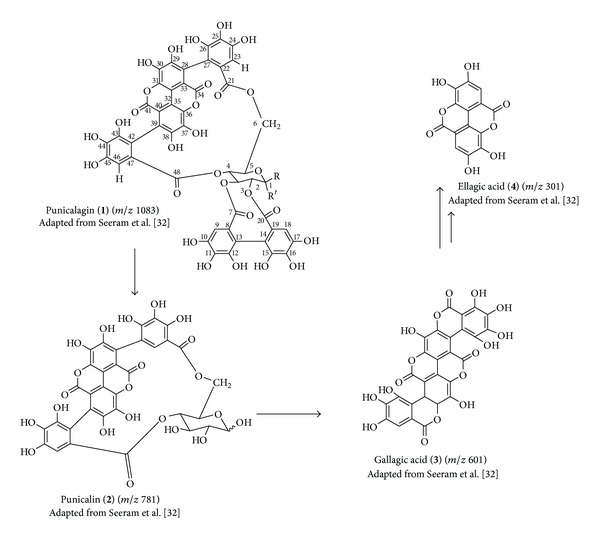
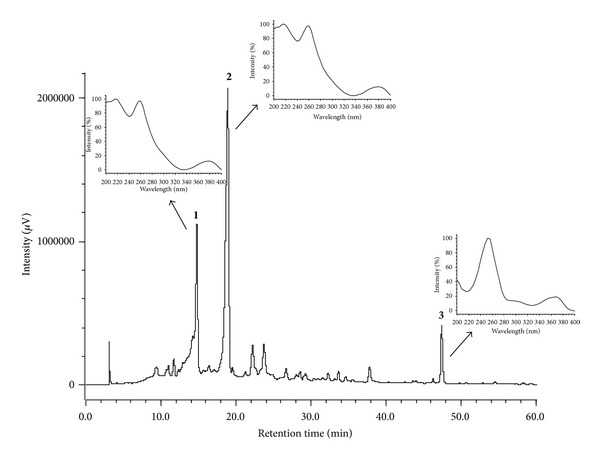
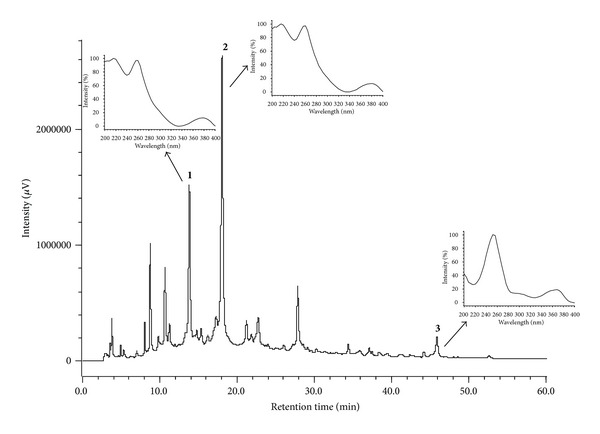
Terminalia is a genus of Combretaceous plants widely distributed in tropical and subtropical regions. Thus, the aim of this study was to quantify the majority compounds of the hydroalcoholic extract (7 : 3, v/v) of the leaves from T. catappa by HPLC-PDA, chemically characterize by hyphenated techniques (HPLC-ESI-IT-MS(n)) and NMR, and evaluate its mutagenic activity by the Salmonella/microsome assay on S. typhimurium strains TA98, TA97a, TA100, and TA102. The quantification of analytes was performed using an external calibration standard. Punicalagin is the most abundant polyphenol found in the leaves. The presence of this compound as a mixture of anomers was confirmed using HPLC-PDA and (1)H and (13)C NMR. Mutagenic activity was observed in strains TA100 and TA97a. As the extract is a complex mixture of punicalagin, its derivatives, and several other compounds, the observed mutagenicity may be explained in part by possible synergistic interaction between the compounds present in the extract. These studies show that mutagenic activity of T. catappa in the Ames test can only be observed when measured at high concentrations. However, considering the mutagenic effects observed for T. catappa, this plant should be used cautiously for medicinal purposes.
Terminalia 是一个在热带和亚热带地区广泛分布的 Combretaceous 植物属。因此,本研究的目的是通过 HPLC-PDA 定量测定Terminalia catappa 叶的 7:3(v/v)水醇提取物中的大部分化合物,通过联用技术(HPLC-ESI-IT-MS(n))和 NMR 进行化学表征,并通过沙门氏菌/微粒体试验在 S. typhimurium 菌株 TA98、TA97a、TA100 和 TA102 上评估其致突变活性。分析物的定量采用外部校准标准进行。安石榴苷是该叶中最丰富的多酚。使用 HPLC-PDA 和 (1)H 和 (13)C NMR 证实了该化合物作为差向异构体混合物的存在。在 TA100 和 TA97a 菌株中观察到致突变活性。由于提取物是安石榴苷、其衍生物和几种其他化合物的复杂混合物,因此观察到的致突变性可能部分归因于提取物中存在的化合物之间可能存在协同相互作用。这些研究表明,Terminalia catappa 在 Ames 试验中的致突变活性仅在高浓度下才能观察到。然而,考虑到 Terminalia catappa 观察到的致突变作用,这种植物在药用方面应谨慎使用。