Casanova Fernando, Carney Paul R, Sarntinoranont Malisa
Department of Mechanical & Aerospace Engineering, University of Florida, Gainesville, Florida, United States of America; Escuela de Ingeniería Mecánica, Universidad del Valle, Cali, Colombia.
Department of Pediatrics, Neurology, Neuroscience, and J. Crayton Pruitt Family Department of Biomedical Engineering, Wilder Center of Excellence for Epilepsy Research, Gainesville, Florida, United States of America.
PLoS One. 2014 Apr 28;9(4):e94919. doi: 10.1371/journal.pone.0094919. eCollection 2014.
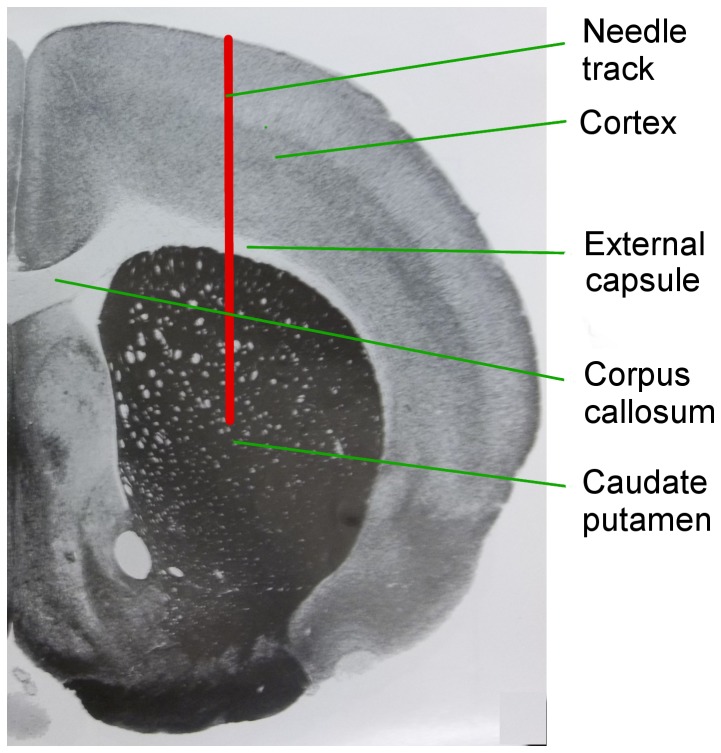
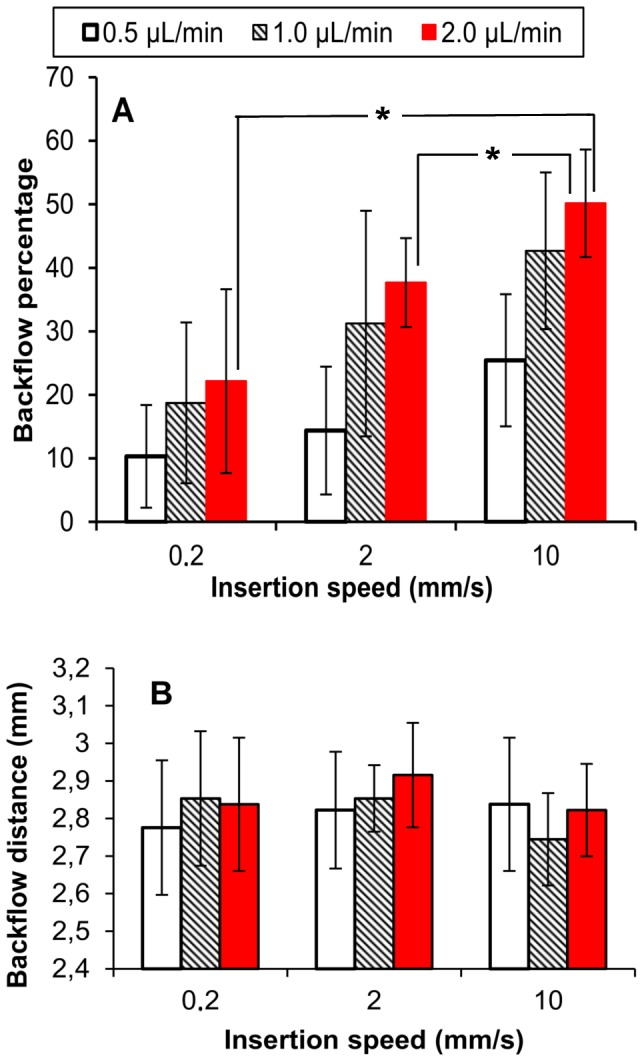
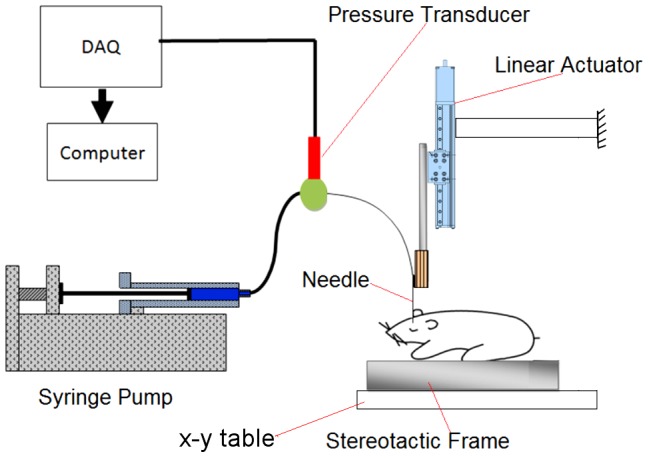
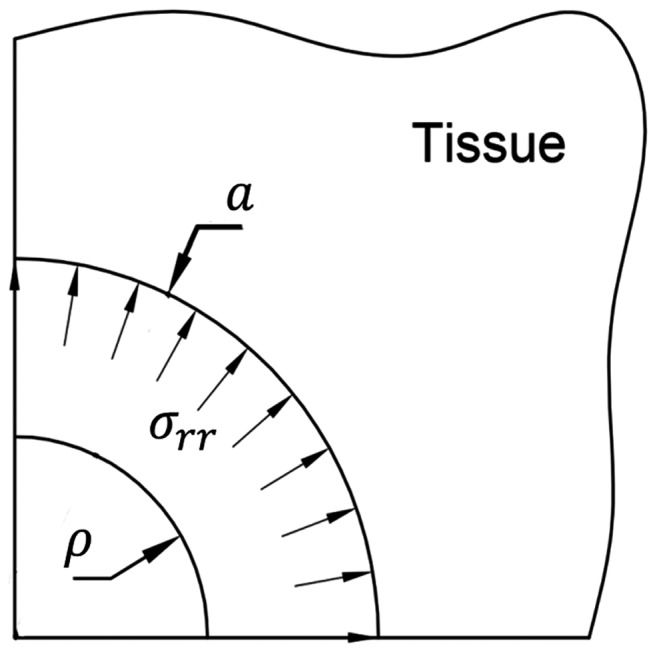
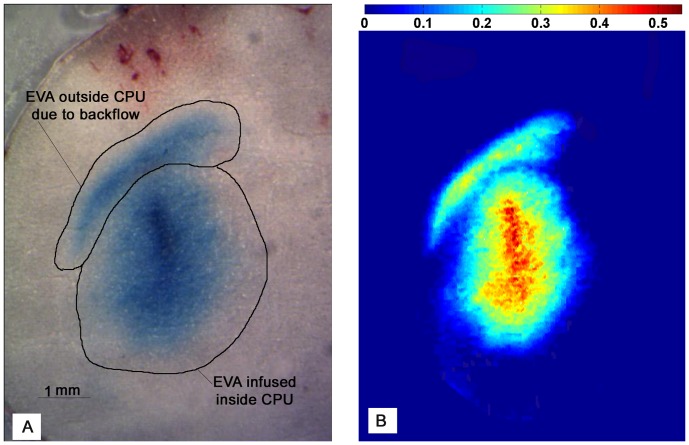
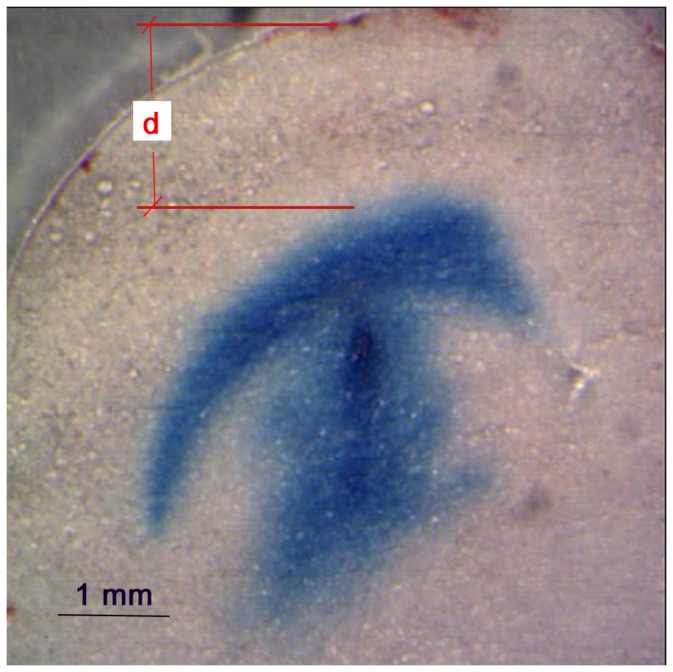
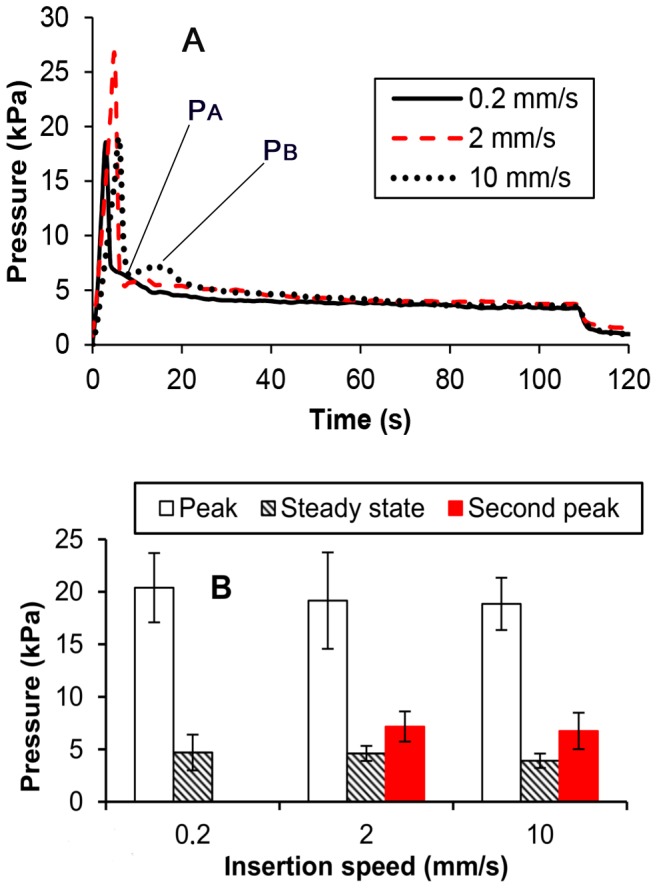
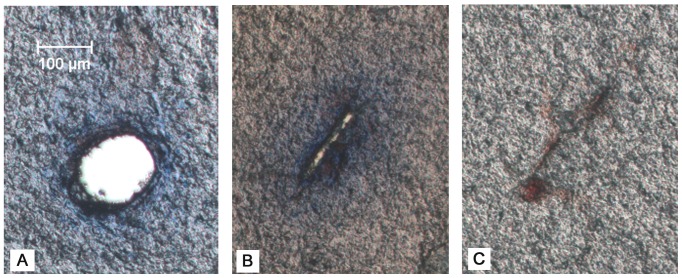
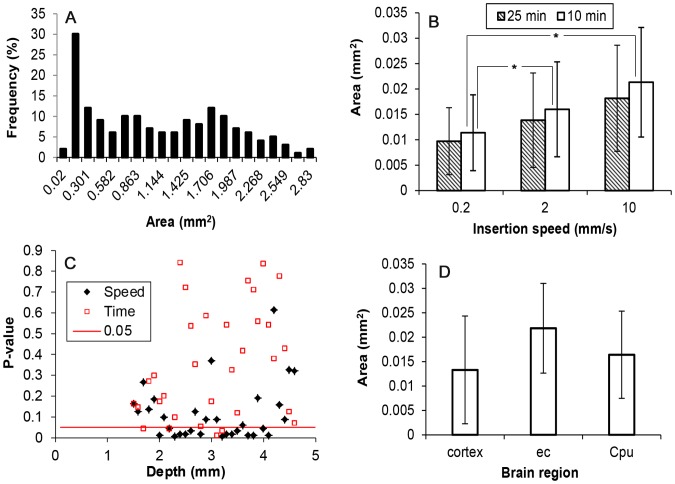
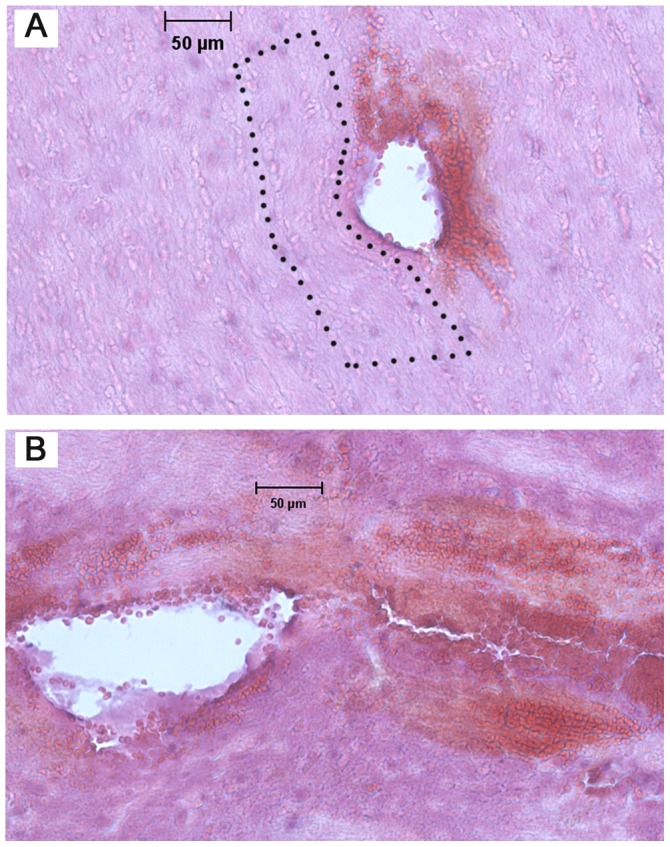
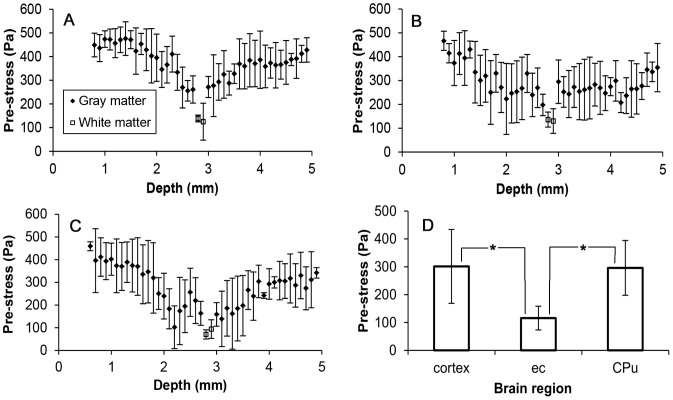
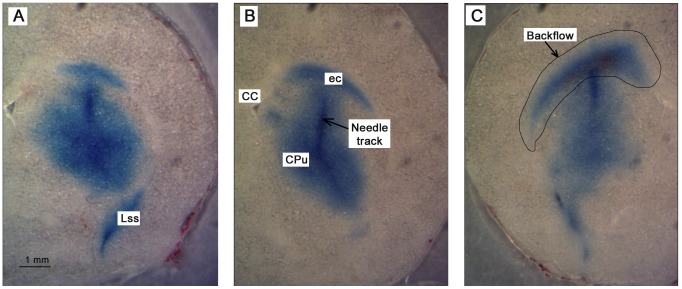
Flow back along a needle track (backflow) can be a problem during direct infusion, e.g. convection-enhanced delivery (CED), of drugs into soft tissues such as brain. In this study, the effect of needle insertion speed on local tissue injury and backflow was evaluated in vivo in the rat brain. Needles were introduced at three insertion speeds (0.2, 2, and 10 mm/s) followed by CED of Evans blue albumin (EBA) tracer. Holes left in tissue slices were used to reconstruct penetration damage. These measurements were also input into a hyperelastic model to estimate radial stress at the needle-tissue interface (pre-stress) before infusion. Fast insertion speeds were found to produce more tissue bleeding and disruption; average hole area at 10 mm/s was 1.87-fold the area at 0.2 mm/s. Hole measurements also differed at two fixation time points after needle retraction, 10 and 25 min, indicating that pre-stresses are influenced by time-dependent tissue swelling. Calculated pre-stresses were compressive (0 to 485 Pa) and varied along the length of the needle with smaller average values within white matter (116 Pa) than gray matter (301 Pa) regions. Average pre-stress at 0.2 mm/s (351.7 Pa) was calculated to be 1.46-fold the value at 10 mm/s. For CED backflow experiments (0.5, 1, and 2 µL/min), measured EBA backflow increased as much as 2.46-fold between 10 and 0.2 mm/s insertion speeds. Thus, insertion rate-dependent damage and changes in pre-stress were found to directly contribute to the extent of backflow, with slower insertion resulting in less damage and improved targeting.
在将药物直接输注到脑组织等软组织中,如对流增强递送(CED)过程中,沿针道回流(逆流)可能是个问题。在本研究中,在大鼠脑内活体评估了针插入速度对局部组织损伤和逆流的影响。以三种插入速度(0.2、2和10毫米/秒)插入针,随后进行伊文思蓝白蛋白(EBA)示踪剂的对流增强递送。利用组织切片上留下的孔来重建穿刺损伤。这些测量结果还被输入到一个超弹性模型中,以估计输注前针-组织界面处的径向应力(预应力)。发现快速插入速度会导致更多的组织出血和破坏;10毫米/秒时的平均孔面积是0.2毫米/秒时面积的1.87倍。在拔针后的两个固定时间点(10分钟和25分钟),孔的测量结果也有所不同,这表明预应力受时间依赖性组织肿胀的影响。计算得到的预应力为压缩性(0至485帕),并且沿针的长度变化,白质区域(116帕)的平均值小于灰质区域(301帕)。计算得出0.2毫米/秒时的平均预应力(351.7帕)是10毫米/秒时预应力值的1.46倍。对于CED逆流实验(0.5、1和2微升/分钟),在10至0.2毫米/秒的插入速度之间,测得的EBA逆流增加了2.46倍。因此,发现与插入速率相关的损伤和预应力变化直接导致逆流程度,插入速度较慢会减少损伤并改善靶向性。