Liu Qiang, Wu Di, Ni Na, Ren Huixia, Luo Chuanming, He Chengwei, Kang Jing-Xuan, Wan Jian-Bo, Su Huanxing
State Key Laboratory of Quality Research in Chinese Medicine, Institute of Chinese Medical Sciences, University of Macau, Macao 999078, China.
Laboratory for Lipid Medicine and Technology, Massachusetts General Hospital and Harvard Medical School, Boston, MA 02114, USA.
Mar Drugs. 2014 Apr 29;12(5):2341-56. doi: 10.3390/md12052341.
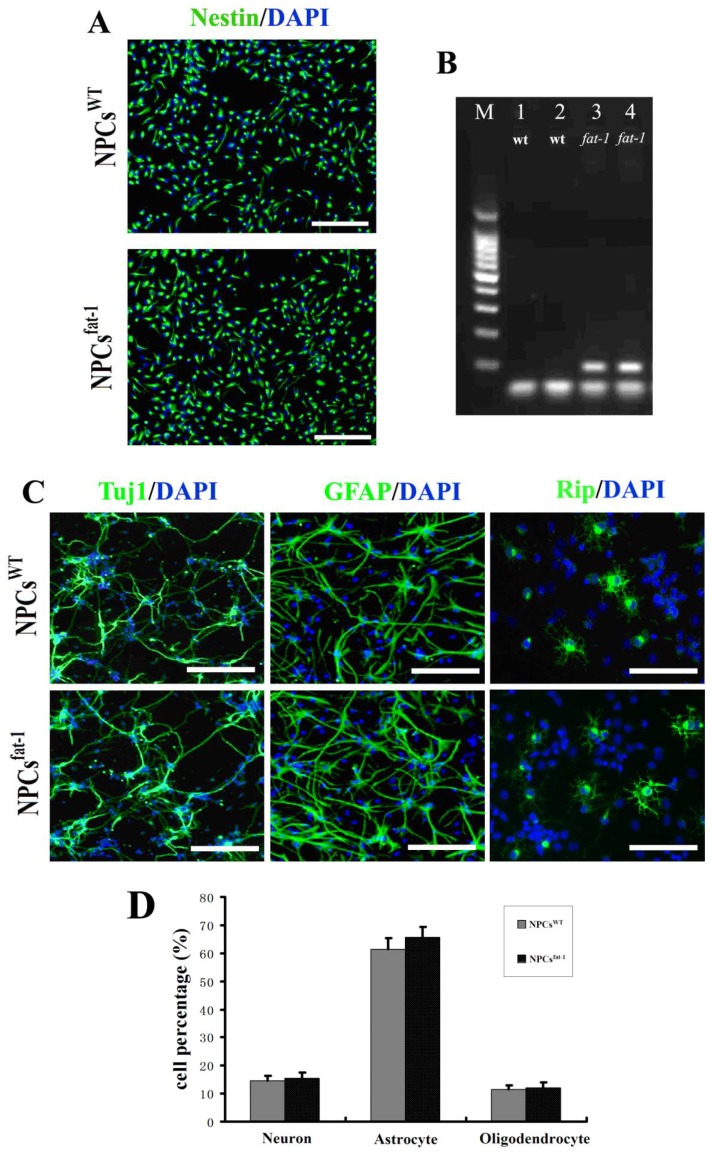
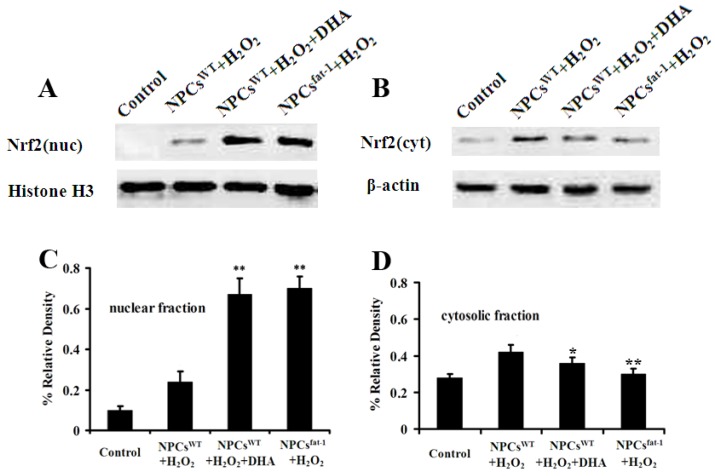
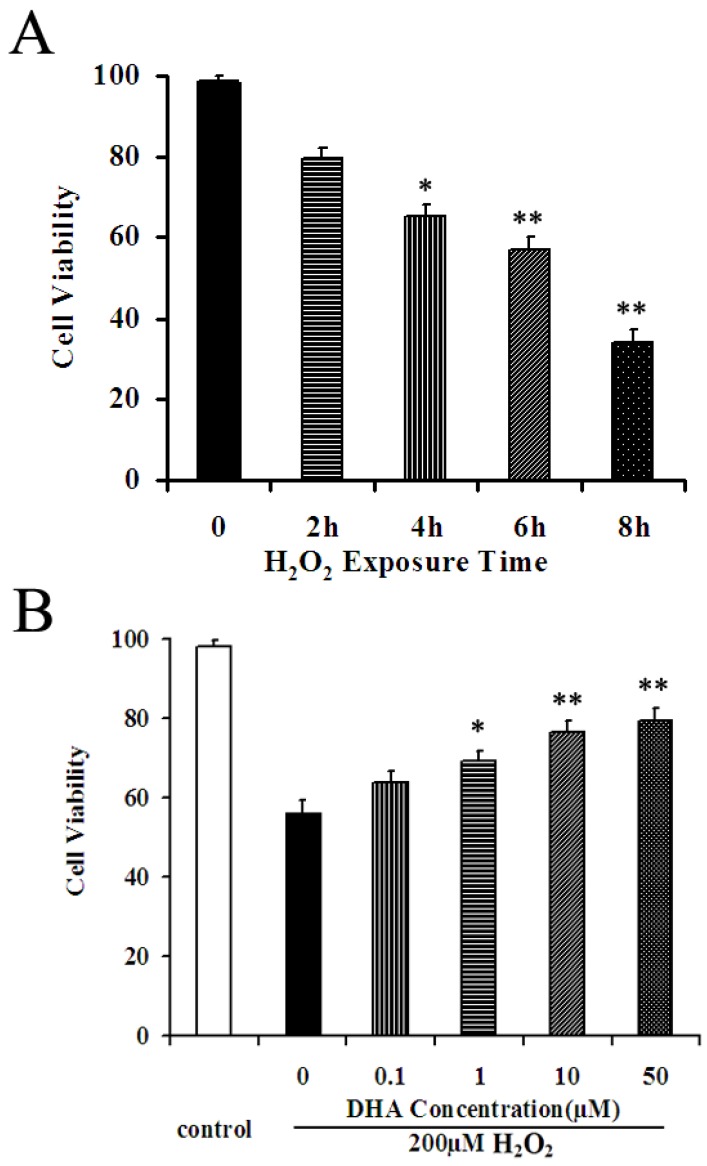
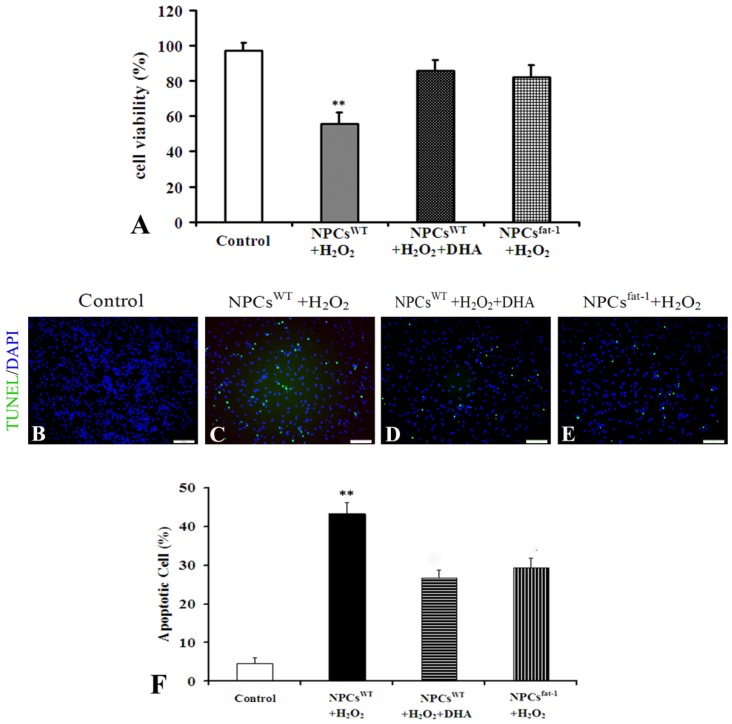
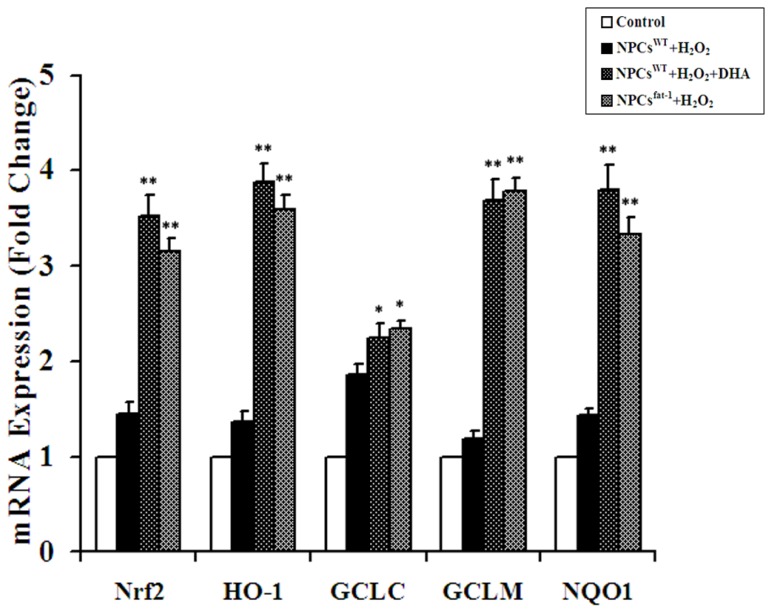
The omega-3 polyunsaturated fatty acids (ω-3 PUFAs), eicosapentaenoic acid (EPA) and docosahexaenoic acid (DHA), derived mainly from fish oil, play important roles in brain development and neuroplasticity. Here, we reported that application of ω-3 PUFAs significantly protected mouse neural progenitor cells (NPCs) against H2O2-induced oxidative injury. We also isolated NPCs from transgenic mice expressing the Caenorhabditis elegans fat-1 gene. The fat-1 gene, which is absent in mammals, can add a double bond into an unsaturated fatty acid hydrocarbon chain and convert ω-6 to ω-3 fatty acids. Terminal deoxynucleotidyl transferase dUTP nick end labeling (TUNEL) staining showed that a marked decrease in apoptotic cells was found in fat-1 NPCs after oxidative injury with H2O2 as compared with wild-type NPCs. Quantitative RT-PCR and Western blot analysis demonstrated a much higher expression of nuclear factor erythroid 2-related factor 2 (Nrf2), a master transcriptional factor for antioxidant genes, in fat-1 NPCs. The results of the study provide evidence that ω-3 PUFAs resist oxidative injury to NPCs.
主要来源于鱼油的ω-3多不饱和脂肪酸(ω-3 PUFAs),即二十碳五烯酸(EPA)和二十二碳六烯酸(DHA),在大脑发育和神经可塑性中发挥着重要作用。在此,我们报告ω-3 PUFAs的应用显著保护小鼠神经祖细胞(NPCs)免受H2O2诱导的氧化损伤。我们还从表达秀丽隐杆线虫fat-1基因的转基因小鼠中分离出NPCs。哺乳动物中不存在的fat-1基因可在不饱和脂肪酸烃链中添加一个双键,并将ω-6脂肪酸转化为ω-3脂肪酸。末端脱氧核苷酸转移酶dUTP缺口末端标记(TUNEL)染色显示,与野生型NPCs相比,用H2O2进行氧化损伤后,fat-1 NPCs中的凋亡细胞显著减少。定量逆转录聚合酶链反应(RT-PCR)和蛋白质免疫印迹分析表明,抗氧化基因的主要转录因子核因子E2相关因子2(Nrf2)在fat-1 NPCs中的表达要高得多。该研究结果提供了证据,表明ω-3 PUFAs可抵抗NPCs的氧化损伤。