Linehan Eimear, Dombrowski Yvonne, Snoddy Rachel, Fallon Padraic G, Kissenpfennig Adrien, Fitzgerald Denise C
Centre for Infection and Immunity, Queen's University Belfast, 97 Lisburn Road, Belfast, BT9 7AE, Northern Ireland.
Aging Cell. 2014 Aug;13(4):699-708. doi: 10.1111/acel.12223. Epub 2014 May 12.
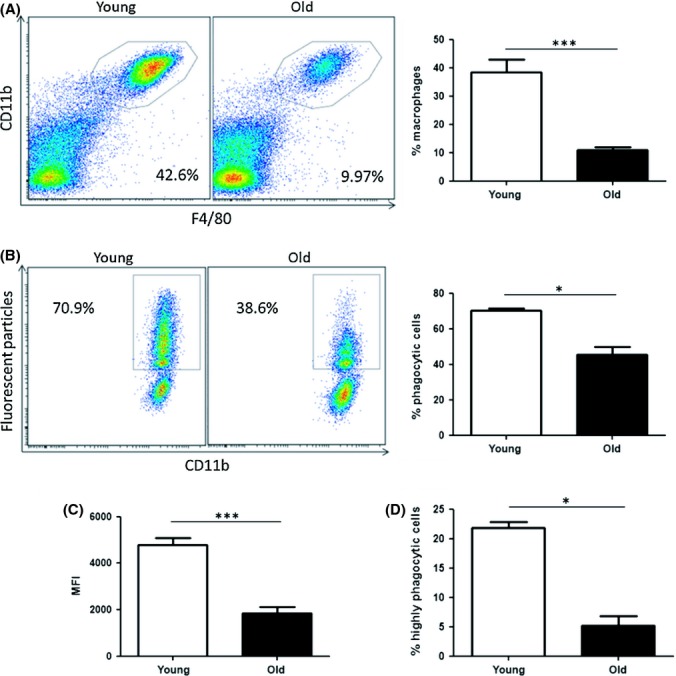
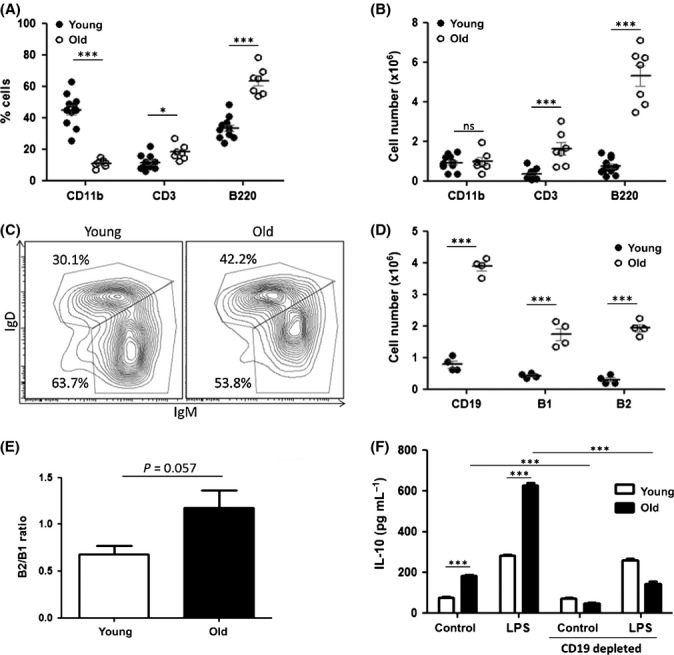
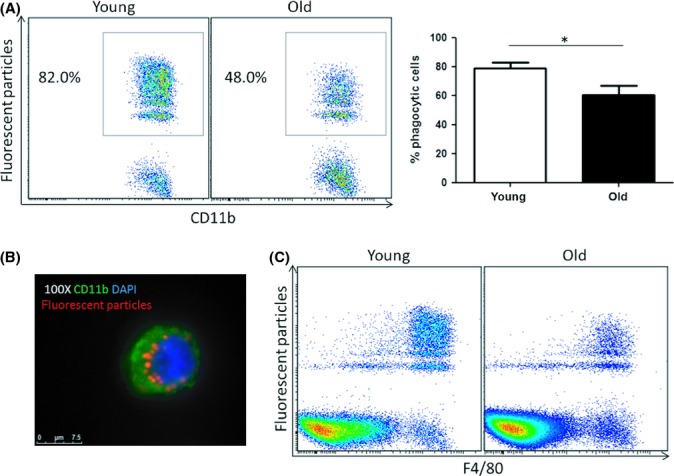
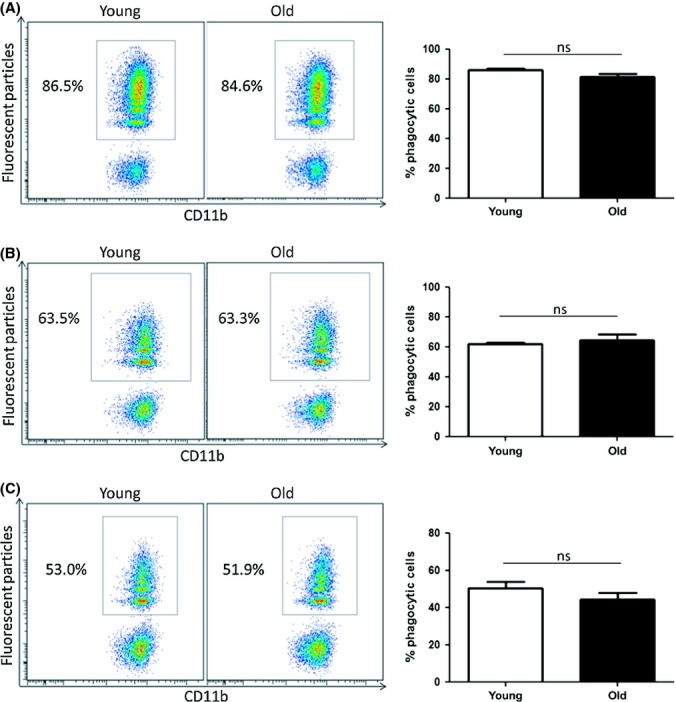
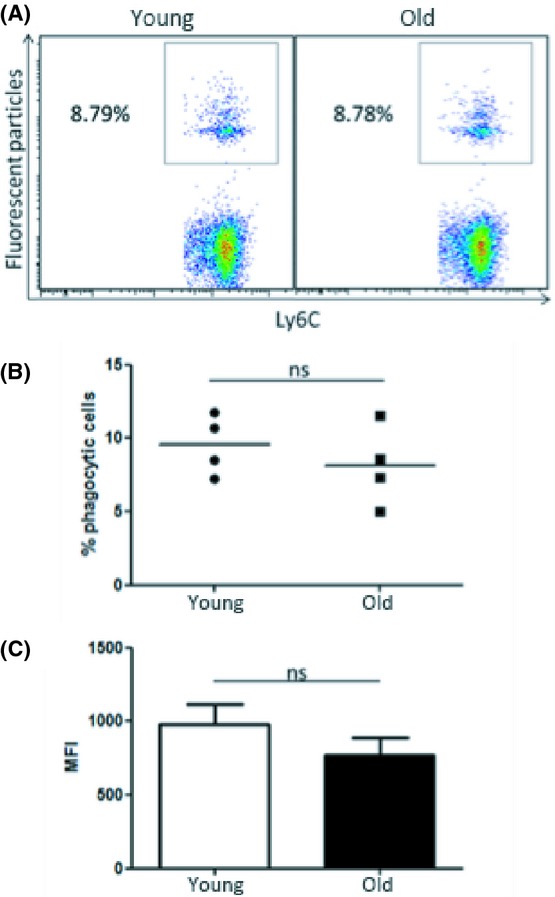
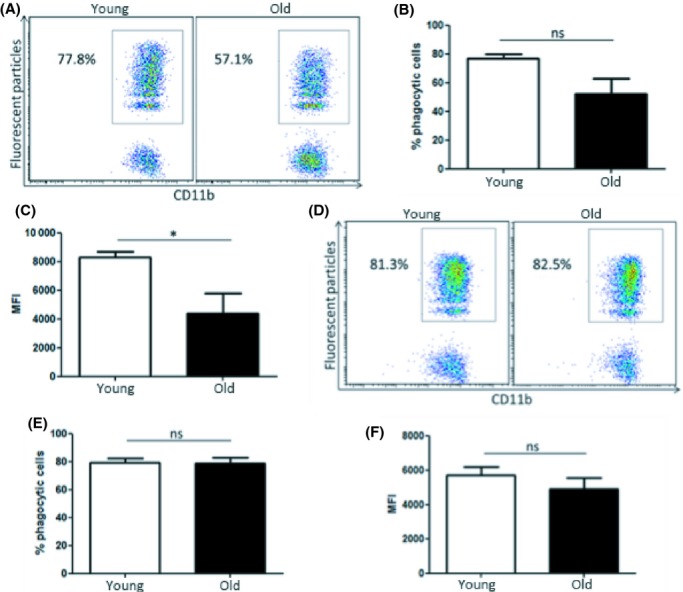
Aging results in deterioration of the immune system, which is associated with increased susceptibility to infection and impaired wound healing in the elderly. Phagocytosis is an essential process in both wound healing and immune defence. As such, age-related impairments in phagocytosis impact on the health of the elderly population. Phagocytic efficiency in peritoneal macrophages, bone marrow-derived macrophages and bone marrow monocytes from young and old mice was investigated. Aging significantly impaired phagocytosis by peritoneal macrophages, both in vitro and in vivo. However, bone marrow-derived macrophages and bone marrow monocytes did not exhibit age-related impairments in phagocytosis, suggesting no intrinsic defect in these cells. We sought to investigate underlying mechanisms in age-related impairments in phagocytosis by peritoneal macrophages. We hypothesized that microenvironmental factors in the peritoneum of old mice impaired macrophage phagocytosis. Indeed, macrophages from young mice injected into the peritoneum of old mice exhibited impaired phagocytosis. Proportions of peritoneal immune cells were characterized, and striking increases in numbers of T cells, B1 and B2 cells were observed in the peritoneum of old mice compared with young mice. In addition, B cell-derived IL-10 was increased in resting and LPS-activated peritoneal cell cultures from old mice. These data demonstrate that aging impairs phagocytosis by tissue-resident peritoneal macrophages, but not by bone marrow-derived macrophages/monocytes, and suggest that age-related defects in macrophage phagocytosis may be due to extrinsic factors in the tissue microenvironment. As such, defects may be reversible and macrophages could be targeted therapeutically in order to boost immune function in the elderly.
衰老会导致免疫系统衰退,这与老年人感染易感性增加及伤口愈合受损有关。吞噬作用在伤口愈合和免疫防御中都是一个重要过程。因此,与年龄相关的吞噬作用受损会影响老年人群的健康。我们研究了年轻和老年小鼠腹膜巨噬细胞、骨髓来源的巨噬细胞及骨髓单核细胞的吞噬效率。衰老显著损害了腹膜巨噬细胞在体外和体内的吞噬作用。然而,骨髓来源的巨噬细胞和骨髓单核细胞并未表现出与年龄相关的吞噬作用受损,这表明这些细胞没有内在缺陷。我们试图研究腹膜巨噬细胞吞噬作用与年龄相关受损的潜在机制。我们假设老年小鼠腹膜中的微环境因素会损害巨噬细胞的吞噬作用。事实上,注射到老年小鼠腹膜中的年轻小鼠巨噬细胞表现出吞噬作用受损。我们对腹膜免疫细胞的比例进行了表征,与年轻小鼠相比,老年小鼠腹膜中T细胞、B1和B2细胞数量显著增加。此外,在老年小鼠静息和脂多糖激活的腹膜细胞培养物中,B细胞衍生的白细胞介素-10增加。这些数据表明,衰老会损害组织驻留腹膜巨噬细胞的吞噬作用,但不会损害骨髓来源的巨噬细胞/单核细胞的吞噬作用,这表明巨噬细胞吞噬作用与年龄相关的缺陷可能是由于组织微环境中的外在因素。因此,这些缺陷可能是可逆的,并且可以对巨噬细胞进行靶向治疗,以增强老年人的免疫功能。