Natural Products Research Laboratories, UNC Eshelman School of Pharmacy, University of North Carolina, Chapel Hill, NC, USA. ; Kunming Institute of Botany, Chinese Academy of Sciences, Kunming, People's Republic of China.
Natural Products Research Laboratories, UNC Eshelman School of Pharmacy, University of North Carolina, Chapel Hill, NC, USA.
J Tradit Complement Med. 2014 Jan;4(1):8-16. doi: 10.4103/2225-4110.124811.
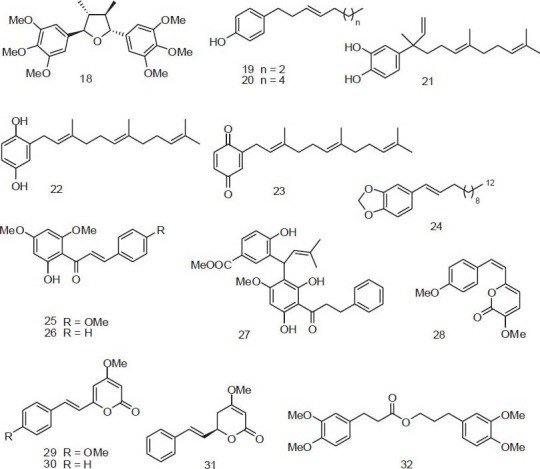
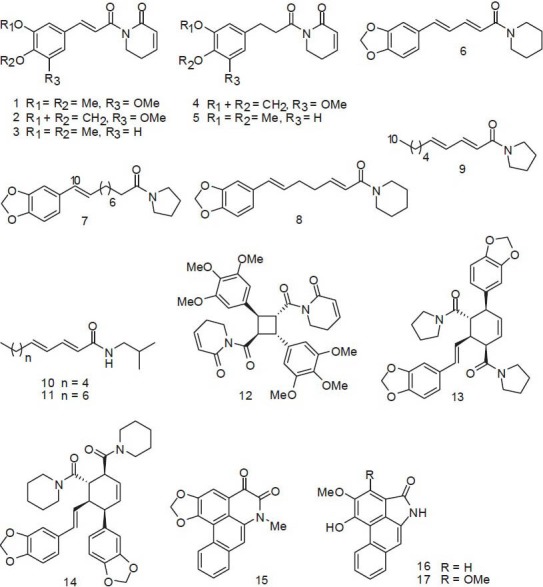
The ethnomedical uses of Piper ( Hú Jiāo) plants as anticancer agents, in vitro cytotoxic activity of both extracts and compounds from Piper plants, and in vivo antitumor activity and mechanism of action of selected compounds are reviewed in the present paper. The genus Piper (Piperaceae) contains approximately 2000 species, of which 10 species have been used in traditional medicines to treat cancer or cancer-like symptoms. Studies have shown that 35 extracts from 24 Piper species and 32 compounds from Piper plants possess cytotoxic activity. Amide alkaloids account for 53% of the major active principles. Among them, piplartine (piperlongumine) shows the most promise, being toxic to dozens of cancer cell lines and having excellent in vivo activity. It is worthwhile to conduct further anticancer studies both in vitro and in vivo on Piper plants and their active principles.
本文综述了胡椒(胡焦)植物作为抗癌剂的民族医学用途、胡椒植物的提取物和化合物的体外细胞毒性活性、以及选定化合物的体内抗肿瘤活性和作用机制。胡椒属(胡椒科)包含约 2000 种,其中 10 种被用于传统医学治疗癌症或类似癌症的症状。研究表明,来自 24 种胡椒植物的 35 种提取物和来自胡椒植物的 32 种化合物具有细胞毒性活性。酰胺生物碱占主要活性成分的 53%。其中,胡椒碱(piperlongumine)最有前途,对数十种癌细胞系有毒,并且具有出色的体内活性。值得对胡椒植物及其活性成分进行进一步的体外和体内抗癌研究。