IJN-UTM Cardiovascular Engineering Centre, Faculty of Biosciences and Medical Engineering, Universiti Teknologi Malaysia, 81310 Johor Bahru, Malaysia.
Rubber Technology Centre, Indian Institute of Technology, Kharagpur, West Bengal 721302, India.
Biomed Res Int. 2014;2014:459465. doi: 10.1155/2014/459465. Epub 2014 May 8.
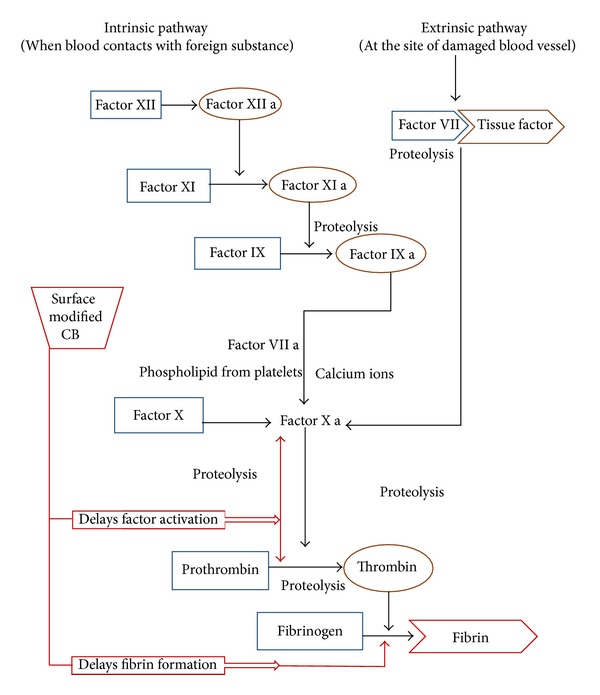
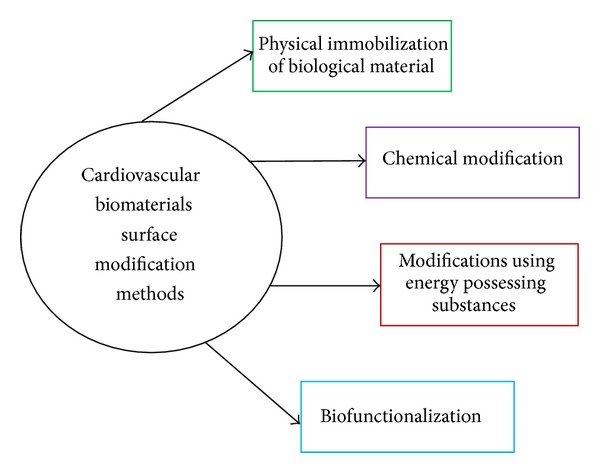
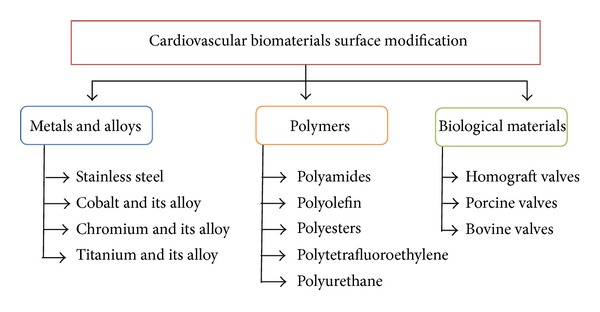
Cardiovascular biomaterials (CB) dominate the category of biomaterials based on the demand and investments in this field. This review article classifies the CB into three major classes, namely, metals, polymers, and biological materials and collates the information about the CB. Blood compatibility is one of the major criteria which limit the use of biomaterials for cardiovascular application. Several key players are associated with blood compatibility and they are discussed in this paper. To enhance the compatibility of the CB, several surface modification strategies were in use currently. Some recent applications of surface modification technology on the materials for cardiovascular devices were also discussed for better understanding. Finally, the current trend of the CB, endothelization of the cardiac implants and utilization of induced human pluripotent stem cells (ihPSCs), is also presented in this review. The field of CB is growing constantly and many new investigators and researchers are developing interest in this domain. This review will serve as a one stop arrangement to quickly grasp the basic research in the field of CB.
心血管生物材料(CB)在生物材料领域基于需求和投资方面占据主导地位。本文将 CB 分为三大类,即金属、聚合物和生物材料,并整理了有关 CB 的信息。血液相容性是限制生物材料在心血管应用中的主要标准之一。本文讨论了与血液相容性相关的几个关键因素。为了提高 CB 的相容性,目前正在使用几种表面改性策略。本文还讨论了心血管器械材料表面改性技术的一些最新应用,以便更好地理解。最后,本文还介绍了 CB 的当前趋势,即心脏植入物的内皮化和诱导多能干细胞(ihPSCs)的利用。CB 领域不断发展,许多新的研究人员对该领域产生了兴趣。本文综述将为快速掌握 CB 领域的基础研究提供一站式服务。