Nanobiotechnology Center, University of Kentucky, Lexington, KY, USA.
Department of Pharmaceutical Sciences, College of Pharmacy, University of Kentucky, Lexington, KY, USA.
Cell Biosci. 2014 Jun 1;4:30. doi: 10.1186/2045-3701-4-30. eCollection 2014.
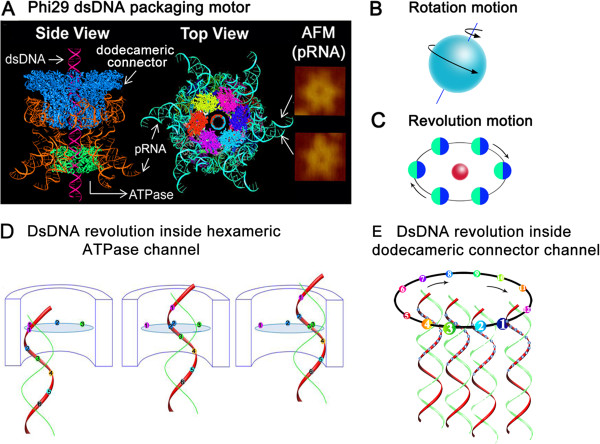
Double-stranded DNA translocation is ubiquitous in living systems. Cell mitosis, bacterial binary fission, DNA replication or repair, homologous recombination, Holliday junction resolution, viral genome packaging and cell entry all involve biomotor-driven dsDNA translocation. Previously, biomotors have been primarily classified into linear and rotational motors. We recently discovered a third class of dsDNA translocation motors in Phi29 utilizing revolution mechanism without rotation. Analogically, the Earth rotates around its own axis every 24 hours, but revolves around the Sun every 365 days.
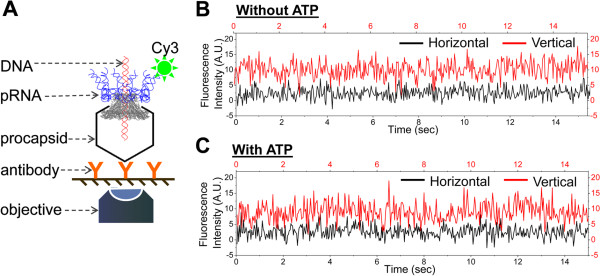
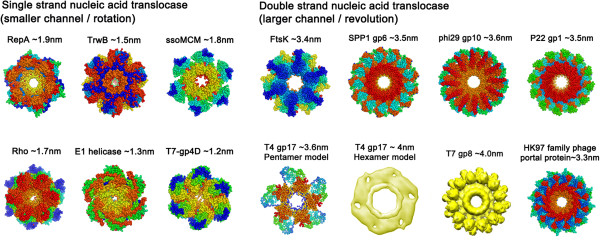
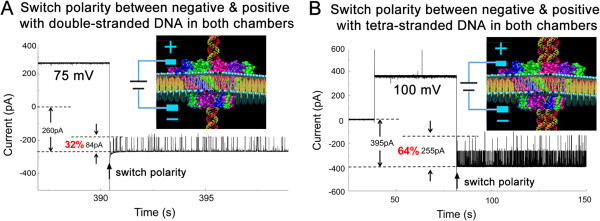
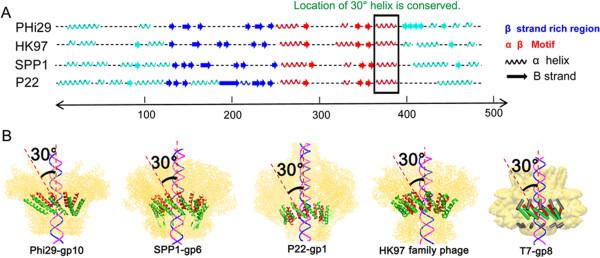
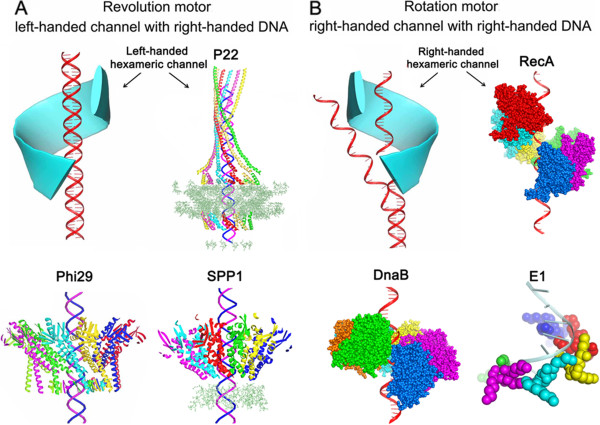
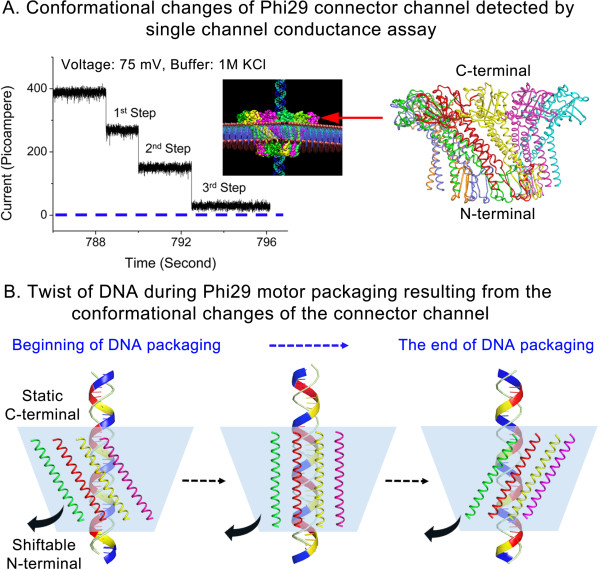
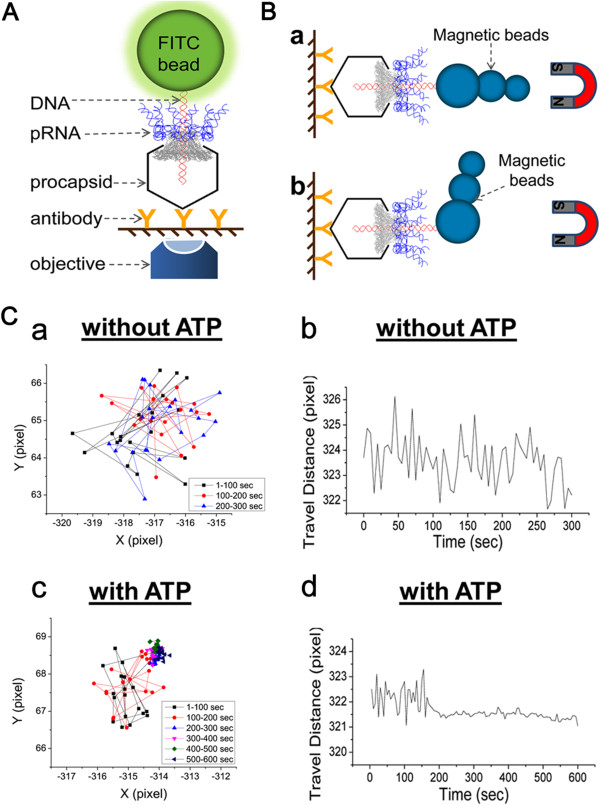
Single-channel DNA translocation conductance assay combined with structure inspections of motor channels on bacteriophages P22, SPP1, HK97, T7, T4, Phi29, and other dsDNA translocation motors such as bacterial FtsK and eukaryotic mimiviruses or vaccinia viruses showed that revolution motor is widespread. The force generation mechanism for revolution motors is elucidated. Revolution motors can be differentiated from rotation motors by their channel size and chirality. Crystal structure inspection revealed that revolution motors commonly exhibit channel diameters larger than 3 nm, while rotation motors that rotate around one of the two separated DNA strands feature a diameter smaller than 2 nm. Phi29 revolution motor translocated double- and tetra-stranded DNA that occupied 32% and 64% of the narrowest channel cross-section, respectively, evidencing that revolution motors exhibit channel diameters significantly wider than the dsDNA. Left-handed oriented channels found in revolution motors drive the right-handed dsDNA via anti-chiral interaction, while right-handed channels observed in rotation motors drive the right-handed dsDNA via parallel threads. Tethering both the motor and the dsDNA distal-end of the revolution motor does not block DNA packaging, indicating that no rotation is required for motors of dsDNA phages, while a small-angle left-handed twist of dsDNA that is aligned with the channel could occur due to the conformational change of the phage motor channels from a left-handed configuration for DNA entry to a right-handed configuration for DNA ejection for host cell infection.
The revolution motor is widespread among biological systems, and can be distinguished from rotation motors by channel size and chirality. The revolution mechanism renders dsDNA void of coiling and torque during translocation of the lengthy helical chromosome, thus resulting in more efficient motor energy conversion.
双链 DNA 易位在所有生命系统中普遍存在。细胞有丝分裂、细菌二分分裂、DNA 复制或修复、同源重组、霍利迪结的解析、病毒基因组包装和细胞进入都涉及到生物马达驱动的双链 DNA 易位。以前,生物马达主要分为线性和旋转马达。我们最近在 Phi29 中发现了第三种双链 DNA 易位马达,它利用旋转机制而不旋转。类似地,地球每 24 小时绕其自身轴自转,但每 365 天绕太阳公转。
结合噬菌体 P22、SPP1、HK97、T7、T4、Phi29 等马达通道的结构检测,以及细菌 FtsK 和真核 mimiviruses 或痘病毒等其他双链 DNA 易位马达的单通道 DNA 易位电导测定,发现旋转马达广泛存在。阐明了旋转马达的力产生机制。可以通过通道大小和手性将旋转马达与旋转马达区分开来。晶体结构检测表明,旋转马达通常表现出直径大于 3nm 的通道,而围绕两条分离的 DNA 链之一旋转的旋转马达的直径小于 2nm。Phi29 旋转马达易位双股和四股 DNA,分别占据最窄通道横截面的 32%和 64%,这表明旋转马达的通道直径明显大于 dsDNA。在旋转马达中发现的左手取向通道通过反手性相互作用驱动右手 dsDNA,而在旋转马达中观察到的右手通道通过平行线程驱动右手 dsDNA。将旋转马达的马达和 dsDNA 远末端系绳并不阻止 DNA 包装,这表明 dsDNA 噬菌体的马达不需要旋转,而由于噬菌体马达通道的构象从 DNA 进入的左手构型转变为用于宿主细胞感染的 DNA 排出的右手构型,dsDNA 可能会发生与通道对齐的小角度左手扭曲。
旋转马达在生物系统中广泛存在,可以通过通道大小和手性与旋转马达区分开来。旋转机制使长螺旋染色体在易位过程中没有卷曲和扭矩,从而提高了马达能量转换的效率。