De Luca Mariana P, Franca Juçara R, Macedo Filipe Augusto F F, Grenho Liliana, Cortes Maria Esperanza, Faraco André Augusto G, Moreira Allyson N, Santos Vagner R
Department of Paediatric Dentistry and Orthodontics, Faculty of Dentistry, Federal University of Minas Gerais, Campus Pampulha, Avenida Presidente Antônio Carlos 6627, 31.270-901 Belo Horizonte, MG, Brazil.
Department of Pharmaceutical Products, Faculty of Pharmacy, Federal University of Minas Gerais, Campus Pampulha, Avenida Presidente Antônio Carlos 6627, 31.270-901 Belo Horizonte, MG, Brazil.
Biomed Res Int. 2014;2014:348647. doi: 10.1155/2014/348647. Epub 2014 May 13.
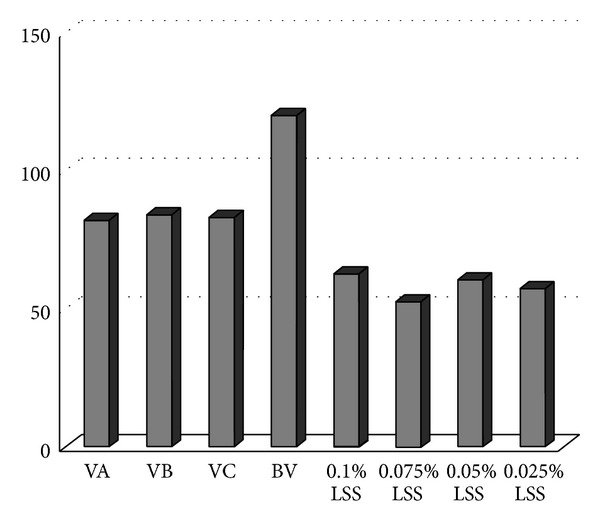
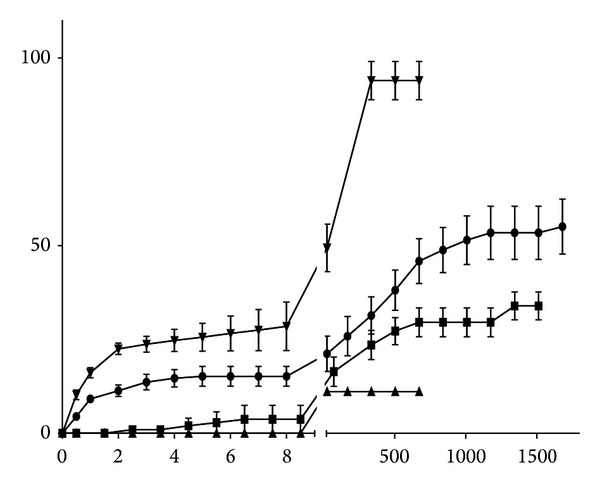
Varnishes are preparations that differ in the polymeric matrix and therapeutical agents. In dentistry they are used to prevent caries. In this study we developed a propolis varnish, considering propolis properties against cariogenic bacteria. To a chitosan polymeric base (CHV) was added ethanolic propolis extract in different concentrations: PV1 (5%), PV2 (10%), and PV3 (15%). Antimicrobial activity was carried out against Streptococcus mutans (SM), Streptococcus sanguinis (SG), Streptococcus salivarius (SS), and Lactobacillus casei (LC) through agar diffusion method. The three propolis concentrations incorporated were effective in inhibiting the growth of all microorganisms, but without significant difference between the zones of inhibition observed. Cytotoxicity assay was done by MTT method. Data were analyzed by one-way ANOVA and Bonferroni test. None of the varnishes were cytotoxic, keeping 80% of viable cells, while CHV allowed cellular proliferation (120%). Sustained-release test was carried out by applying 40 μ L of each varnish in the buccal surface of bovine teeth and kept in an ethanol/water solution removed in regular times. According to the "independent model approach," the release profiles were distinct from each varnish and the most prolonged was PV3 (8 weeks). Varnish formulations had satisfactory antimicrobial activity against cariogenic bacteria and have a low cytotoxicity (<50%).
清漆制剂在聚合物基质和治疗剂方面存在差异。在牙科领域,它们用于预防龋齿。在本研究中,考虑到蜂胶对致龋菌的特性,我们开发了一种蜂胶清漆。在壳聚糖聚合物基质(CHV)中添加了不同浓度的乙醇蜂胶提取物:PV1(5%)、PV2(10%)和PV3(15%)。通过琼脂扩散法对变形链球菌(SM)、血链球菌(SG)、唾液链球菌(SS)和干酪乳杆菌(LC)进行抗菌活性测试。所加入的三种蜂胶浓度均能有效抑制所有微生物的生长,但观察到的抑菌圈之间无显著差异。通过MTT法进行细胞毒性试验。数据采用单因素方差分析和Bonferroni检验进行分析。所有清漆均无细胞毒性,保持80%的活细胞,而CHV则允许细胞增殖(120%)。通过在牛牙颊面涂抹40μL每种清漆并定期置于乙醇/水溶液中进行缓释试验。根据“独立模型方法”,每种清漆的释放曲线各不相同,最长的是PV3(8周)。清漆制剂对致龋菌具有令人满意的抗菌活性,且细胞毒性较低(<50%)。