• 文献检索
  • 文档翻译
  • 深度研究
  • 学术资讯
  • Suppr Zotero 插件Zotero 插件
  • 邀请有礼
  • 套餐&价格
  • 历史记录
应用&插件
Suppr Zotero 插件Zotero 插件浏览器插件Mac 客户端Windows 客户端微信小程序
定价
高级版会员购买积分包购买API积分包
服务
文献检索文档翻译深度研究API 文档MCP 服务
关于我们
关于 Suppr公司介绍联系我们用户协议隐私条款
关注我们

Suppr 超能文献

核心技术专利:CN118964589B侵权必究
粤ICP备2023148730 号-1Suppr @ 2026

文献检索

告别复杂PubMed语法,用中文像聊天一样搜索,搜遍4000万医学文献。AI智能推荐,让科研检索更轻松。

立即免费搜索

文件翻译

保留排版,准确专业,支持PDF/Word/PPT等文件格式,支持 12+语言互译。

免费翻译文档

深度研究

AI帮你快速写综述,25分钟生成高质量综述,智能提取关键信息,辅助科研写作。

立即免费体验

通过自动挖掘公共生物测定数据剖析动物毒物:计算毒理学的大数据方法

Profiling animal toxicants by automatically mining public bioassay data: a big data approach for computational toxicology.

作者信息

Zhang Jun, Hsieh Jui-Hua, Zhu Hao

机构信息

Department of Chemistry, Rutgers University, Camden, New Jersey, United States of America; The Rutgers Center for Computational and Integrative Biology, Camden, New Jersey, United States of America.

Biomolecular Screening Branch, Division of National Toxicology Program, National Institute of Environmental Health Sciences, Research Triangle Park, North Carolina, United States of America.

出版信息

PLoS One. 2014 Jun 20;9(6):e99863. doi: 10.1371/journal.pone.0099863. eCollection 2014.

DOI:10.1371/journal.pone.0099863
PMID:24950175
原文链接:https://pmc.ncbi.nlm.nih.gov/articles/PMC4064997/
Abstract

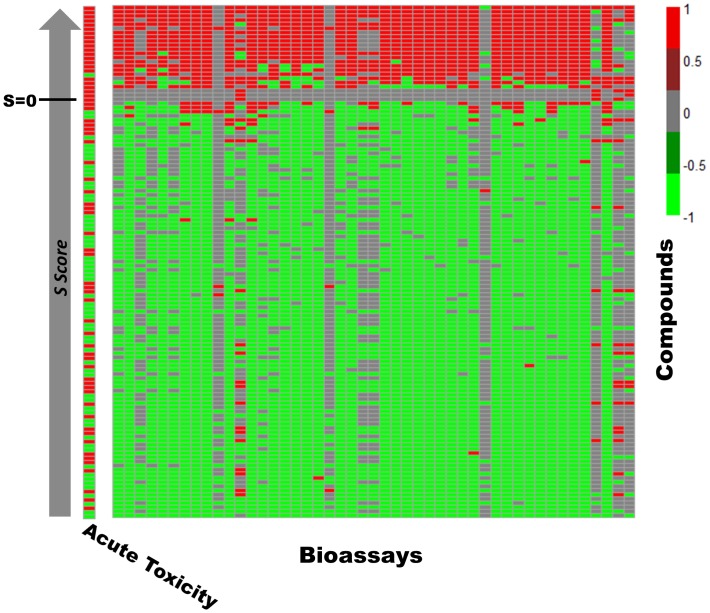
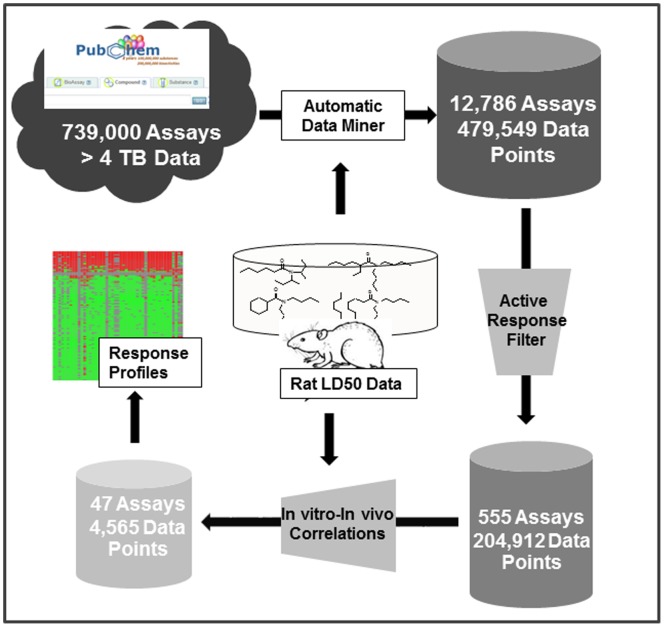
In vitro bioassays have been developed and are currently being evaluated as potential alternatives to traditional animal toxicity models. Already, the progress of high throughput screening techniques has resulted in an enormous amount of publicly available bioassay data having been generated for a large collection of compounds. When a compound is tested using a collection of various bioassays, all the testing results can be considered as providing a unique bio-profile for this compound, which records the responses induced when the compound interacts with different cellular systems or biological targets. Profiling compounds of environmental or pharmaceutical interest using useful toxicity bioassay data is a promising method to study complex animal toxicity. In this study, we developed an automatic virtual profiling tool to evaluate potential animal toxicants. First, we automatically acquired all PubChem bioassay data for a set of 4,841 compounds with publicly available rat acute toxicity results. Next, we developed a scoring system to evaluate the relevance between these extracted bioassays and animal acute toxicity. Finally, the top ranked bioassays were selected to profile the compounds of interest. The resulting response profiles proved to be useful to prioritize untested compounds for their animal toxicity potentials and form a potential in vitro toxicity testing panel. The protocol developed in this study could be combined with structure-activity approaches and used to explore additional publicly available bioassay datasets for modeling a broader range of animal toxicities.

摘要

体外生物测定法已经得到发展,目前正在作为传统动物毒性模型的潜在替代方法进行评估。高通量筛选技术的进步已经产生了大量针对大量化合物的公开可用生物测定数据。当使用各种生物测定法对一种化合物进行测试时,所有测试结果都可以被视为为该化合物提供了一个独特的生物特征,该特征记录了该化合物与不同细胞系统或生物靶点相互作用时所诱导的反应。利用有用的毒性生物测定数据对具有环境或药学意义的化合物进行特征分析是研究复杂动物毒性的一种有前景的方法。在本研究中,我们开发了一种自动虚拟特征分析工具来评估潜在的动物毒物。首先,我们自动获取了一组4841种化合物的所有PubChem生物测定数据,这些化合物具有公开可用的大鼠急性毒性结果。接下来,我们开发了一个评分系统来评估这些提取的生物测定与动物急性毒性之间的相关性。最后,选择排名靠前的生物测定来对感兴趣的化合物进行特征分析。所得的反应特征被证明有助于对未测试化合物的动物毒性潜力进行排序,并形成一个潜在的体外毒性测试面板。本研究中开发的方案可以与构效关系方法相结合,并用于探索更多公开可用的生物测定数据集,以建立更广泛的动物毒性模型。
https://cdn.ncbi.nlm.nih.gov/pmc/blobs/c309/4064997/042ecb808c97/pone.0099863.g007.jpg
https://cdn.ncbi.nlm.nih.gov/pmc/blobs/c309/4064997/3789bd742502/pone.0099863.g001.jpg
https://cdn.ncbi.nlm.nih.gov/pmc/blobs/c309/4064997/438686c9ca63/pone.0099863.g002.jpg
https://cdn.ncbi.nlm.nih.gov/pmc/blobs/c309/4064997/0d91549ea7cd/pone.0099863.g003.jpg
https://cdn.ncbi.nlm.nih.gov/pmc/blobs/c309/4064997/e13cd045d1af/pone.0099863.g004.jpg
https://cdn.ncbi.nlm.nih.gov/pmc/blobs/c309/4064997/3a46fccd5c5e/pone.0099863.g005.jpg
https://cdn.ncbi.nlm.nih.gov/pmc/blobs/c309/4064997/4b501873e5ec/pone.0099863.g006.jpg
https://cdn.ncbi.nlm.nih.gov/pmc/blobs/c309/4064997/042ecb808c97/pone.0099863.g007.jpg
https://cdn.ncbi.nlm.nih.gov/pmc/blobs/c309/4064997/3789bd742502/pone.0099863.g001.jpg
https://cdn.ncbi.nlm.nih.gov/pmc/blobs/c309/4064997/438686c9ca63/pone.0099863.g002.jpg
https://cdn.ncbi.nlm.nih.gov/pmc/blobs/c309/4064997/0d91549ea7cd/pone.0099863.g003.jpg
https://cdn.ncbi.nlm.nih.gov/pmc/blobs/c309/4064997/e13cd045d1af/pone.0099863.g004.jpg
https://cdn.ncbi.nlm.nih.gov/pmc/blobs/c309/4064997/3a46fccd5c5e/pone.0099863.g005.jpg
https://cdn.ncbi.nlm.nih.gov/pmc/blobs/c309/4064997/4b501873e5ec/pone.0099863.g006.jpg
https://cdn.ncbi.nlm.nih.gov/pmc/blobs/c309/4064997/042ecb808c97/pone.0099863.g007.jpg

相似文献

1
Profiling animal toxicants by automatically mining public bioassay data: a big data approach for computational toxicology.通过自动挖掘公共生物测定数据剖析动物毒物:计算毒理学的大数据方法
PLoS One. 2014 Jun 20;9(6):e99863. doi: 10.1371/journal.pone.0099863. eCollection 2014.
2
Nonanimal Models for Acute Toxicity Evaluations: Applying Data-Driven Profiling and Read-Across.非动物急性毒性评估模型:应用数据驱动的剖析和外推。
Environ Health Perspect. 2019 Apr;127(4):47001. doi: 10.1289/EHP3614.
3
Mechanism Profiling of Hepatotoxicity Caused by Oxidative Stress Using Antioxidant Response Element Reporter Gene Assay Models and Big Data.使用抗氧化反应元件报告基因检测模型和大数据对氧化应激引起的肝毒性进行机制剖析
Environ Health Perspect. 2016 May;124(5):634-41. doi: 10.1289/ehp.1509763. Epub 2015 Sep 18.
4
Using a hybrid read-across method to evaluate chemical toxicity based on chemical structure and biological data.基于化学结构和生物数据的混合读片法评估化学毒性
Ecotoxicol Environ Saf. 2019 Aug 30;178:178-187. doi: 10.1016/j.ecoenv.2019.04.019. Epub 2019 Apr 17.
5
Computational toxicology as implemented by the U.S. EPA: providing high throughput decision support tools for screening and assessing chemical exposure, hazard and risk.美国环保署实施的计算毒理学:为筛选和评估化学暴露、危害和风险提供高通量决策支持工具。
J Toxicol Environ Health B Crit Rev. 2010 Feb;13(2-4):197-217. doi: 10.1080/10937404.2010.483935.
6
Big data in chemical toxicity research: the use of high-throughput screening assays to identify potential toxicants.化学毒性研究中的大数据:利用高通量筛选分析来识别潜在毒物。
Chem Res Toxicol. 2014 Oct 20;27(10):1643-51. doi: 10.1021/tx500145h. Epub 2014 Sep 16.
7
From Classical Toxicology to Tox21: Some Critical Conceptual and Technological Advances in the Molecular Understanding of the Toxic Response Beginning From the Last Quarter of the 20th Century.从经典毒理学到 Tox21:20 世纪最后四分之一世纪以来,分子水平理解毒性反应的一些关键性概念和技术进步。
Toxicol Sci. 2018 Jan 1;161(1):5-22. doi: 10.1093/toxsci/kfx186.
8
Differentiating Pathway-Specific From Nonspecific Effects in High-Throughput Toxicity Data: A Foundation for Prioritizing Adverse Outcome Pathway Development.区分高通量毒性数据中的特异性途径与非特异性效应:优先开发不良结局途径的基础。
Toxicol Sci. 2018 Jun 1;163(2):500-515. doi: 10.1093/toxsci/kfy049.
9
Advancing Computational Toxicology by Interpretable Machine Learning.通过可解释机器学习推进计算毒理学
Environ Sci Technol. 2023 Nov 21;57(46):17690-17706. doi: 10.1021/acs.est.3c00653. Epub 2023 May 24.
10
Use of in vitro HTS-derived concentration-response data as biological descriptors improves the accuracy of QSAR models of in vivo toxicity.将基于体外高通量筛选(HTS)的浓度-反应数据用作生物描述符,可提高体内毒性定量构效关系(QSAR)模型的准确性。
Environ Health Perspect. 2011 Mar;119(3):364-70. doi: 10.1289/ehp.1002476. Epub 2010 Oct 27.

引用本文的文献

1
Integrating Concentration-Dependent Toxicity Data and Toxicokinetics To Inform Hepatotoxicity Response Pathways.整合浓度依赖性毒性数据和毒代动力学信息以阐明肝毒性反应途径。
Environ Sci Technol. 2023 Aug 22;57(33):12291-12301. doi: 10.1021/acs.est.3c02792. Epub 2023 Aug 11.
2
Predicting Prenatal Developmental Toxicity Based On the Combination of Chemical Structures and Biological Data.基于化学结构和生物数据组合预测产前发育毒性。
Environ Sci Technol. 2022 May 3;56(9):5984-5998. doi: 10.1021/acs.est.2c01040. Epub 2022 Apr 22.
3
The Toxicity of Wiped Dust and Airborne Microbes in Individual Classrooms Increase the Risk of Teachers' Work-Related Symptoms: A Cross-Sectional Study.

本文引用的文献

1
Tox21 to date: steps toward modernizing human hazard characterization.截至目前的Tox21:迈向人类危害特征描述现代化的步骤。
Environ Health Perspect. 2013 Jul;121(7):A228. doi: 10.1289/ehp.121-a228.
2
Profiling 976 ToxCast chemicals across 331 enzymatic and receptor signaling assays.对 976 种 ToxCast 化学物质进行 331 项酶和受体信号检测分析。
Chem Res Toxicol. 2013 Jun 17;26(6):878-95. doi: 10.1021/tx400021f. Epub 2013 May 16.
3
Benchmarking ligand-based virtual High-Throughput Screening with the PubChem database.基于配体的虚拟高通量筛选与 PubChem 数据库的基准测试。
个别教室中擦拭灰尘和空气传播微生物的毒性增加了教师工作相关症状的风险:一项横断面研究。
Pathogens. 2021 Oct 21;10(11):1360. doi: 10.3390/pathogens10111360.
4
Predicting the Skin Sensitization Potential of Small Molecules with Machine Learning Models Trained on Biologically Meaningful Descriptors.利用基于具有生物学意义描述符训练的机器学习模型预测小分子的皮肤致敏潜力。
Pharmaceuticals (Basel). 2021 Aug 11;14(8):790. doi: 10.3390/ph14080790.
5
Construction of a Virtual Opioid Bioprofile: A Data-Driven QSAR Modeling Study to Identify New Analgesic Opioids.虚拟阿片类生物图谱的构建:一项用于识别新型镇痛阿片类药物的数据驱动定量构效关系建模研究
ACS Sustain Chem Eng. 2021 Mar 15;9(10):3909-3919. doi: 10.1021/acssuschemeng.0c09139. Epub 2021 Mar 4.
6
Advancing computer-aided drug discovery (CADD) by big data and data-driven machine learning modeling.通过大数据和数据驱动的机器学习建模来推动计算机辅助药物发现 (CADD)。
Drug Discov Today. 2020 Sep;25(9):1624-1638. doi: 10.1016/j.drudis.2020.07.005. Epub 2020 Jul 11.
7
Benchmarking Data Sets from PubChem BioAssay Data: Current Scenario and Room for Improvement.从 PubChem 生物测定数据中进行基准测试数据集:当前情况和改进空间。
Int J Mol Sci. 2020 Jun 19;21(12):4380. doi: 10.3390/ijms21124380.
8
Mechanism-Driven Read-Across of Chemical Hepatotoxicants Based on Chemical Structures and Biological Data.基于化学结构和生物学数据的化学肝毒物机制驱动的从头预测。
Toxicol Sci. 2020 Apr 1;174(2):178-188. doi: 10.1093/toxsci/kfaa005.
9
Analysis of model PM-induced inflammation and cytotoxicity by the combination of a virtual carbon nanoparticle library and computational modeling.分析虚拟碳纳米粒子文库与计算建模相结合对模型 PM 诱导的炎症和细胞毒性的影响。
Ecotoxicol Environ Saf. 2020 Mar 15;191:110216. doi: 10.1016/j.ecoenv.2020.110216. Epub 2020 Jan 20.
10
Big Data and Artificial Intelligence Modeling for Drug Discovery.大数据和人工智能在药物发现中的建模。
Annu Rev Pharmacol Toxicol. 2020 Jan 6;60:573-589. doi: 10.1146/annurev-pharmtox-010919-023324. Epub 2019 Sep 13.
Molecules. 2013 Jan 8;18(1):735-56. doi: 10.3390/molecules18010735.
4
Update on EPA's ToxCast program: providing high throughput decision support tools for chemical risk management.美国环保署 ToxCast 计划最新进展:为化学品风险管理提供高通量决策支持工具。
Chem Res Toxicol. 2012 Jul 16;25(7):1287-302. doi: 10.1021/tx3000939. Epub 2012 May 15.
5
PubChem's BioAssay Database.PubChem 的生物测定数据库。
Nucleic Acids Res. 2012 Jan;40(Database issue):D400-12. doi: 10.1093/nar/gkr1132. Epub 2011 Dec 2.
6
ChEMBL: a large-scale bioactivity database for drug discovery.ChEMBL:用于药物发现的大型生物活性数据库。
Nucleic Acids Res. 2012 Jan;40(Database issue):D1100-7. doi: 10.1093/nar/gkr777. Epub 2011 Sep 23.
7
Exploiting PubChem for Virtual Screening.利用PubChem进行虚拟筛选。
Expert Opin Drug Discov. 2010 Dec;5(12):1205-1220. doi: 10.1517/17460441.2010.524924.
8
Cloud and heterogeneous computing solutions exist today for the emerging big data problems in biology.如今,针对生物学中出现的大数据问题,已有云计算和异构计算解决方案。
Nat Rev Genet. 2011 Mar;12(3):224. doi: 10.1038/nrg2857-c2. Epub 2011 Feb 8.
9
Use of in vitro HTS-derived concentration-response data as biological descriptors improves the accuracy of QSAR models of in vivo toxicity.将基于体外高通量筛选(HTS)的浓度-反应数据用作生物描述符,可提高体内毒性定量构效关系(QSAR)模型的准确性。
Environ Health Perspect. 2011 Mar;119(3):364-70. doi: 10.1289/ehp.1002476. Epub 2010 Oct 27.
10
Computational solutions to large-scale data management and analysis.大规模数据管理和分析的计算解决方案。
Nat Rev Genet. 2010 Sep;11(9):647-57. doi: 10.1038/nrg2857.