Hannan Mahammad A, Mutashar Saad, Samad Salina A, Hussain Aini
Department of Electrical, Electronic & Systems Engineering, Faculty of Engineering and Built Environment, UniversitiKebangsaan Malaysia, 43600 UKM, Bangi, Selangor, Malaysia.
Biomed Eng Online. 2014 Jun 20;13:79. doi: 10.1186/1475-925X-13-79.
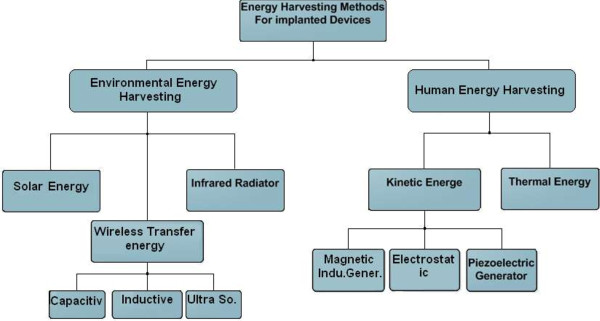
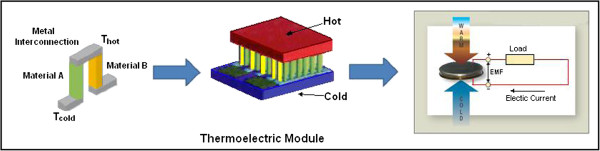
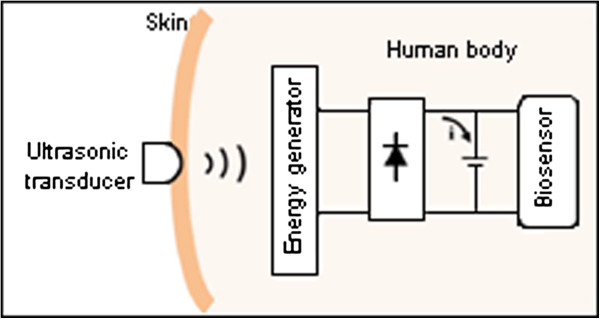
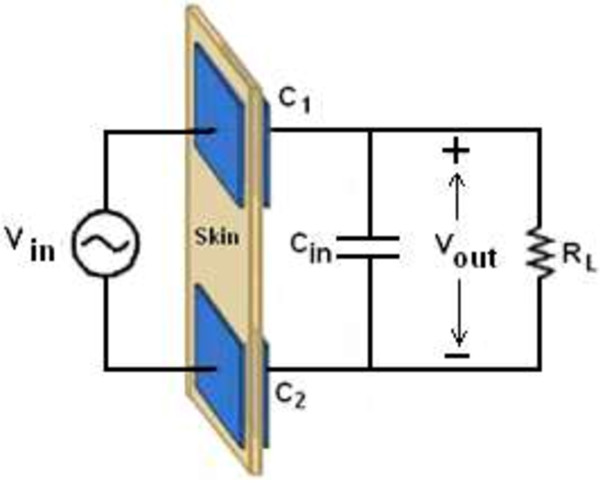
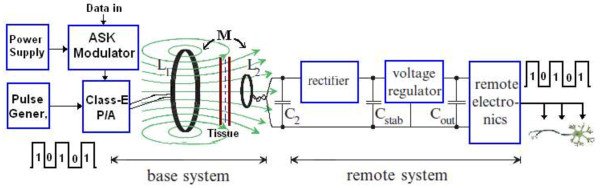
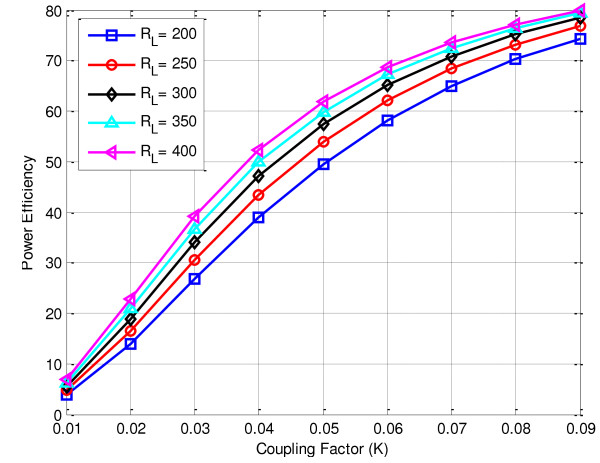
The development of implanted devices is essential because of their direct effect on the lives and safety of humanity. This paper presents the current issues and challenges related to all methods used to harvest energy for implantable biomedical devices. The advantages, disadvantages, and future trends of each method are discussed. The concept of harvesting energy from environmental sources and human body motion for implantable devices has gained a new relevance. In this review, the harvesting kinetic, electromagnetic, thermal and infrared radiant energies are discussed. Current issues and challenges related to the typical applications of these methods for energy harvesting are illustrated. Suggestions and discussion of the progress of research on implantable devices are also provided. This review is expected to increase research efforts to develop the battery-less implantable devices with reduced over hole size, low power, high efficiency, high data rate, and improved reliability and feasibility. Based on current literature, we believe that the inductive coupling link is the suitable method to be used to power the battery-less devices. Therefore, in this study, the power efficiency of the inductive coupling method is validated by MATLAB based on suggested values. By further researching and improvements, in the future the implantable and portable medical devices are expected to be free of batteries.
植入式设备的发展至关重要,因为它们直接影响着人类的生命和安全。本文介绍了与用于为可植入生物医学设备获取能量的所有方法相关的当前问题和挑战。讨论了每种方法的优缺点和未来趋势。从环境源和人体运动中为可植入设备获取能量的概念具有了新的意义。在这篇综述中,讨论了获取动能、电磁能、热能和红外辐射能的情况。阐述了与这些能量获取方法的典型应用相关的当前问题和挑战。还提供了关于可植入设备研究进展的建议和讨论。这篇综述有望加大研发力度,以开发出孔径更小、低功耗、高效率、高数据速率且可靠性和可行性更高的无电池可植入设备。基于当前文献,我们认为感应耦合链路是为无电池设备供电的合适方法。因此,在本研究中,基于建议值通过MATLAB验证了感应耦合方法的功率效率。通过进一步研究和改进,未来有望使可植入和便携式医疗设备无需电池。