Nelson Martha I, Balmaseda Angel, Kuan Guillermina, Saborio Saira, Lin Xudong, Halpin Rebecca A, Stockwell Timothy B, Wentworth David E, Harris Eva, Gordon Aubree
Fogarty International Center, National Institutes of Health, 16 Center Drive, Building 16, Room 202, Bethesda, MD 20892, USA.
Laboratorio Nacional de Virología, Centro Nacional de Diagnóstico y Referencia, Ministry of Health, Managua, Nicaragua.
Virology. 2014 Aug;462-463:81-90. doi: 10.1016/j.virol.2014.05.025. Epub 2014 Jun 22.
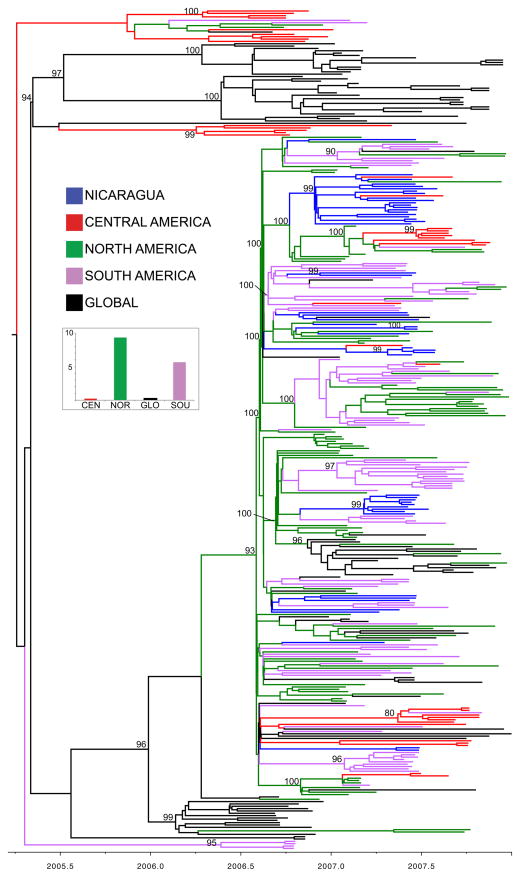
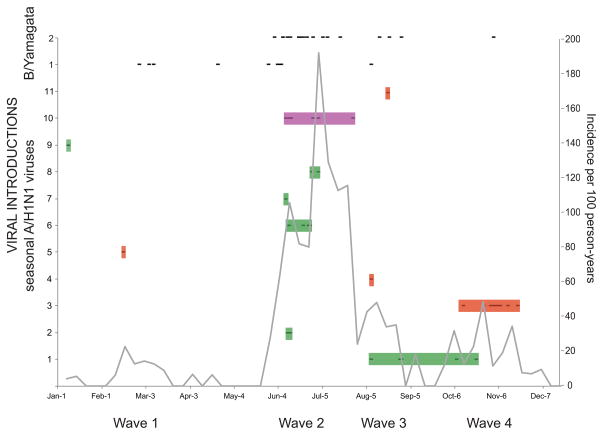
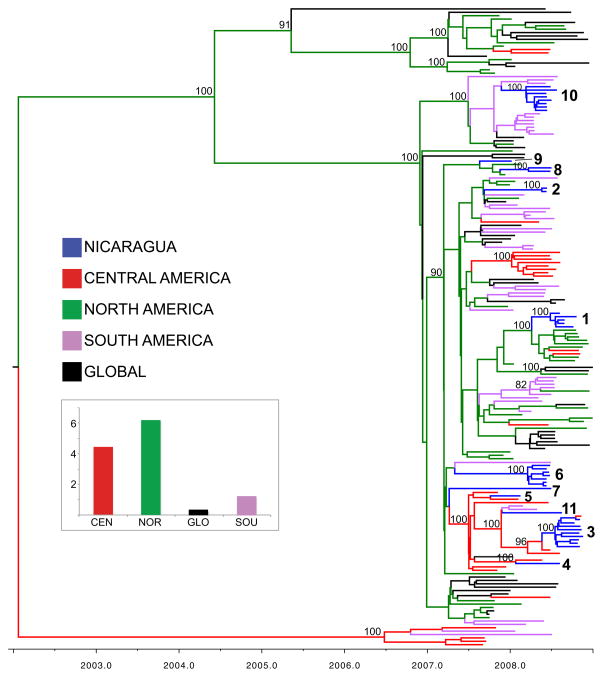
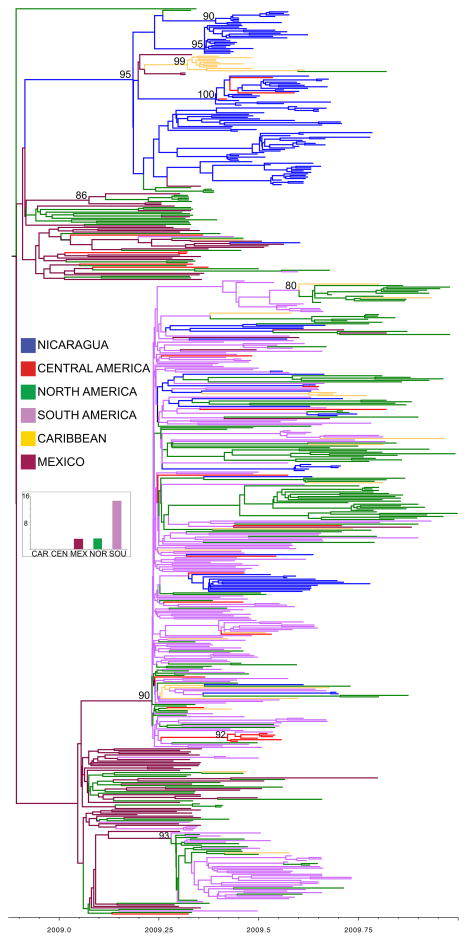
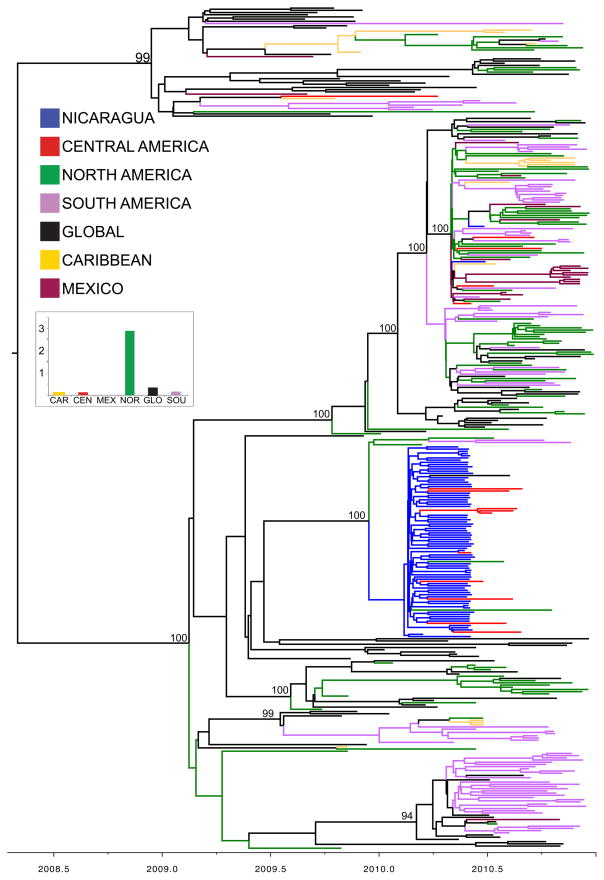
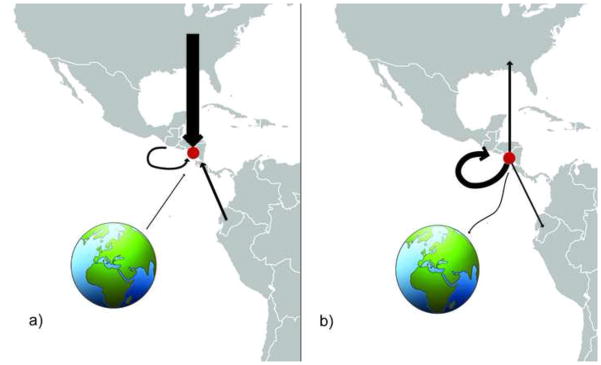
Despite mounting evidence of the high disease burden of influenza in tropical regions, relatively little viral sequence data is available from tropical countries in the Western hemisphere. To understand the evolutionary dynamics of influenza A and B viruses in Managua, Nicaragua, we performed a phylogenetic analysis of 1956 influenza viruses, including 335 collected for this study during 2007-2010 from a population-based cohort in Managua. North America was consistently identified as the most significant source of influenza virus diversity in Managua, although South America and Mexico were important viral sources during the 2009 A/H1N1 pandemic. The low number of viral introductions of Central American origin may reflect differences in the seasonality of influenza in Nicaragua versus neighboring countries, and underscores the need for additional data in this understudied region.
尽管越来越多的证据表明热带地区流感的疾病负担很高,但西半球热带国家的病毒序列数据相对较少。为了解尼加拉瓜马那瓜甲型和乙型流感病毒的进化动态,我们对1956株流感病毒进行了系统发育分析,其中包括2007年至2010年期间从马那瓜一个基于人群的队列中收集的用于本研究的335株病毒。北美一直被认为是马那瓜流感病毒多样性的最重要来源,尽管在2009年甲型H1N1流感大流行期间,南美和墨西哥也是重要的病毒来源。中美洲起源的病毒引入数量较少,这可能反映了尼加拉瓜与邻国流感季节性的差异,并强调了在这个研究不足的地区需要更多数据。