Gschwind Yves J, Eichberg Sabine, Marston Hannah R, Ejupi Andreas, Rosario Helios de, Kroll Michael, Drobics Mario, Annegarn Janneke, Wieching Rainer, Lord Stephen R, Aal Konstantin, Delbaere Kim
Neuroscience Research Australia, University of New South Wales, Barker Street, Randwick, Sydney, New South Wales 2031, Australia.
BMC Geriatr. 2014 Aug 20;14:91. doi: 10.1186/1471-2318-14-91.
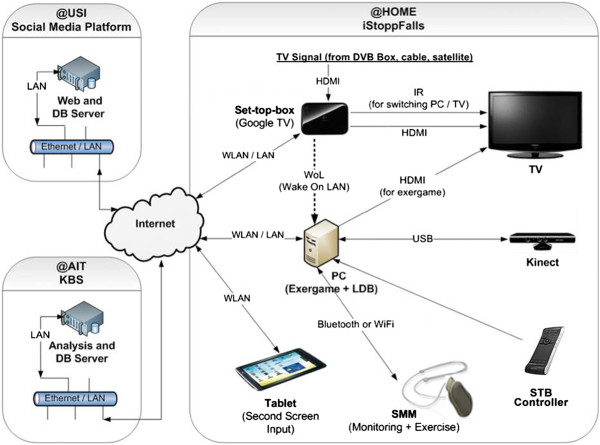
Falls are very common, especially in adults aged 65 years and older. Within the current international European Commission's Seventh Framework Program (FP7) project 'iStoppFalls' an Information and Communication Technology (ICT) based system has been developed to regularly assess a person's risk of falling in their own home and to deliver an individual and tailored home-based exercise and education program for fall prevention. The primary aims of iStoppFalls are to assess the feasibility and acceptability of the intervention program, and its effectiveness to improve balance, muscle strength and quality of life in older people.
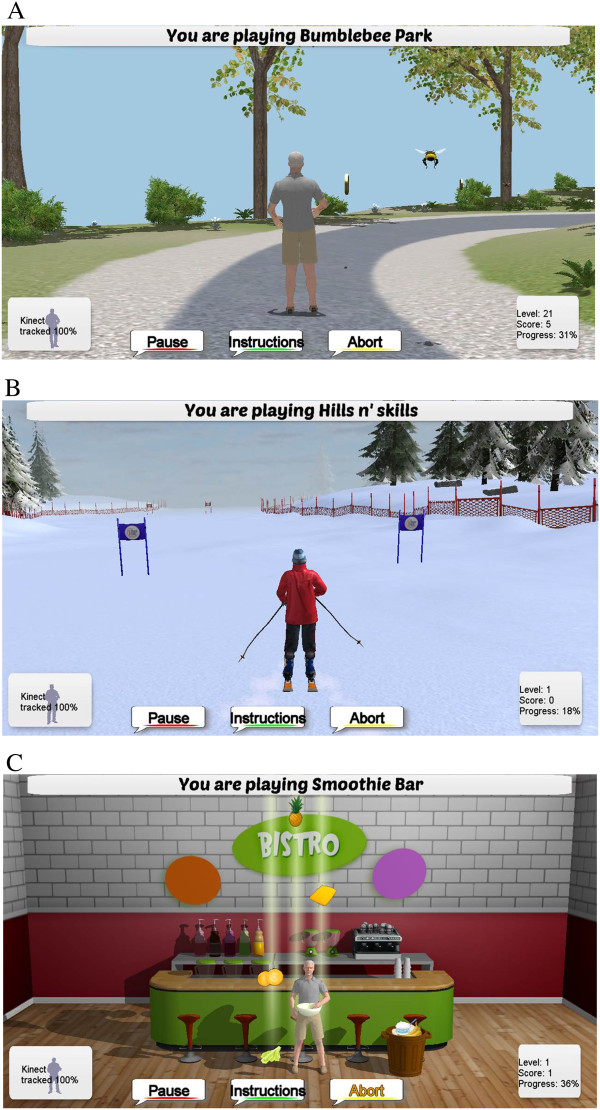
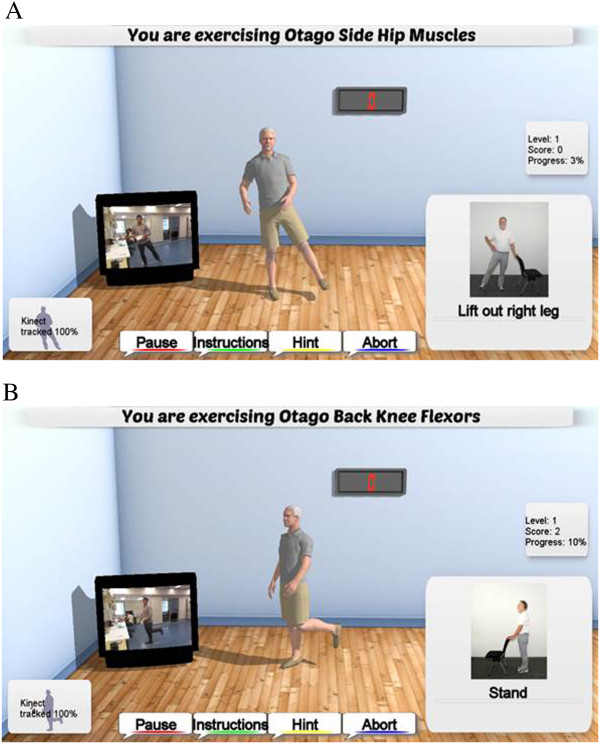
METHODS/DESIGN: This international, multicenter study is designed as a single-blinded, two-group randomized controlled trial. A total of 160 community-dwelling older people aged 65 years and older will be recruited in Germany (n = 60), Spain (n = 40), and Australia (n = 60) between November 2013 and May 2014. Participants in the intervention group will conduct a 16-week exercise program using the iStoppFalls system through their television set at home. Participants are encouraged to exercise for a total duration of 180 minutes per week. The training program consists of a variety of balance and strength exercises in the form of video games using exergame technology. Educational material about a healthy lifestyle will be provided to each participant. Final reassessments will be conducted after 16 weeks. The assessments include physical and cognitive tests as well as questionnaires assessing health, fear of falling, quality of life and psychosocial determinants. Falls will be followed up for six months by monthly falls calendars.
We hypothesize that the regular use of this newly developed ICT-based system for fall prevention at home is feasible for older people. By using the iStoppFalls sensor-based exercise program, older people are expected to improve in balance and strength outcomes. In addition, the exercise training may have a positive impact on quality of life by reducing the risk of falls. Taken together with expected cognitive improvements, the individual approach of the iStoppFalls program may provide an effective model for fall prevention in older people who prefer to exercise at home.
Australian New Zealand Clinical Trials Registry Trial ID: ACTRN12614000096651.International Standard Randomised Controlled Trial Number: ISRCTN15932647.
跌倒非常常见,尤其是在65岁及以上的成年人中。在当前欧盟委员会第七框架计划(FP7)项目“iStoppFalls”中,已开发出一种基于信息通信技术(ICT)的系统,用于定期评估人们在家中跌倒的风险,并提供个性化的居家预防跌倒锻炼和教育计划。iStoppFalls的主要目标是评估干预计划的可行性和可接受性,以及其改善老年人平衡能力、肌肉力量和生活质量的有效性。
方法/设计:这项国际多中心研究设计为单盲、两组随机对照试验。2013年11月至2014年5月期间,将在德国(n = 60)、西班牙(n = 40)和澳大利亚(n = 60)招募总共160名65岁及以上的社区居住老年人。干预组的参与者将通过家中的电视机使用iStoppFalls系统进行为期16周的锻炼计划。鼓励参与者每周总共锻炼180分钟。培训计划包括各种以使用体感游戏技术的视频游戏形式进行的平衡和力量锻炼。将向每位参与者提供有关健康生活方式的教育材料。16周后进行最终重新评估。评估包括身体和认知测试以及评估健康状况、跌倒恐惧、生活质量和心理社会决定因素的问卷。通过每月的跌倒日历对跌倒情况进行为期六个月的随访。
我们假设,对于老年人来说,在家中定期使用这种新开发的基于ICT的预防跌倒系统是可行的。通过使用基于iStoppFalls传感器的锻炼计划,预计老年人的平衡和力量指标会有所改善。此外,锻炼训练可能通过降低跌倒风险对生活质量产生积极影响。结合预期的认知改善,iStoppFalls计划的个性化方法可能为更喜欢在家中锻炼的老年人提供一种有效的预防跌倒模式。
澳大利亚新西兰临床试验注册中心试验编号:ACTRN12614000096651。国际标准随机对照试验编号:ISRCTN15932647。