Vaziri Daryoush D, Aal Konstantin, Ogonowski Corinna, Von Rekowski Thomas, Kroll Michael, Marston Hannah R, Poveda Rakel, Gschwind Yves J, Delbaere Kim, Wieching Rainer, Wulf Volker
Institute for Information Systems, University of Siegen, Kohlbettstr. 15, 57072 Siegen, Germany.
Institute of Movement and Sport Gerontology, German Sport University Cologne, Am Sportpark Muengersdorf 6, 50933 Cologne, Germany.
Eur Rev Aging Phys Act. 2016 Jun 10;13:6. doi: 10.1186/s11556-016-0165-z. eCollection 2016.
Falls are common in older adults and can result in serious injuries. Due to demographic changes, falls and related healthcare costs are likely to increase over the next years. Participation and motivation of older adults in fall prevention measures remain a challenge. The iStoppFalls project developed an information and communication technology (ICT)-based system for older adults to use at home in order to reduce common fall risk factors such as impaired balance and muscle weakness. The system aims at increasing older adults' motivation to participate in ICT-based fall prevention measures. This article reports on usability, user-experience and user-acceptance aspects affecting the use of the iStoppFalls system by older adults.
In the course of a 16-week international multicenter study, 153 community-dwelling older adults aged 65+ participated in the iStoppFalls randomized controlled trial, of which half used the system in their home to exercise and assess their risk of falling. During the study, 60 participants completed questionnaires regarding the usability, user experience and user acceptance of the iStoppFalls system. Usability was measured with the System Usability Scale (SUS). For user experience the Physical Activity Enjoyment Scale (PACES) was applied. User acceptance was assessed with the Dynamic Acceptance Model for the Re-evaluation of Technologies (DART). To collect more detailed data on usability, user experience and user acceptance, additional qualitative interviews and observations were conducted with participants.
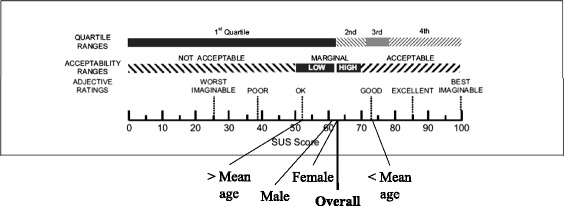
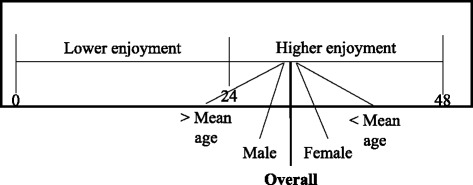
Participants evaluated the usability of the system with an overall score of 62 (Standard Deviation, SD 15.58) out of 100, which suggests good usability. Most users enjoyed the iStoppFalls games and assessments, as shown by the overall PACES score of 31 (SD 8.03). With a score of 0.87 (SD 0.26), user acceptance results showed that participants accepted the iStoppFalls system for use in their own home. Interview data suggested that certain factors such as motivation, complexity or graphical design were different for gender and age.
The results suggest that the iStoppFalls system has good usability, user experience and user acceptance. It will be important to take these along with factors such as motivation, gender and age into consideration when designing and further developing ICT-based fall prevention systems.
跌倒在老年人中很常见,可能导致严重伤害。由于人口结构变化,未来几年跌倒及相关医疗费用可能会增加。老年人参与和积极采取预防跌倒措施仍然是一项挑战。iStoppFalls项目开发了一种基于信息通信技术(ICT)的系统,供老年人在家中使用,以减少常见的跌倒风险因素,如平衡能力受损和肌肉无力。该系统旨在提高老年人参与基于ICT的预防跌倒措施的积极性。本文报告了影响老年人使用iStoppFalls系统的可用性、用户体验和用户接受度方面的情况。
在一项为期16周的国际多中心研究过程中,153名65岁及以上的社区居住老年人参与了iStoppFalls随机对照试验,其中一半人在家中使用该系统进行锻炼并评估自己的跌倒风险。在研究期间,60名参与者完成了关于iStoppFalls系统可用性、用户体验和用户接受度的问卷调查。可用性用系统可用性量表(SUS)进行测量。对于用户体验,应用了身体活动享受量表(PACES)。用户接受度通过技术重新评估动态接受模型(DART)进行评估。为了收集关于可用性、用户体验和用户接受度的更详细数据,还对参与者进行了额外的定性访谈和观察。
参与者对该系统可用性的总体评分为62分(标准差,SD 15.58)(满分100分),这表明可用性良好。如PACES总体评分为31分(SD 8.03)所示,大多数用户喜欢iStoppFalls游戏和评估。用户接受度得分为0.87(SD 0.26),结果表明参与者接受iStoppFalls系统在自己家中使用。访谈数据表明,动机、复杂性或图形设计等某些因素在性别和年龄方面存在差异。
结果表明,iStoppFalls系统具有良好的可用性、用户体验和用户接受度。在设计和进一步开发基于ICT的预防跌倒系统时,将这些因素与动机、性别和年龄等因素一并考虑非常重要。