Ayloo Swathi, Lazarus Jacob E, Dodda Aditya, Tokito Mariko, Ostap E Michael, Holzbaur Erika L F
1] Department of Physiology and the Pennsylvania Muscle Institute, Perelman School of Medicine at the University of Pennsylvania, Philadelphia, Pennsylvania 19104-6085, USA [2] Department of Biology Graduate Group, School of Arts and Sciences at the University of Pennsylvania, Philadelphia, Pennsylvania 19104-6085, USA.
Department of Physiology and the Pennsylvania Muscle Institute, Perelman School of Medicine at the University of Pennsylvania, Philadelphia, Pennsylvania 19104-6085, USA.
Nat Commun. 2014 Sep 4;5:4807. doi: 10.1038/ncomms5807.
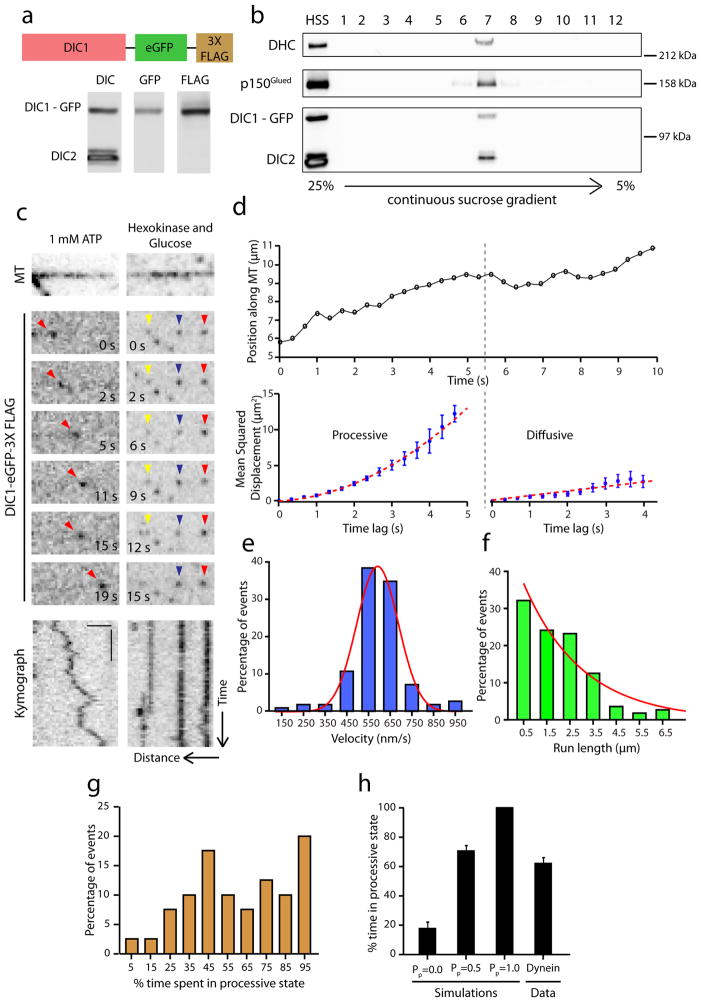
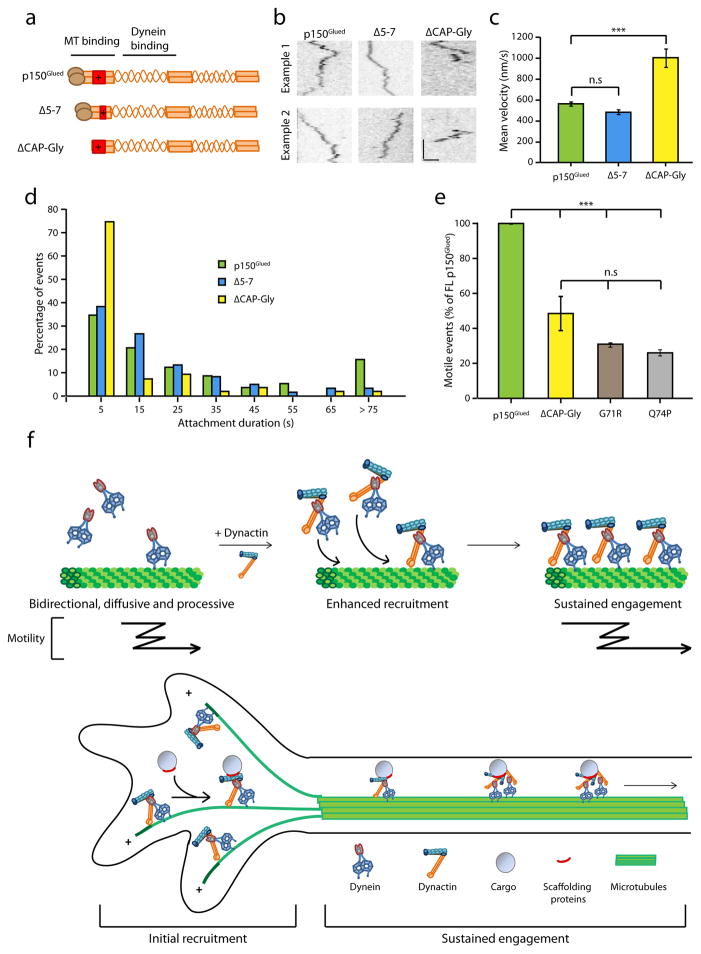
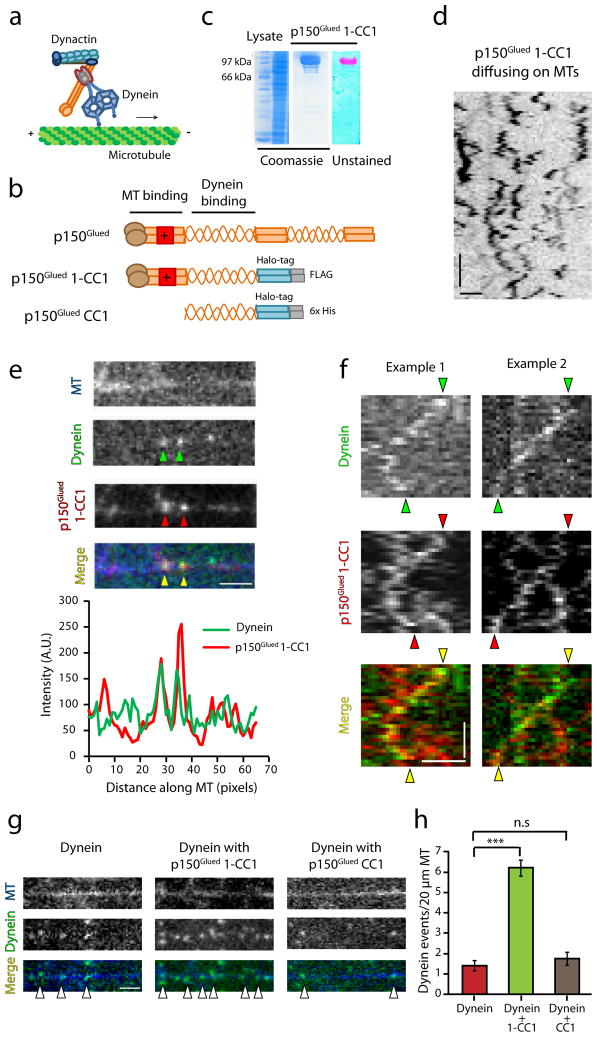
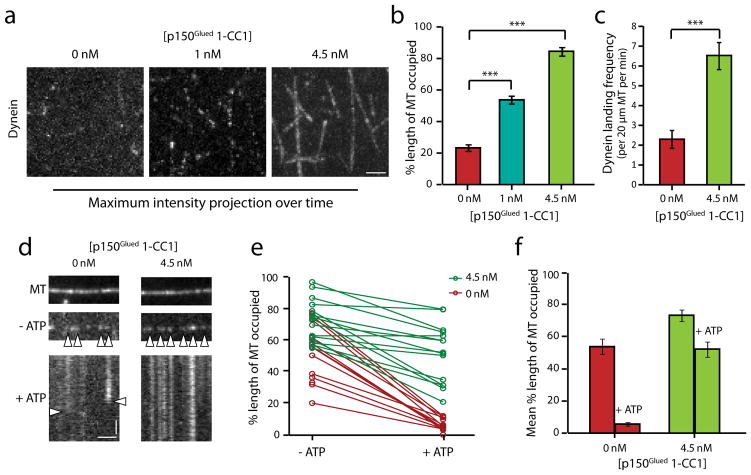
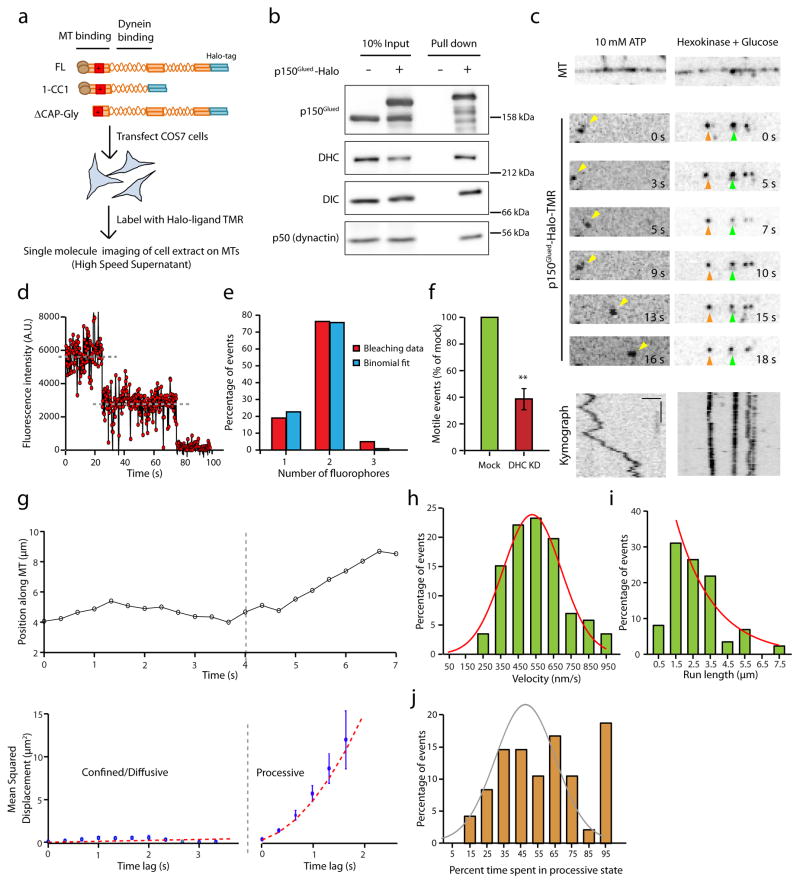
Dynactin is an essential cofactor for most cellular functions of the microtubule motor cytoplasmic dynein, but the mechanism by which dynactin activates dynein remains unclear. Here we use single molecule approaches to investigate dynein regulation by the dynactin subunit p150(Glued). We investigate the formation and motility of a dynein-p150(Glued) co-complex using dual-colour total internal reflection fluorescence microscopy. p150(Glued) recruits and tethers dynein to the microtubule in a concentration-dependent manner. Single molecule imaging of motility in cell extracts demonstrates that the CAP-Gly domain of p150(Glued) decreases the detachment rate of the dynein-dynactin complex from the microtubule and also acts as a brake to slow the dynein motor. Consistent with this important role, two neurodegenerative disease-causing mutations in the CAP-Gly domain abrogate these functions in our assays. Together, these observations support a model in which dynactin enhances the initial recruitment of dynein onto microtubules and promotes the sustained engagement of dynein with its cytoskeletal track.
动力蛋白激活蛋白是微管马达胞质动力蛋白大多数细胞功能所必需的辅助因子,但动力蛋白激活蛋白激活动力蛋白的机制仍不清楚。在这里,我们使用单分子方法来研究动力蛋白激活蛋白亚基p150(Glued)对动力蛋白的调节作用。我们使用双色全内反射荧光显微镜研究动力蛋白-p150(Glued)共复合物的形成和运动。p150(Glued)以浓度依赖的方式将动力蛋白招募并拴系到微管上。细胞提取物中运动的单分子成像表明,p150(Glued)的CAP-Gly结构域降低了动力蛋白-动力蛋白激活蛋白复合物从微管上的脱离速率,并且还起到制动器的作用来减缓动力蛋白马达。与这一重要作用一致,CAP-Gly结构域中的两个导致神经退行性疾病的突变在我们的实验中消除了这些功能。总之,这些观察结果支持了一个模型,即动力蛋白激活蛋白增强动力蛋白最初在微管上的招募,并促进动力蛋白与其细胞骨架轨道的持续结合。