Vento-Tormo Roser, Rodríguez-Ubreva Javier, Lisio Lorena Di, Islam Abul B M M K, Urquiza Jose M, Hernando Henar, López-Bigas Nuria, Shannon-Lowe Claire, Martínez Nerea, Montes-Moreno Santiago, Piris Miguel A, Ballestar Esteban
Chromatin and Disease Group, Cancer Epigenetics and Biology Programme (PEBC), Bellvitge Biomedical Research Institute (IDIBELL), 08908 L'Hospitalet de Llobregat, Barcelona, Spain.
Pathology Department, Hospital Universitario Marques de Valdecilla, Cancer Genomics, IFIMAV, 39008 Santander, Spain.
Nucleic Acids Res. 2014;42(17):11025-39. doi: 10.1093/nar/gku826. Epub 2014 Sep 8.
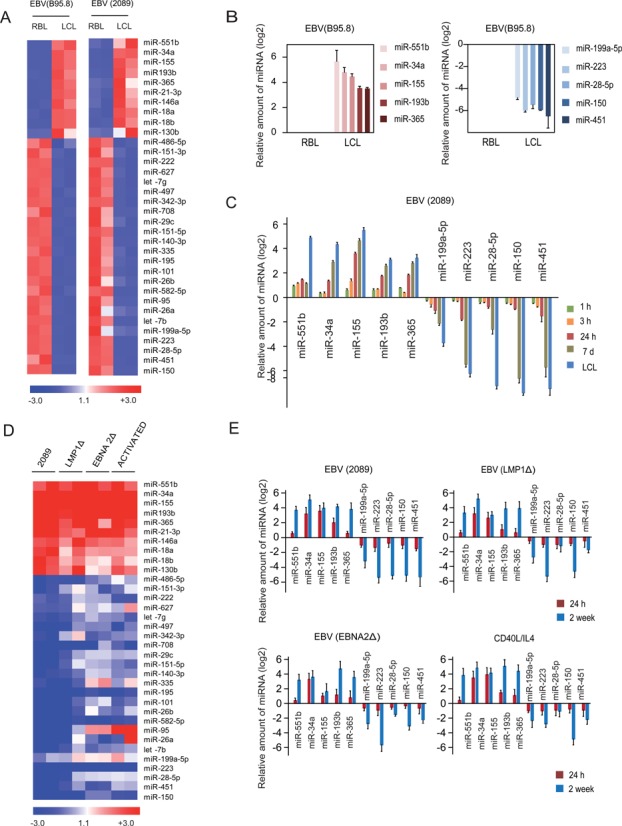
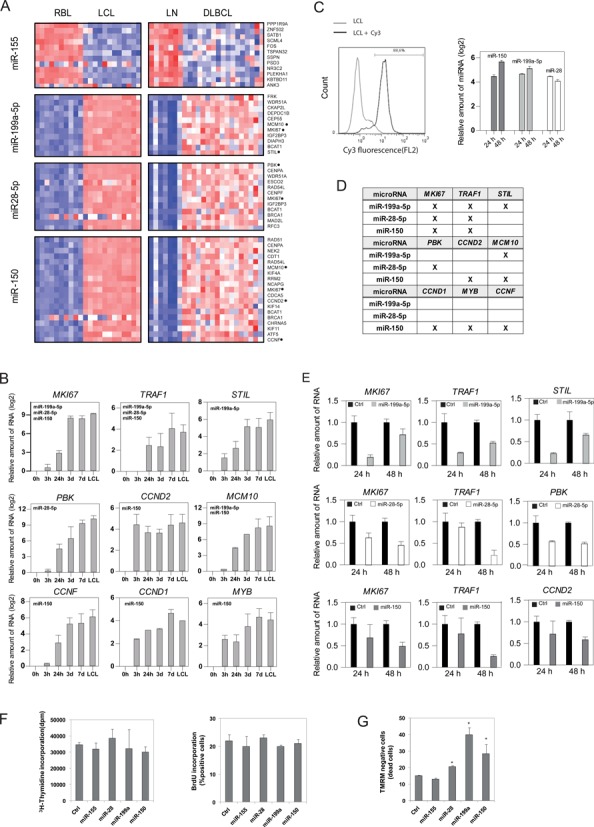
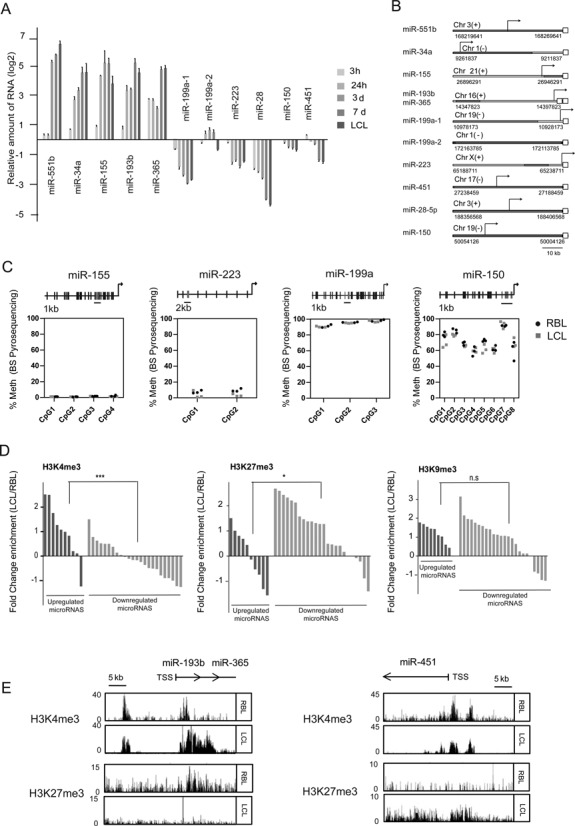
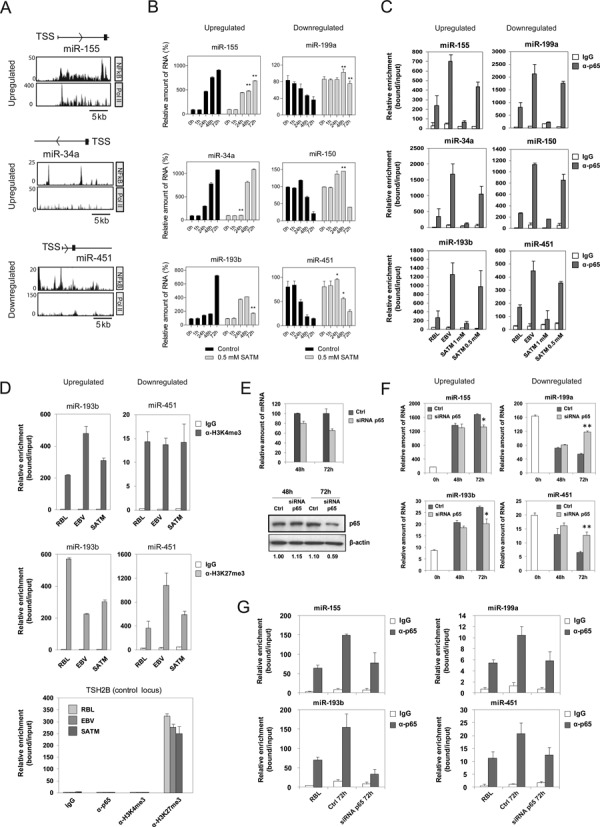
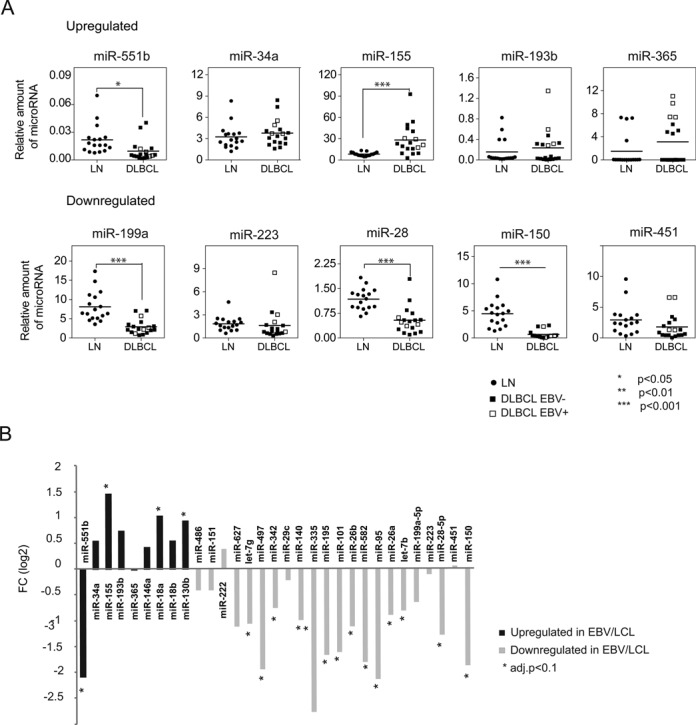
MicroRNAs (miRNAs) have negative effects on gene expression and are major players in cell function in normal and pathological conditions. Epstein-Barr virus (EBV) infection of resting B lymphocytes results in their growth transformation and associates with different B cell lymphomas. EBV-mediated B cell transformation involves large changes in gene expression, including cellular miRNAs. We performed miRNA expression analysis in growth transformation of EBV-infected B cells. We observed predominant downregulation of miRNAs and upregulation of a few miRNAs. We observed similar profiles of miRNA expression in B cells stimulated with CD40L/IL-4, and those infected with EBNA-2- and LMP-1-deficient EBV particles, suggesting the implication of the NF-kB pathway, common to all four situations. In fact, the NF-kB subunit p65 associates with the transcription start site (TSS) of both upregulated and downregulated miRNAs following EBV infection This occurs together with changes at histone H3K27me3 and histone H3K4me3. Inhibition of the NF-kB pathway impairs changes in miRNA expression, NF-kB binding and changes at the above histone modifications near the TSS of these miRNA genes. Changes in expression of these miRNAs also occurred in diffuse large B cell lymphomas (DLBCL), which are strongly NF-kB dependent. Our results highlight the relevance of the NF-kB pathway in epigenetically mediated miRNA control in B cell transformation and DLBCL.
微小RNA(miRNA)对基因表达具有负面影响,是正常和病理条件下细胞功能的主要参与者。爱泼斯坦-巴尔病毒(EBV)感染静止的B淋巴细胞会导致其生长转化,并与不同的B细胞淋巴瘤相关。EBV介导的B细胞转化涉及基因表达的巨大变化,包括细胞miRNA。我们对EBV感染的B细胞生长转化过程中的miRNA表达进行了分析。我们观察到miRNA主要下调,少数miRNA上调。我们在CD40L/IL-4刺激的B细胞以及感染EBNA-2和LMP-1缺陷型EBV颗粒的B细胞中观察到了相似的miRNA表达谱,这表明NF-κB通路在这四种情况中均有涉及。事实上,NF-κB亚基p65在EBV感染后与上调和下调的miRNA的转录起始位点(TSS)结合。这一过程伴随着组蛋白H3K27me3和组蛋白H3K4me3的变化。抑制NF-κB通路会损害miRNA表达、NF-κB结合以及这些miRNA基因TSS附近上述组蛋白修饰的变化。这些miRNA的表达变化也发生在弥漫性大B细胞淋巴瘤(DLBCL)中,DLBCL强烈依赖NF-κB。我们的结果突出了NF-κB通路在B细胞转化和DLBCL中表观遗传介导的miRNA调控中的相关性。