Mauss Daniel, Li Jian, Schmidt Burkhard, Angerer Peter, Jarczok Marc N
Mannheim Institute of Public Health, Social and Preventive Medicine, Medical Faculty Mannheim, Heidelberg University, Germany; Occupational Health Services, Allianz Germany, Germany.
Ind Health. 2015;53(1):5-20. doi: 10.2486/indhealth.2014-0122. Epub 2014 Sep 13.
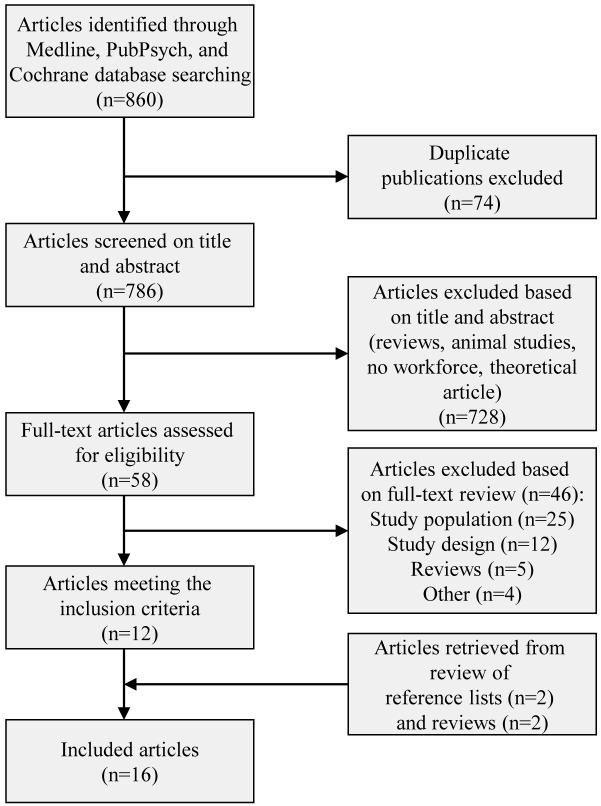
The Allostatic Load Index (ALI) has been used to establish associations between stress and health-related outcomes. This review summarizes the measurement and methodological challenges of allostatic load in occupational settings. Databases of Medline, PubPsych, and Cochrane were searched to systematically explore studies measuring ALI in working adults following the PRISMA statement. Study characteristics, biomarkers and methods were tabulated. Methodological quality was evaluated using a standardized checklist. Sixteen articles (2003-2013) met the inclusion criteria, with a total of 39 (range 6-17) different variables used to calculate ALI. Substantial heterogeneity was observed in the number and type of biomarkers used, the analytic techniques applied and study quality. Particularly, primary mediators were not regularly included in ALI calculation. Consensus on methods to measure ALI in working populations is limited. Research should include longitudinal studies using multi-systemic variables to measure employees at risk for biological wear and tear.
应激负荷指数(ALI)已被用于建立压力与健康相关结果之间的关联。本综述总结了职业环境中应激负荷的测量及方法学挑战。检索了Medline、PubPsych和Cochrane数据库,以按照系统评价和Meta分析的首选报告项目(PRISMA)声明,系统地探索测量在职成年人ALI的研究。将研究特征、生物标志物和方法制成表格。使用标准化清单评估方法学质量。16篇文章(2003 - 2013年)符合纳入标准,共有39个(范围6 - 17个)不同变量用于计算ALI。在所用生物标志物的数量和类型、应用的分析技术以及研究质量方面观察到了很大的异质性。特别是,主要中介因素未经常纳入ALI计算。在测量在职人群ALI的方法上,共识有限。研究应包括使用多系统变量的纵向研究,以测量有生物磨损风险的员工。