Wang Xingya, Chrysovergis Kali, Kosak Justin, Kissling Grace, Streicker Mike, Moser Glenda, Li Ruifang, Eling Thomas E
Laboratory of Molecular Carcinogenesis,National Institute of Environmental Health Sciences (NIEHS), Research Triangle Park NC 27709, USA. College of Pharmaceutical Sciences, Zhejiang Chinese Medical University, Zhejiang, China 310053.
Laboratory of Molecular Carcinogenesis,National Institute of Environmental Health Sciences (NIEHS), Research Triangle Park NC 27709, USA.
Aging (Albany NY). 2014 Aug;6(8):690-704. doi: 10.18632/aging.100687.
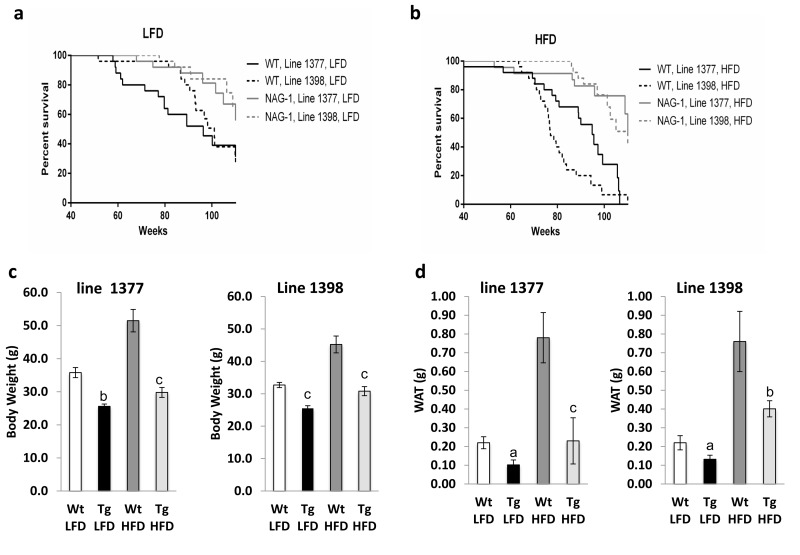
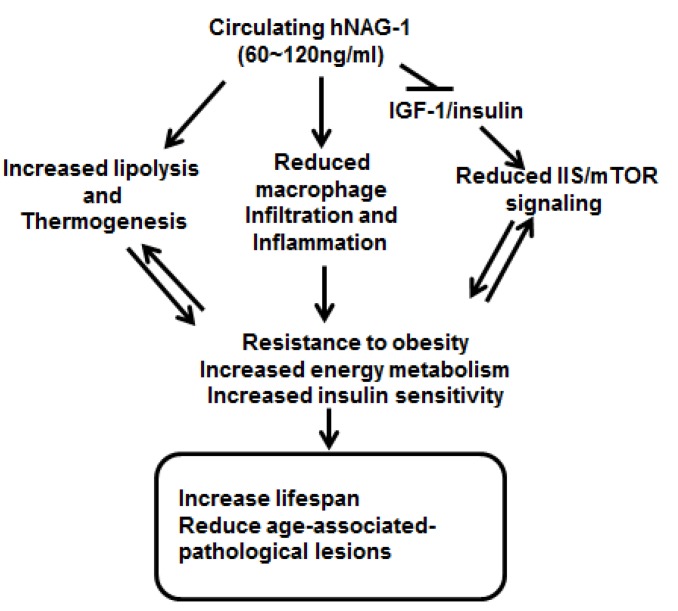
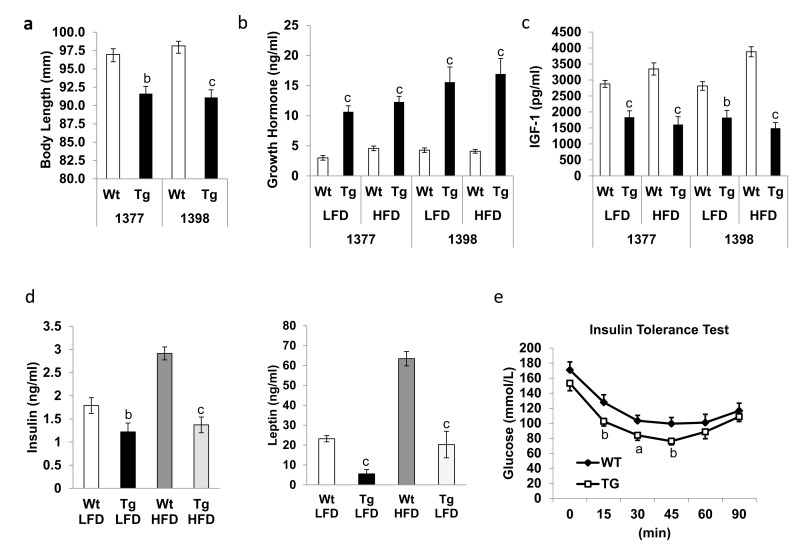
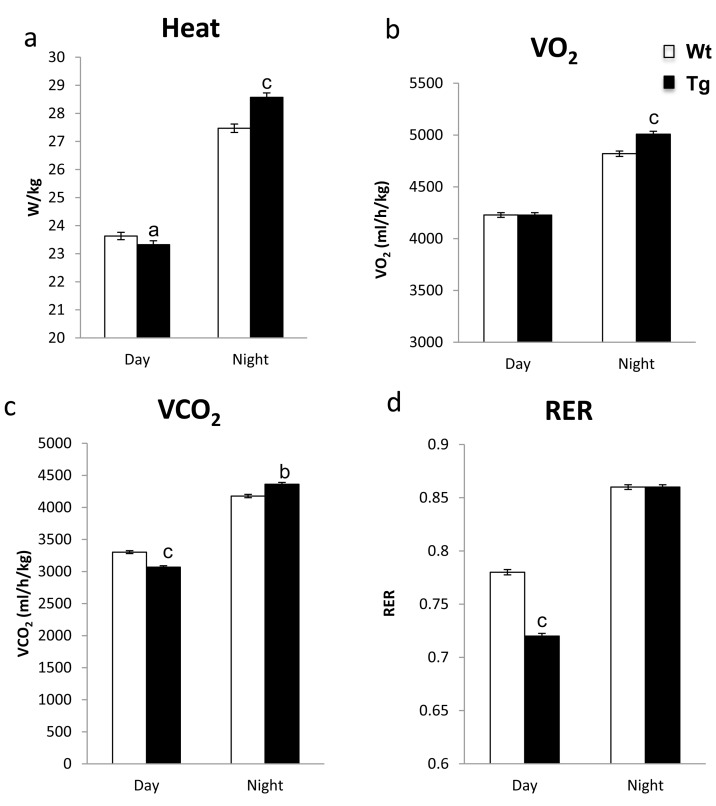
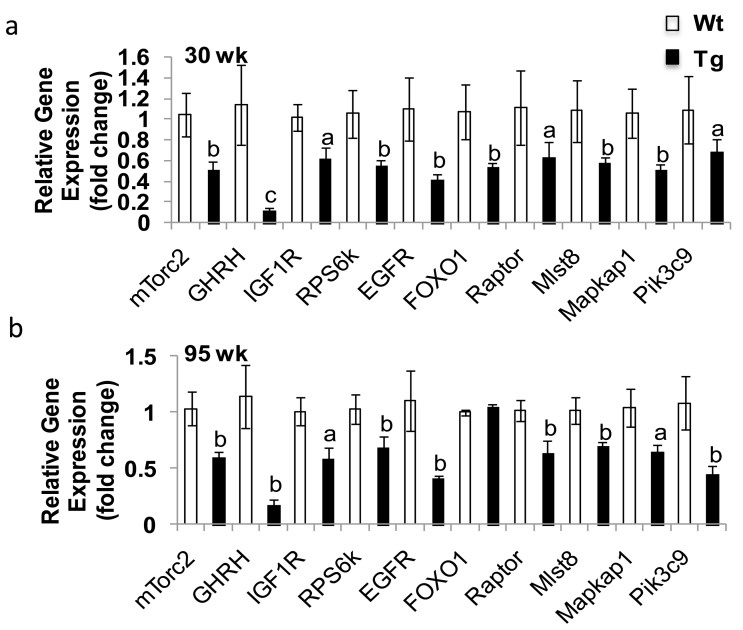
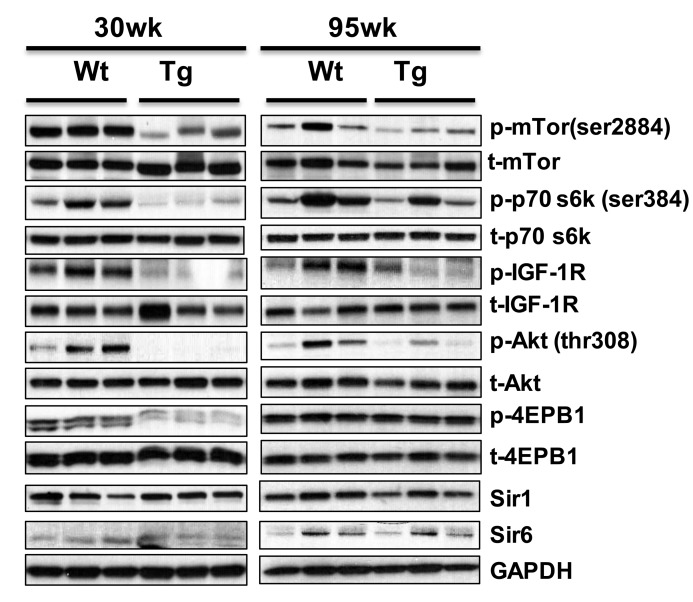
Nonsteroidal anti-inflammatory drug-activated gene (NAG-1) or GDF15 is a divergent member of the transforming growth factor beta (TGF-β) superfamily and mice expressing hNAG-1/hGDF15 have been shown to be resistant to HFD-induced obesity and inflammation. This study investigated if hNAG-1 increases lifespan in mice and its potential mechanisms. Here we report that female hNAG-1 mice had significantly increased both mean and median life spans in two transgenic lines, with a larger difference in life spans in mice on a HFD than on low fat diet. hNAG-1 mice displayed significantly reduced body and adipose tissue weight, lowered serum IGF-1, insulin and glucose levels, improved insulin sensitivity, and increased oxygen utilization, oxidative metabolism and energy expenditure. Gene expression analysis revealed significant differences in conserved gene pathways that are important regulators of longevity, including IGF-1, p70S6K, and PI3K/Akt signaling cascades. Phosphorylation of major components of IGF-1/mTOR signaling pathway was significantly lower in hNAG-1mice. Collectively, hNAG-1 is an important regulator of mammalian longevity and may act as a survival factor. Our study suggests that hNAG-1 has potential therapeutic uses in obesity-related diseases where life span is frequently shorter.
非甾体抗炎药激活基因(NAG-1)或生长分化因子15(GDF15)是转化生长因子β(TGF-β)超家族中的一个不同成员,已证明表达人NAG-1/人GDF15的小鼠对高脂饮食诱导的肥胖和炎症具有抗性。本研究调查了人NAG-1是否能延长小鼠寿命及其潜在机制。在此我们报告,在两个转基因品系中,雌性人NAG-1小鼠的平均寿命和中位数寿命均显著增加,高脂饮食喂养的小鼠寿命差异比低脂饮食喂养的小鼠更大。人NAG-1小鼠的体重和脂肪组织重量显著降低,血清胰岛素样生长因子-1(IGF-1)、胰岛素和葡萄糖水平降低,胰岛素敏感性提高,氧利用率、氧化代谢和能量消耗增加。基因表达分析显示,在长寿的重要调节因子(包括IGF-1、p70核糖体蛋白S6激酶(p70S6K)和磷脂酰肌醇-3激酶/蛋白激酶B(PI3K/Akt)信号级联)的保守基因途径中存在显著差异。人NAG-1小鼠中IGF-1/哺乳动物雷帕霉素靶蛋白(mTOR)信号通路主要成分的磷酸化水平显著降低。总体而言,人NAG-1是哺乳动物寿命的重要调节因子,可能作为一种生存因子发挥作用。我们的研究表明,人NAG-1在与肥胖相关的疾病(这些疾病中寿命通常较短)中具有潜在的治疗用途。