Pelat Camille, Ferguson Neil M, White Peter J, Reed Carrie, Finelli Lyn, Cauchemez Simon, Fraser Christophe
Am J Epidemiol. 2014 Nov 15;180(10):1036-46. doi: 10.1093/aje/kwu213. Epub 2014 Sep 25.
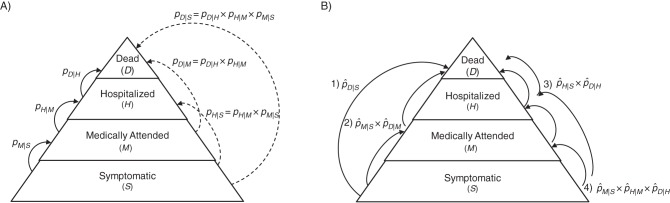
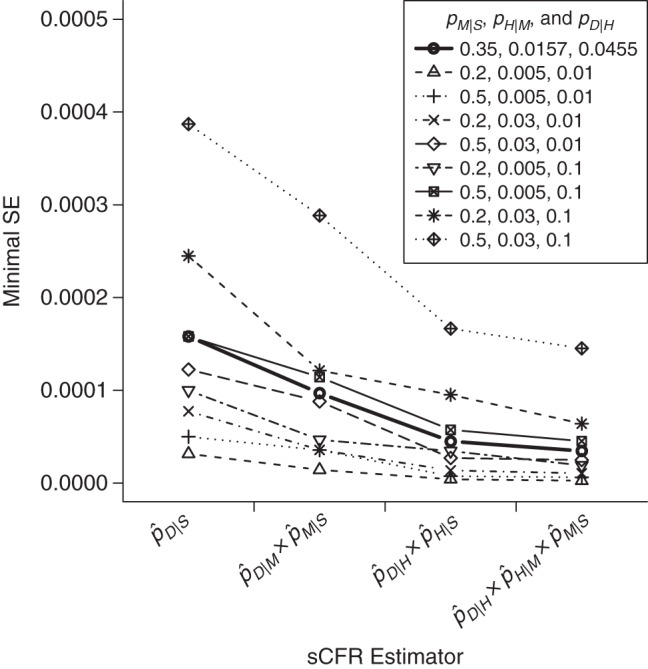
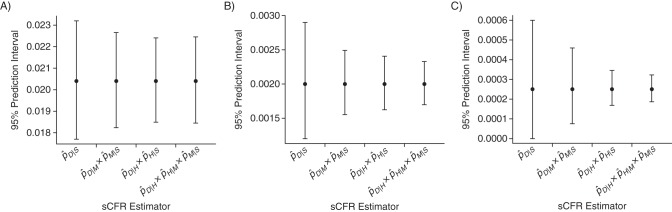
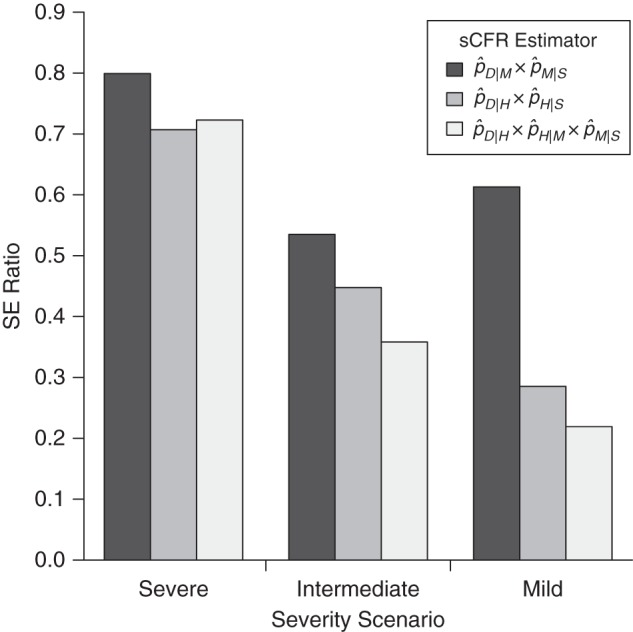
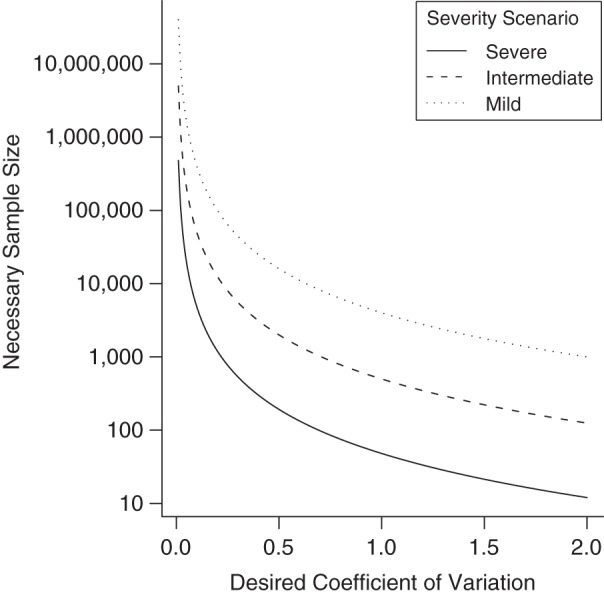
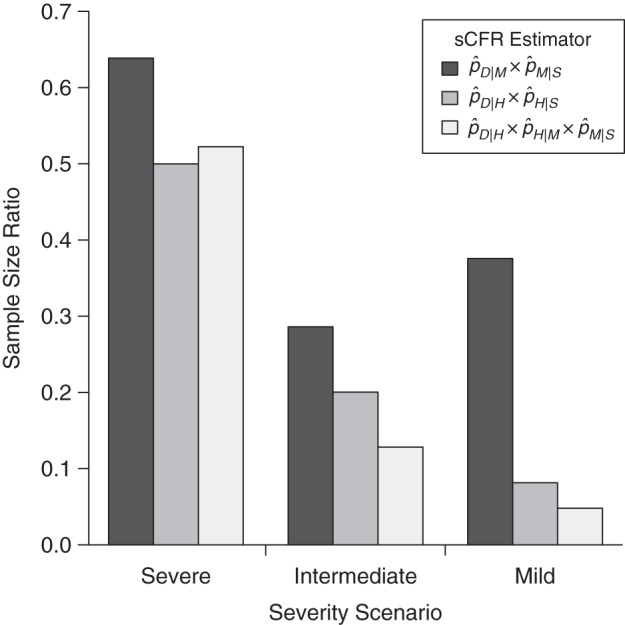
In the management of emerging infectious disease epidemics, precise and accurate estimation of severity indices, such as the probability of death after developing symptoms-the symptomatic case fatality ratio (sCFR)-is essential. Estimation of the sCFR may require merging data gathered through different surveillance systems and surveys. Since different surveillance strategies provide different levels of precision and accuracy, there is need for a theory to help investigators select the strategy that maximizes these properties. Here, we study the precision of sCFR estimators that combine data from several levels of the severity pyramid. We derive a formula for the standard error, which helps us find the estimator with the best precision given fixed resources. We further propose rules of thumb for guiding the choice of strategy: For example, should surveillance of a particular severity level be started? Which level should be preferred? We derive a formula for the optimal allocation of resources between chosen surveillance levels and provide a simple approximation that can be used in thinking more heuristically about planning surveillance. We illustrate these concepts with numerical examples corresponding to 3 influenza pandemic scenarios. Finally, we review the equally important issue of accuracy.
在新发传染病疫情的管理中,精确且准确地估计严重程度指标至关重要,例如出现症状后的死亡概率——即症状性病例死亡率(sCFR)。估计sCFR可能需要整合通过不同监测系统和调查收集的数据。由于不同的监测策略提供的精度和准确性水平不同,因此需要一种理论来帮助研究人员选择能使这些特性最大化的策略。在此,我们研究结合严重程度金字塔多个层级数据的sCFR估计量的精度。我们推导了一个标准误差公式,这有助于我们在给定固定资源的情况下找到精度最佳的估计量。我们还进一步提出了经验法则以指导策略选择:例如,是否应该开始对特定严重程度级别进行监测?应优先选择哪个级别?我们推导了在选定监测级别之间进行资源最优分配的公式,并提供了一个简单的近似值,可用于更直观地思考监测规划。我们用对应3种流感大流行情景的数值示例来说明这些概念。最后,我们审视了同样重要的准确性问题。