Gazzoni Marco, Celadon Nicolò, Mastrapasqua Davide, Paleari Marco, Margaria Valentina, Ariano Paolo
LISiN, Department of Electronics and Telecommunications, Politecnico di Torino, Torino, Italy.
LISiN, Department of Electronics and Telecommunications, Politecnico di Torino, Torino, Italy; Center for Space Human Robotics, Istituto Italiano di Tecnologia, Torino, Italy.
PLoS One. 2014 Oct 7;9(10):e109943. doi: 10.1371/journal.pone.0109943. eCollection 2014.
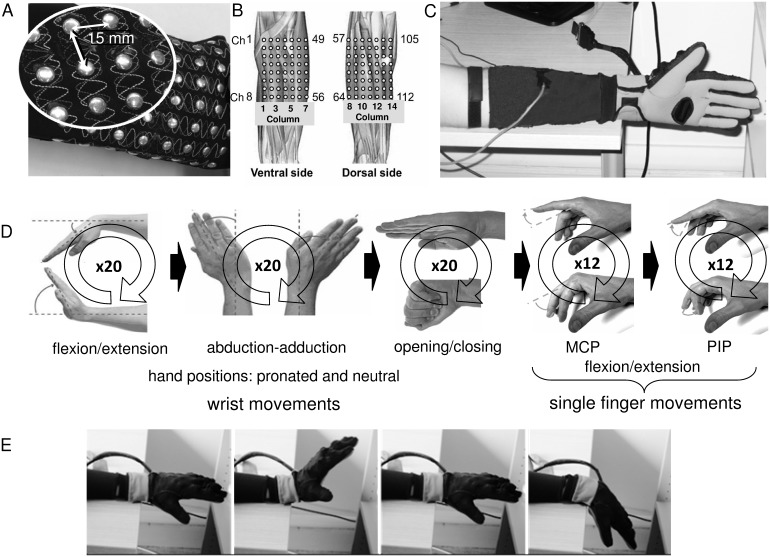
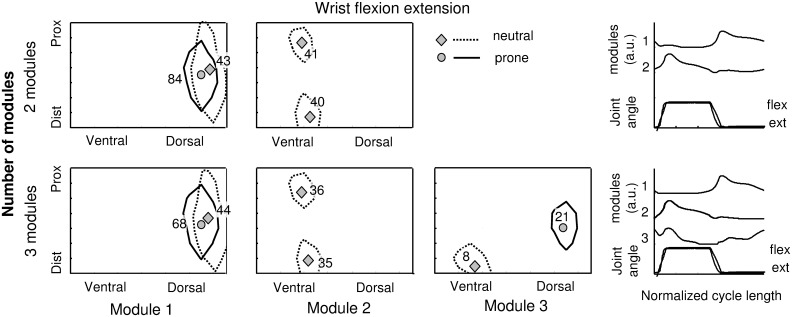
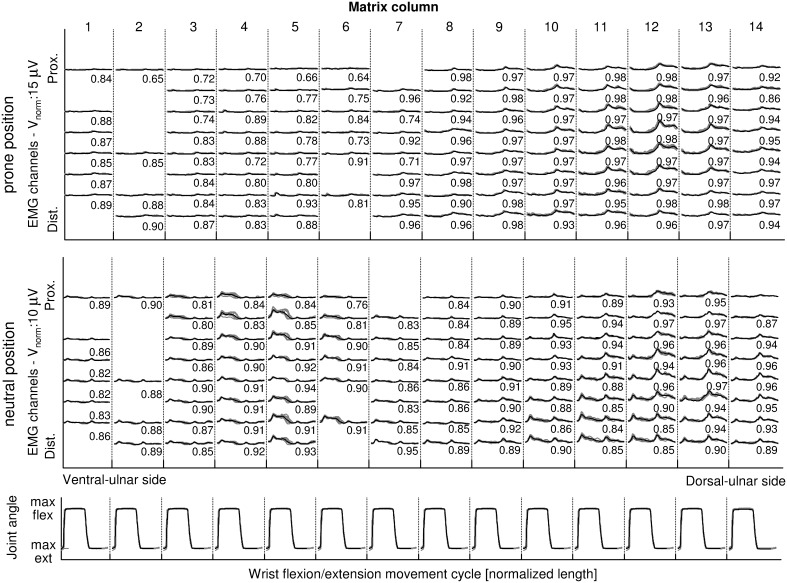
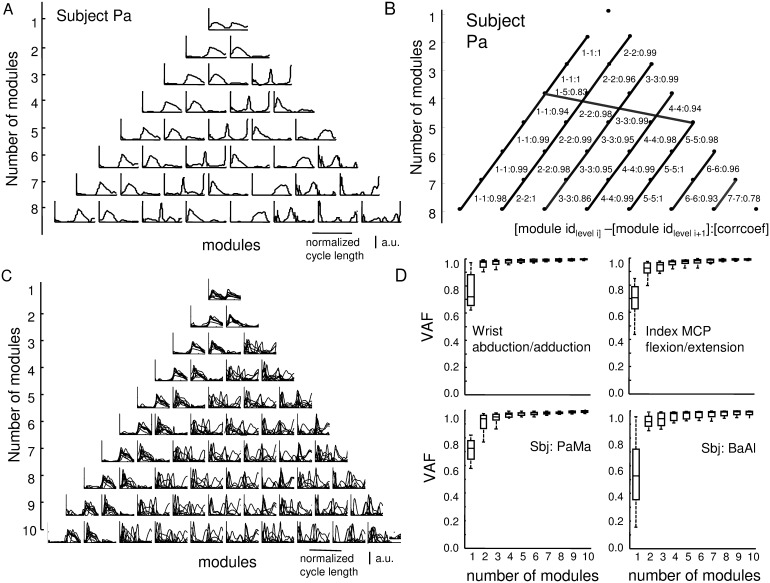
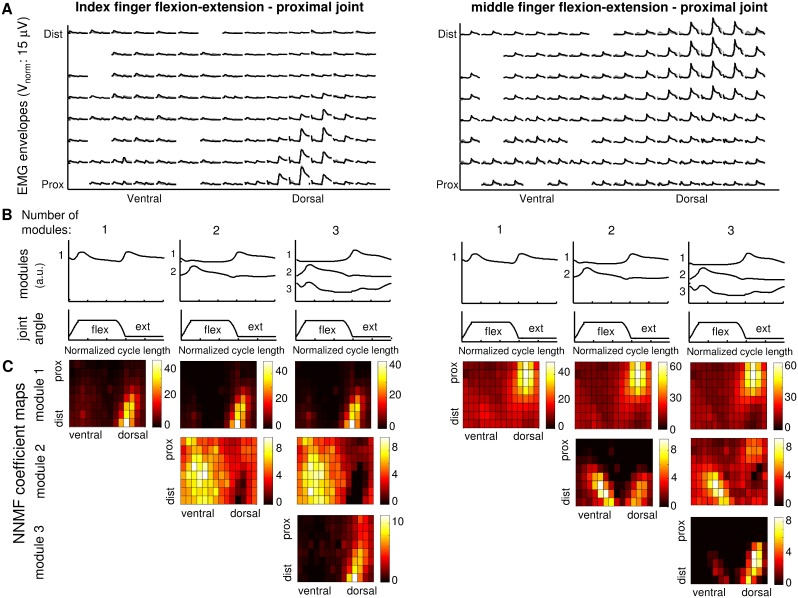
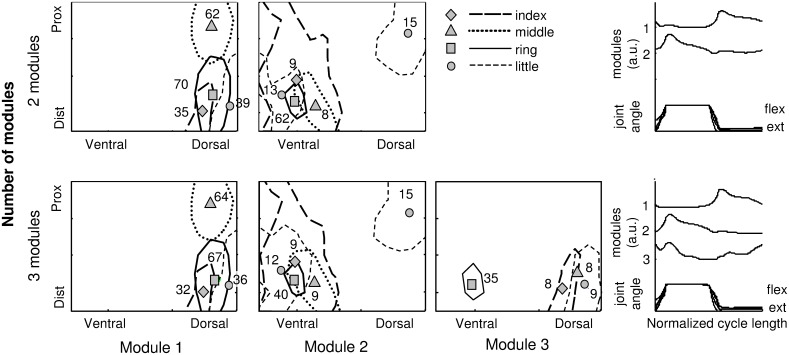
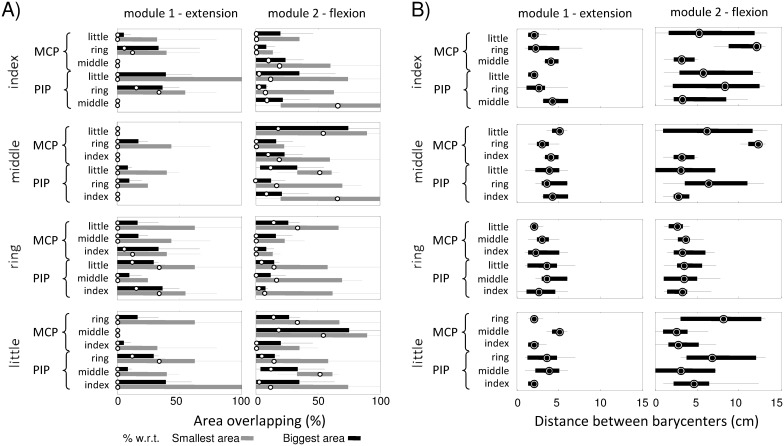
The study of hand and finger movement is an important topic with applications in prosthetics, rehabilitation, and ergonomics. Surface electromyography (sEMG) is the gold standard for the analysis of muscle activation. Previous studies investigated the optimal electrode number and positioning on the forearm to obtain information representative of muscle activation and robust to movements. However, the sEMG spatial distribution on the forearm during hand and finger movements and its changes due to different hand positions has never been quantified. The aim of this work is to quantify 1) the spatial localization of surface EMG activity of distinct forearm muscles during dynamic free movements of wrist and single fingers and 2) the effect of hand position on sEMG activity distribution. The subjects performed cyclic dynamic tasks involving the wrist and the fingers. The wrist tasks and the hand opening/closing task were performed with the hand in prone and neutral positions. A sensorized glove was used for kinematics recording. sEMG signals were acquired from the forearm muscles using a grid of 112 electrodes integrated into a stretchable textile sleeve. The areas of sEMG activity have been identified by a segmentation technique after a data dimensionality reduction step based on Non Negative Matrix Factorization applied to the EMG envelopes. The results show that 1) it is possible to identify distinct areas of sEMG activity on the forearm for different fingers; 2) hand position influences sEMG activity level and spatial distribution. This work gives new quantitative information about sEMG activity distribution on the forearm in healthy subjects and provides a basis for future works on the identification of optimal electrode configuration for sEMG based control of prostheses, exoskeletons, or orthoses. An example of use of this information for the optimization of the detection system for the estimation of joint kinematics from sEMG is reported.
手部和手指运动的研究是一个重要课题,在假肢、康复和人体工程学等领域都有应用。表面肌电图(sEMG)是分析肌肉激活的金标准。以往的研究调查了在前臂上获取代表肌肉激活且对运动具有鲁棒性的信息时的最佳电极数量和位置。然而,手部和手指运动过程中前臂表面肌电图的空间分布及其因不同手部位置而产生的变化从未被量化。这项工作的目的是量化:1)在手腕和单个手指动态自由运动期间,不同前臂肌肉表面肌电活动的空间定位;2)手部位置对表面肌电活动分布的影响。受试者执行了涉及手腕和手指的循环动态任务。手腕任务以及手部开合任务是在手部处于俯卧位和中立位时进行的。使用了一种带有传感器的手套来记录运动学数据。通过将基于非负矩阵分解应用于肌电包络的数据降维步骤后,采用分割技术确定了表面肌电活动区域。结果表明:1)对于不同手指,可以在前臂上识别出不同的表面肌电活动区域;2)手部位置会影响表面肌电活动水平和空间分布。这项工作给出了关于健康受试者前臂表面肌电活动分布的新的定量信息,并为未来基于表面肌电控制假肢、外骨骼或矫形器的最佳电极配置识别工作提供了基础。报告了将此信息用于优化从表面肌电估计关节运动学的检测系统的一个示例。