Xie Jie, Broxmeyer Hal E, Feng Dongni, Schweitzer Kelly S, Yi Ru, Cook Todd G, Chitteti Brahmananda R, Barwinska Daria, Traktuev Dmitry O, Van Demark Mary J, Justice Matthew J, Ou Xuan, Srour Edward F, Prockop Darwin J, Petrache Irina, March Keith L
Department of Cellular & Integrative Physiology, Herman B Wells Center for Pediatric Research, Indiana University, Indianapolis, Indiana, USA; Indiana Center for Vascular Biology and Medicine, VC-CAST Signature Center, Department of Medicine, Herman B Wells Center for Pediatric Research, Indiana University, Indianapolis, Indiana, USA; VA Center for Regenerative Medicine Indianapolis, "Richard L. Roudebush" VA Medical Center, Indianapolis, Indiana, USA.
Stem Cells. 2015 Feb;33(2):468-78. doi: 10.1002/stem.1851.
Bone marrow-derived hematopoietic stem and progenitor cells (HSC/HPC) are critical to homeostasis and tissue repair. The aims of this study were to delineate the myelotoxicity of cigarette smoking (CS) in a murine model, to explore human adipose-derived stem cells (hASC) as a novel approach to mitigate this toxicity, and to identify key mediating factors for ASC activities.
C57BL/6 mice were exposed to CS with or without i.v. injection of regular or siRNA-transfected hASC. For in vitro experiments, cigarette smoke extract was used to mimic the toxicity of CS exposure. Analysis of bone marrow HPC was performed both by flow cytometry and colony-forming unit assays.
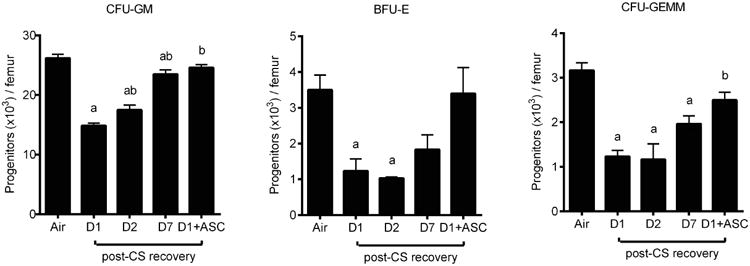
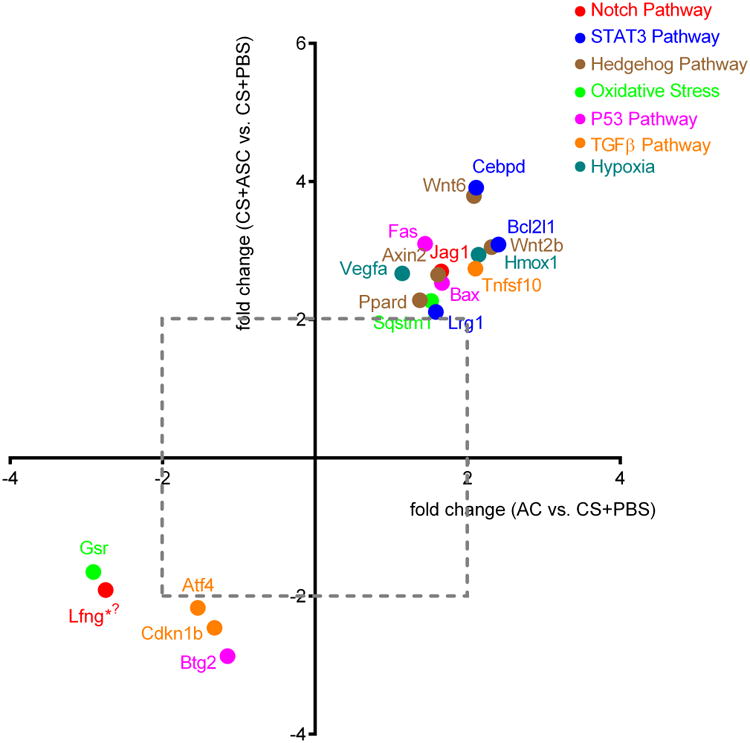
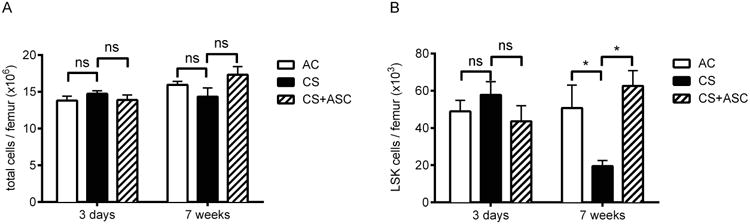
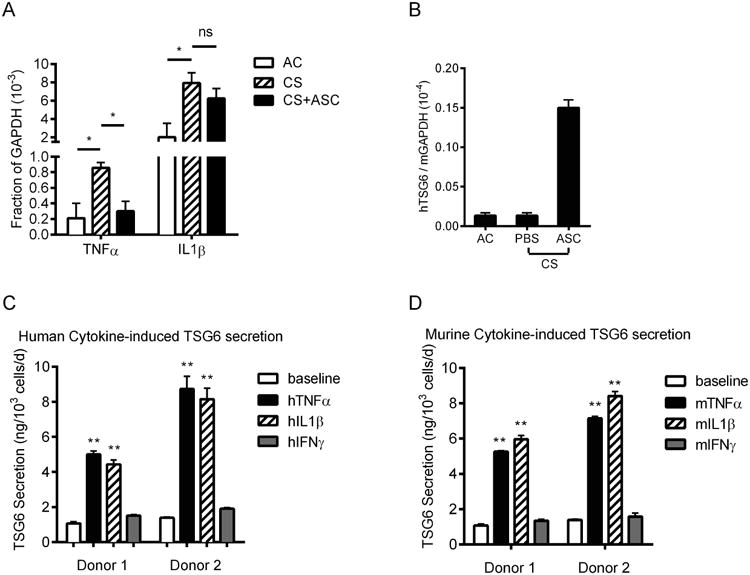
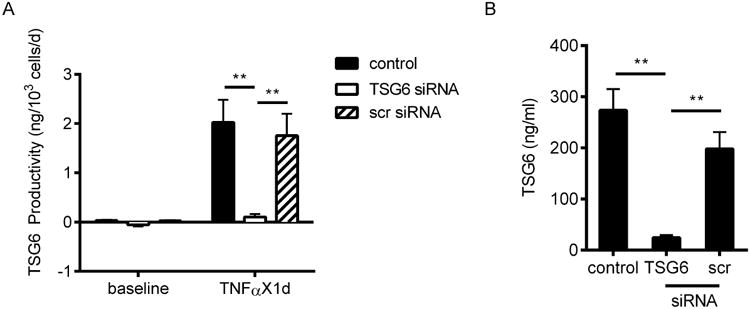
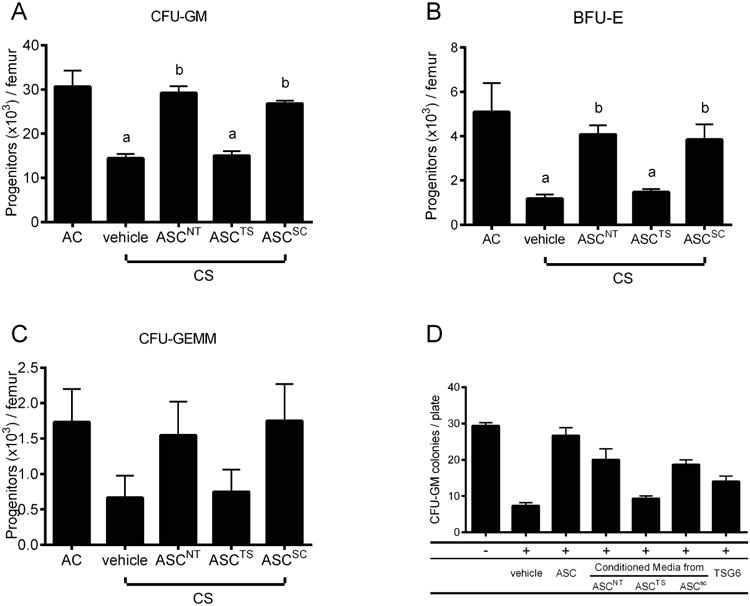
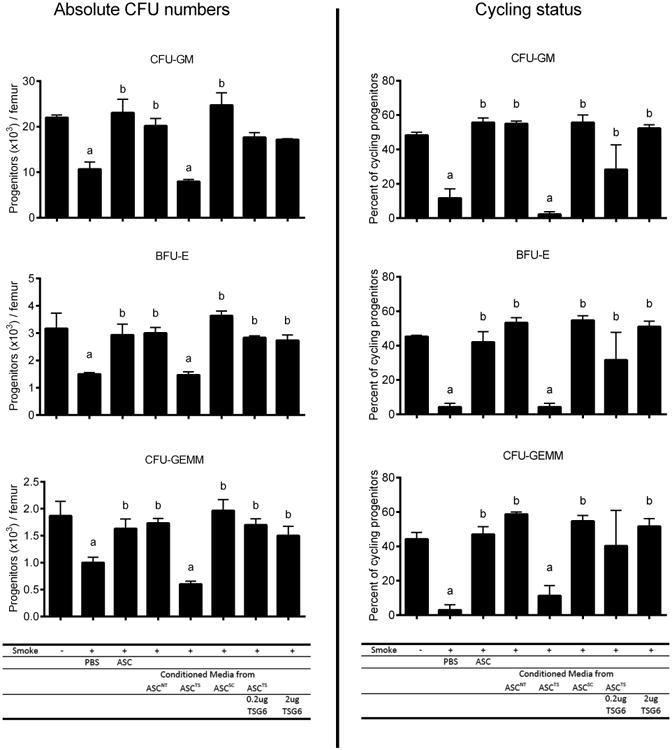
In this study, we demonstrate that as few as 3 days of CS exposure results in marked cycling arrest and diminished clonogenic capacity of HPC, followed by depletion of phenotypically defined HSC/HPC. Intravenous injection of hASC substantially ameliorated both acute and chronic CS-induced myelosuppression. This effect was specifically dependent on the anti-inflammatory factor TSG-6, which is induced from xenografted hASC, primarily located in the lung and capable of responding to host inflammatory signals. Gene expression analysis within bone marrow HSC/HPC revealed several specific signaling molecules altered by CS and normalized by hASC.
Our results suggest that systemic administration of hASC or TSG-6 may be novel approaches to reverse CS-induced myelosuppression.
骨髓来源的造血干细胞和祖细胞(HSC/HPC)对体内稳态和组织修复至关重要。本研究的目的是在小鼠模型中描述吸烟(CS)的骨髓毒性,探索人脂肪来源干细胞(hASC)作为减轻这种毒性的新方法,并确定ASC活性的关键介导因子。
C57BL/6小鼠接受CS暴露,同时或不静脉注射正常或siRNA转染的hASC。在体外实验中,使用香烟烟雾提取物模拟CS暴露的毒性。通过流式细胞术和集落形成单位测定对骨髓HPC进行分析。
在本研究中,我们证明,仅3天的CS暴露就会导致HPC明显的细胞周期停滞和克隆能力下降,随后表型确定的HSC/HPC耗竭。静脉注射hASC可显著改善急性和慢性CS诱导的骨髓抑制。这种作用特别依赖于抗炎因子TSG-6,它由异种移植的hASC诱导产生,主要位于肺部,能够对宿主炎症信号作出反应。骨髓HSC/HPC内的基因表达分析揭示了几种被CS改变并被hASC恢复正常的特定信号分子。
我们的结果表明,全身给予hASC或TSG-6可能是逆转CS诱导的骨髓抑制的新方法。