Ballesteros Soledad, Prieto Antonio, Mayas Julia, Toril Pilar, Pita Carmen, Ponce de León Laura, Reales José M, Waterworth John
Studies on Aging and Neurodegenerative Diseases Research Group, Department of Basic Psychology II, Universidad Nacional de Educación a Distancia Madrid, Spain.
Department of Informatics, Umea University Umea, Sweden.
Front Aging Neurosci. 2014 Oct 14;6:277. doi: 10.3389/fnagi.2014.00277. eCollection 2014.
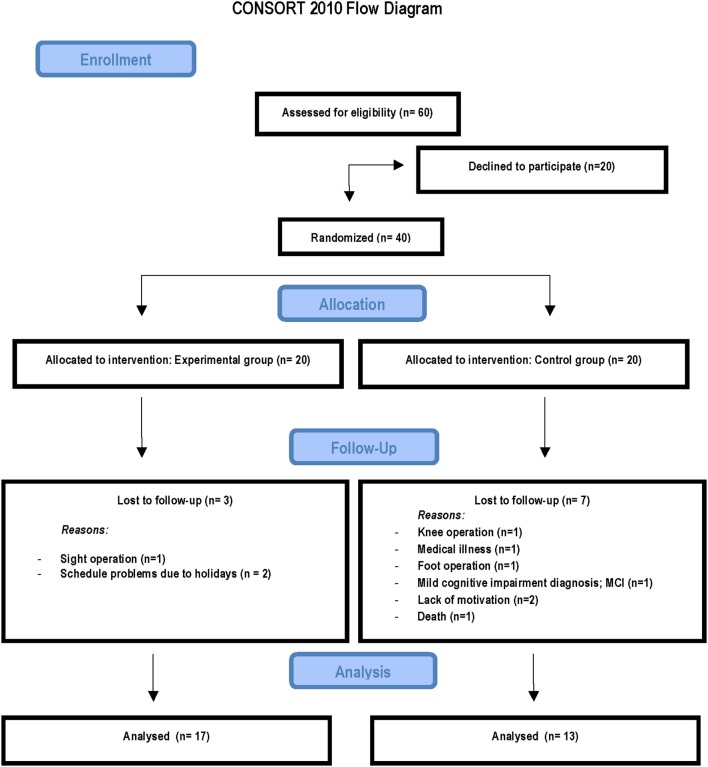
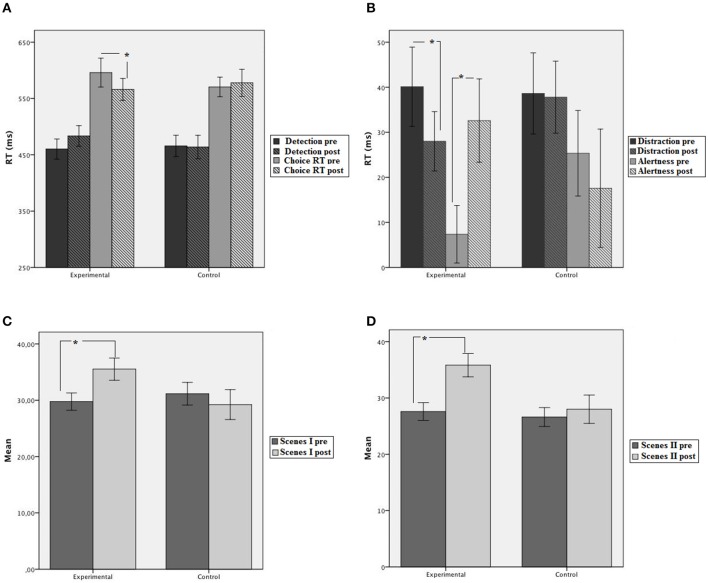
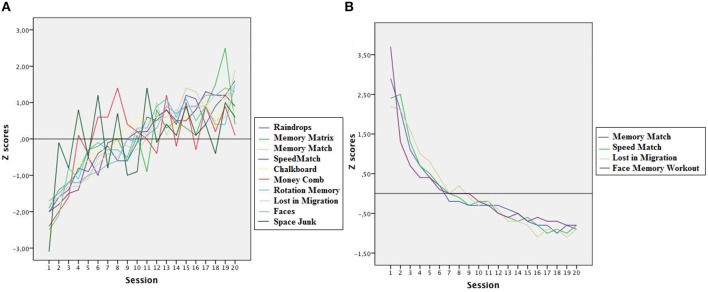
Age-related cognitive and brain declines can result in functional deterioration in many cognitive domains, dependency, and dementia. A major goal of aging research is to investigate methods that help to maintain brain health, cognition, independent living and wellbeing in older adults. This randomized controlled study investigated the effects of 20 1-h non-action video game training sessions with games selected from a commercially available package (Lumosity) on a series of age-declined cognitive functions and subjective wellbeing. Two groups of healthy older adults participated in the study, the experimental group who received the training and the control group who attended three meetings with the research team along the study. Groups were similar at baseline on demographics, vocabulary, global cognition, and depression status. All participants were assessed individually before and after the intervention, or a similar period of time, using neuropsychological tests and laboratory tasks to investigate possible transfer effects. The results showed significant improvements in the trained group, and no variation in the control group, in processing speed (choice reaction time), attention (reduction of distraction and increase of alertness), immediate and delayed visual recognition memory, as well as a trend to improve in Affection and Assertivity, two dimensions of the Wellbeing Scale. Visuospatial working memory (WM) and executive control (shifting strategy) did not improve. Overall, the current results support the idea that training healthy older adults with non-action video games will enhance some cognitive abilities but not others.
与年龄相关的认知和大脑衰退会导致许多认知领域的功能恶化、生活依赖和痴呆。衰老研究的一个主要目标是研究有助于维持老年人脑健康、认知能力、独立生活能力和幸福感的方法。这项随机对照研究调查了从一个商业软件包(Lumosity)中选取的20次为时1小时的非动作类电子游戏训练课程,对一系列随年龄下降的认知功能和主观幸福感的影响。两组健康的老年人参与了该研究,一组是接受训练的实验组,另一组是在研究过程中与研究团队进行三次会面的对照组。两组在人口统计学、词汇量、整体认知能力和抑郁状态方面的基线水平相似。所有参与者在干预前后或相似时间段内接受了单独评估,使用神经心理学测试和实验室任务来研究可能的迁移效应。结果显示,训练组在处理速度(选择反应时间)、注意力(减少分心和提高警觉性)、即时和延迟视觉识别记忆方面有显著改善,对照组则无变化,并且在幸福感量表的两个维度——情感和自信方面有改善趋势。视觉空间工作记忆(WM)和执行控制(转换策略)没有改善。总体而言,目前的结果支持这样一种观点,即使用非动作类电子游戏训练健康的老年人会增强某些认知能力,但不是所有认知能力。