Colder Craig R, Lengua Liliana J, Fite Paula J, Mott Joshua A, Bush Nicole R
Department of Psychology, Park Hall, University at Buffalo, State University of New York, Buffalo, NY 14260-4110, United States.
Department of Psychology, University of Washington, United States.
J Appl Dev Psychol. 2006 Sep;27(5):456-467. doi: 10.1016/j.appdev.2006.06.004.
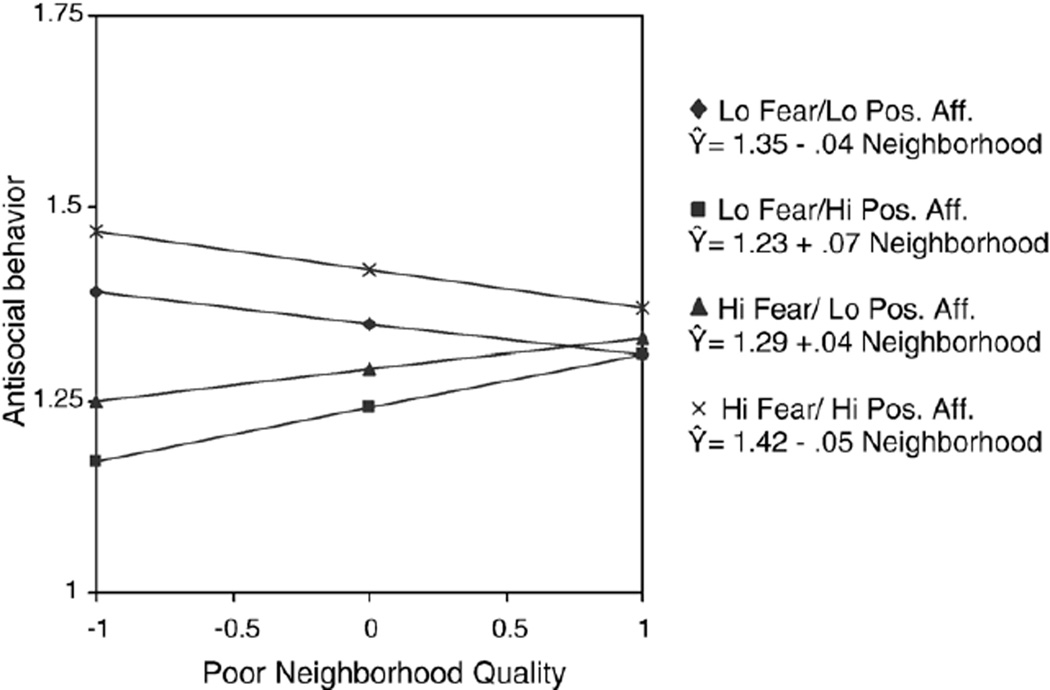
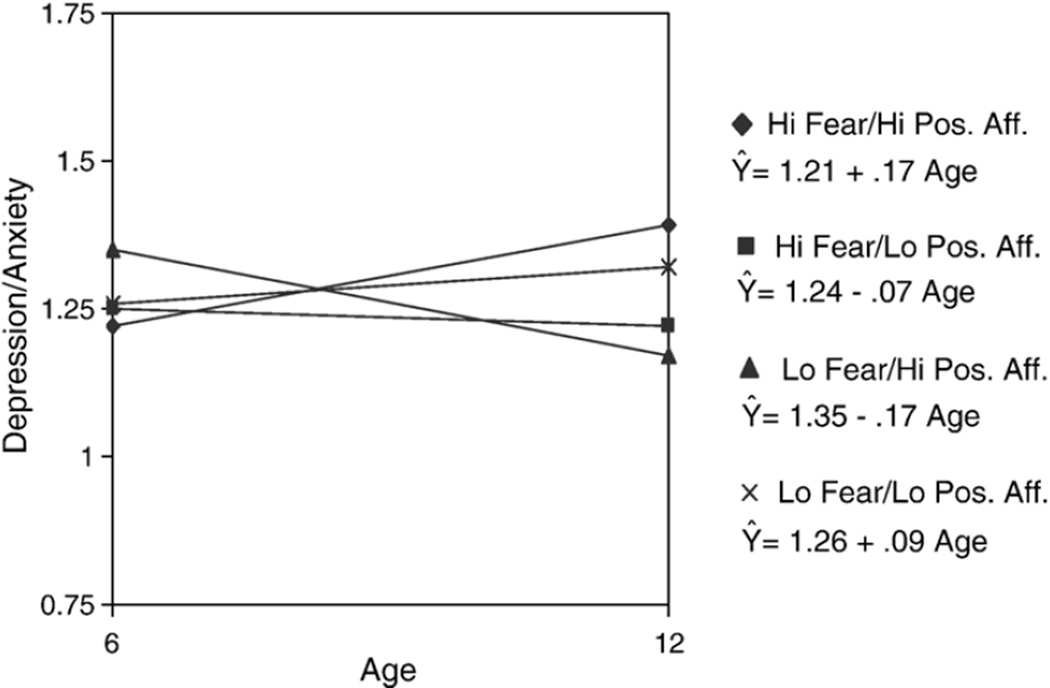
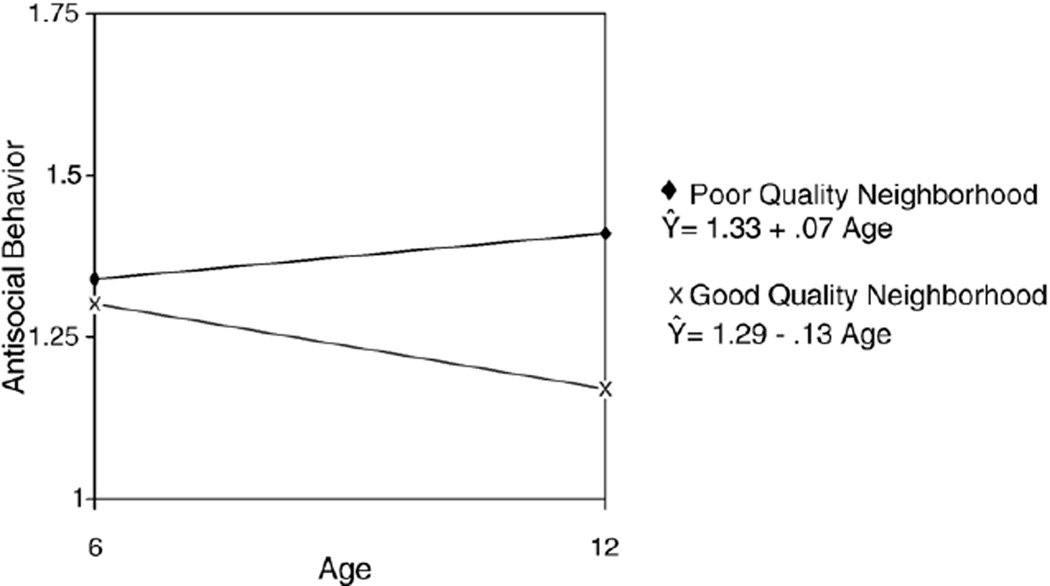
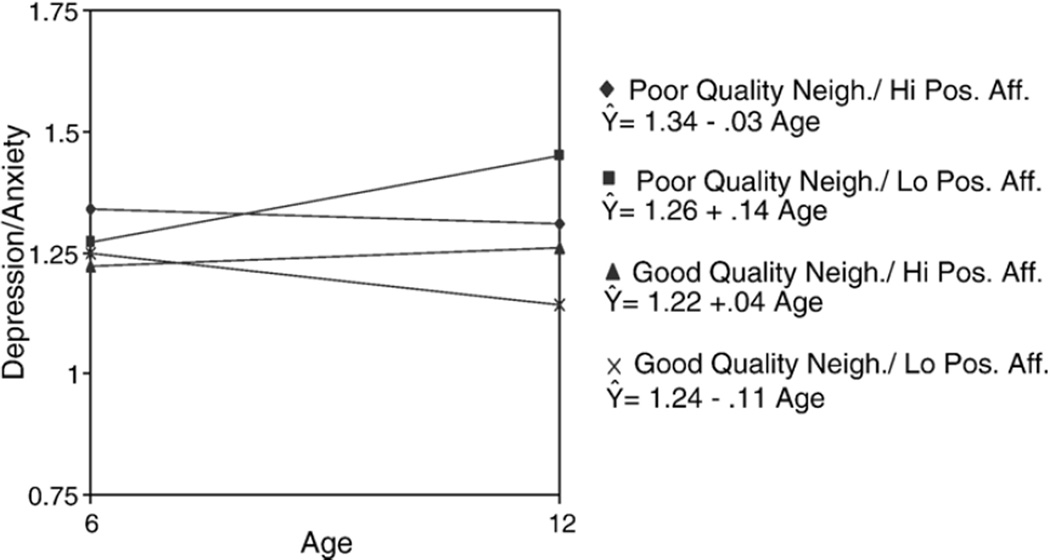
Hypotheses that positive affect and fear in infancy moderate later relationships between neighborhood quality and behavior problems were examined in a sample of children from the National Longitudinal Survey of Youth. Results suggested that poor neighborhood quality was associated with antisocial behavior at age 6 for children who in infancy were characterized by either high positive affect low fear or by low positive affect high fear. Depression/anxiety increased from age 6 to age 12 for children in poor quality neighborhoods who were characterized in infancy by low positive affect. A combination of low fear and high positive affect in infancy appeared to be protective, as it was associated with decreases in depression/anxiety during childhood. These findings suggest the utility of examining multiple dimensions of temperament and of integrating multiple levels of influence into moderational models to understand and prevent the development of childhood symptomatology.
在全国青年纵向调查的儿童样本中,研究了婴儿期积极情绪和恐惧对邻里环境质量与行为问题之间后续关系的调节作用假说。结果表明,邻里环境质量差与6岁时的反社会行为有关,这些儿童在婴儿期的特点是积极情绪高、恐惧低,或者积极情绪低、恐惧高。对于婴儿期积极情绪低的低质量邻里环境中的儿童,抑郁/焦虑从6岁到12岁有所增加。婴儿期低恐惧和高积极情绪的组合似乎具有保护作用,因为它与儿童期抑郁/焦虑的减少有关。这些发现表明,考察气质的多个维度并将多个影响水平纳入调节模型以理解和预防儿童症状发展具有实用性。