Maas Sybren L N, de Vrij Jeroen, van der Vlist Els J, Geragousian Biaina, van Bloois Louis, Mastrobattista Enrico, Schiffelers Raymond M, Wauben Marca H M, Broekman Marike L D, Nolte-'t Hoen Esther N M
Department of Neurosurgery, University Medical Center Utrecht, The Netherlands; Brain Center Rudolf Magnus, University Medical Center Utrecht, The Netherlands.
Department of Biochemistry & Cell Biology, Faculty of Veterinary Medicine, Utrecht University, The Netherlands.
J Control Release. 2015 Feb 28;200:87-96. doi: 10.1016/j.jconrel.2014.12.041. Epub 2014 Dec 30.
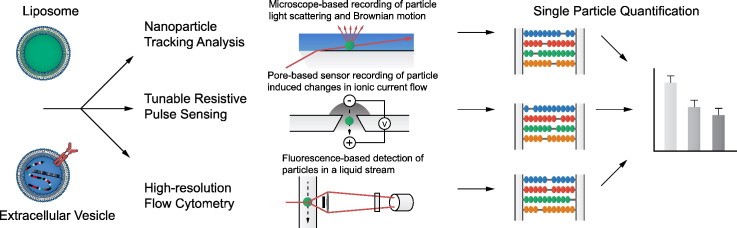
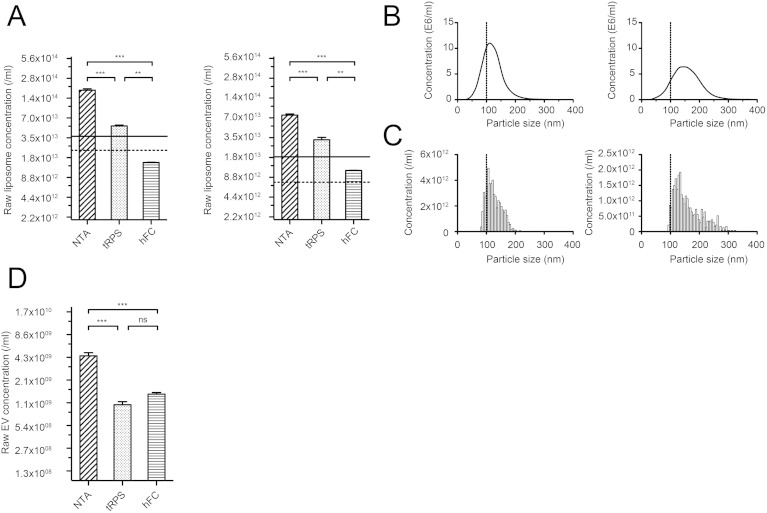
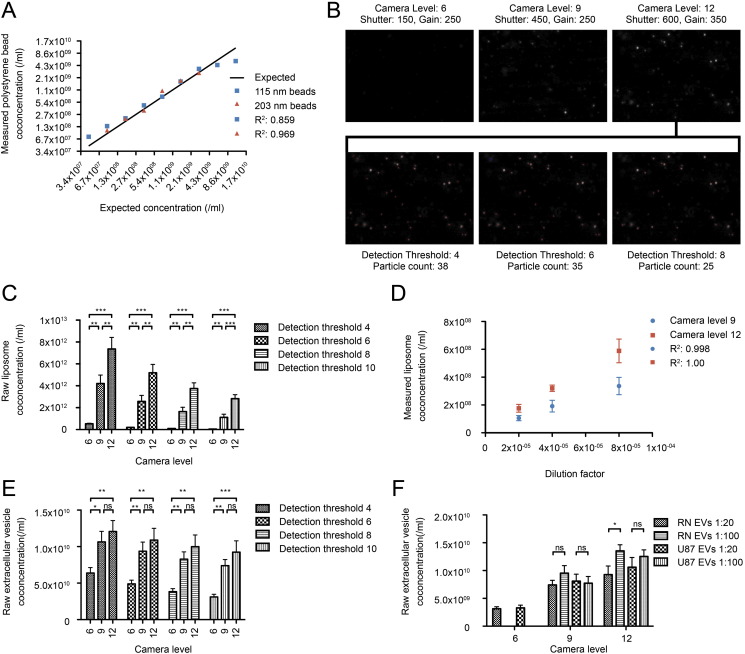
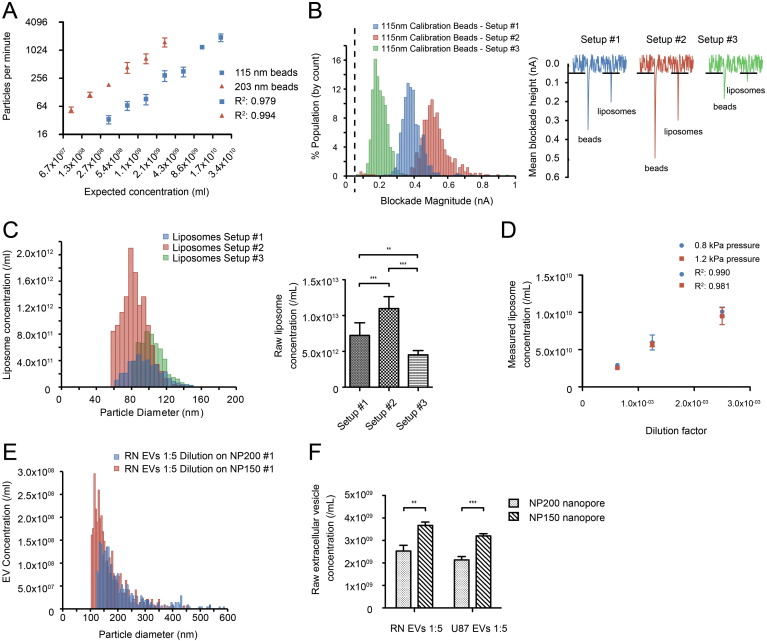
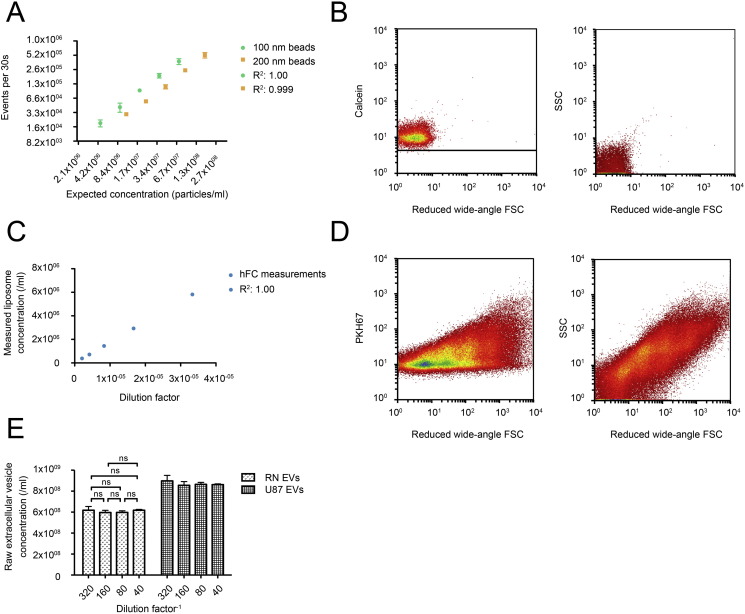
Nano-sized extracelullar vesicles (EVs) released by various cell types play important roles in a plethora of (patho)physiological processes and are increasingly recognized as biomarkers for disease. In addition, engineered EV and EV-inspired liposomes hold great potential as drug delivery systems. Major technologies developed for high-throughput analysis of individual EV include nanoparticle tracking analysis (NTA), tunable resistive pulse sensing (tRPS) and high-resolution flow cytometry (hFC). Currently, there is a need for comparative studies on the available technologies to improve standardization of vesicle analysis in diagnostic or therapeutic settings. We investigated the possibilities, limitations and comparability of NTA, tRPS and hFC for analysis of tumor cell-derived EVs and synthetic mimics (i.e. differently sized liposomes). NTA and tRPS instrument settings were identified that significantly affected the quantification of these particles. Furthermore, we detailed the differences in absolute quantification of EVs and liposomes using the three technologies. This study increases our understanding of possibilities and pitfalls of NTA, tRPS and hFC, which will benefit standardized and large-scale clinical application of (engineered) EVs and EV-mimics in the future.
各种细胞类型释放的纳米级细胞外囊泡(EVs)在众多(病理)生理过程中发挥着重要作用,并且越来越被视为疾病的生物标志物。此外,工程化的EV和受EV启发的脂质体作为药物递送系统具有巨大潜力。为单个EV的高通量分析开发的主要技术包括纳米颗粒跟踪分析(NTA)、可调电阻脉冲传感(tRPS)和高分辨率流式细胞术(hFC)。目前,需要对现有技术进行比较研究,以提高诊断或治疗环境中囊泡分析的标准化。我们研究了NTA、tRPS和hFC用于分析肿瘤细胞衍生的EVs和合成模拟物(即不同大小的脂质体)的可能性、局限性和可比性。确定了对这些颗粒定量有显著影响的NTA和tRPS仪器设置。此外,我们详细阐述了使用这三种技术对EVs和脂质体进行绝对定量时的差异。这项研究增加了我们对NTA、tRPS和hFC的可能性和陷阱的理解,这将有利于(工程化)EVs和EV模拟物在未来的标准化和大规模临床应用。