Janbaz Khalid Hussain, Zaeem Ahsan Muhammad, Saqib Fatima, Imran Imran, Zia-Ul-Haq Muhammad, Abid Rashid Muhammad, Jaafar Hawa Z E, Moga Marius
Faculty of Pharmacy, Bahauddin Zakariya University, Multan, Pakistan.
The Patent Office, Karachi, Pakistan.
PLoS One. 2015 Mar 18;10(3):e0118605. doi: 10.1371/journal.pone.0118605. eCollection 2015.
Pyrus pashia Buch.-Ham. ex D. Don. has been used conventionally by many communities in the Himalayan region for the management of gastrointestinal, respiratory, and vascular complications. Set against this background, this study was carried out to justify the scientific basis to validate folkloric uses of fruits of Pyrus pashia Buch.-Ham. ex D. Don. (Pp.Cr) in traditional systems of medicine.
The crude ethanol extract of fruits of Pyrus pashia Buch.-Ham. ex D. Don. (Pp.Cr) was tested in vitro on isolated rabbit jejunum, tracheal, and aorta preparations. The responses of tissues were recorded using isotonic transducers coupled with a PowerLab data acquisition system.
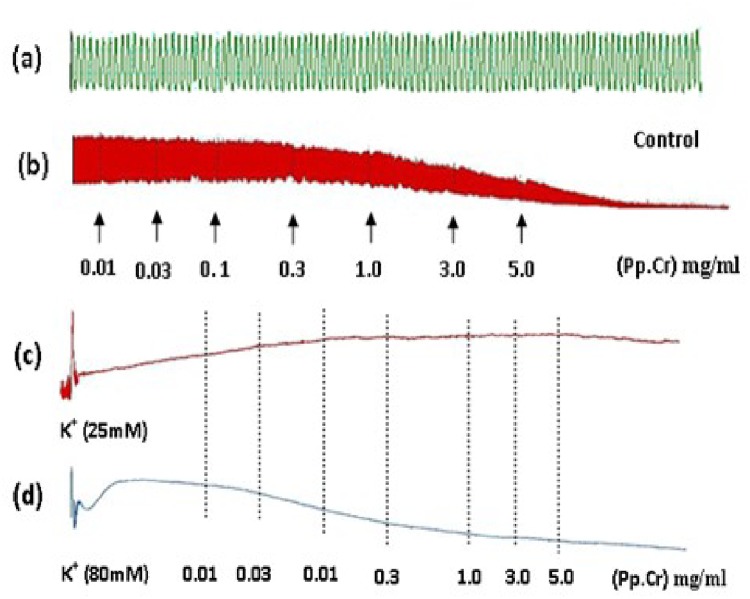
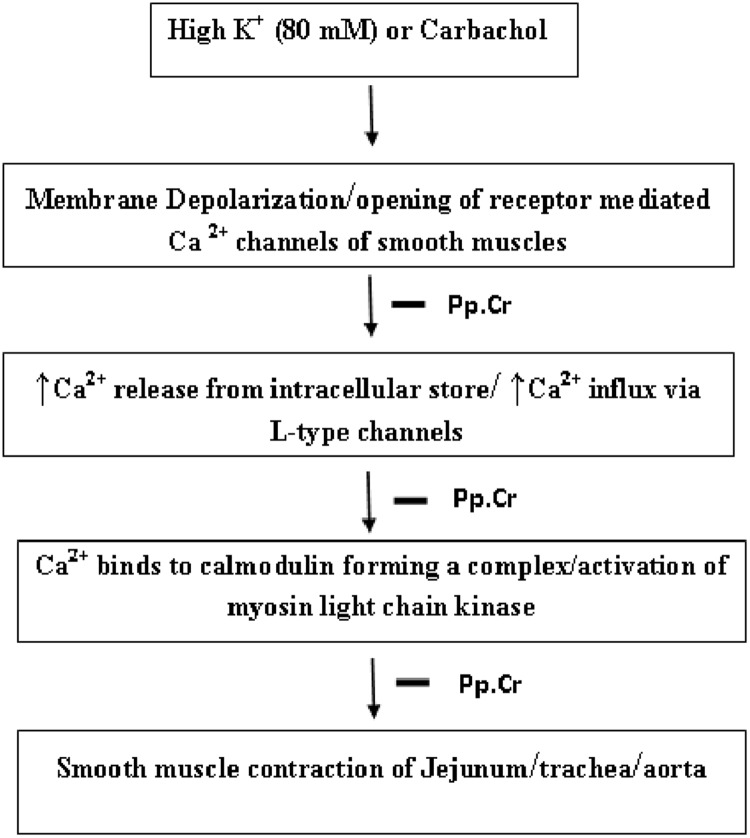
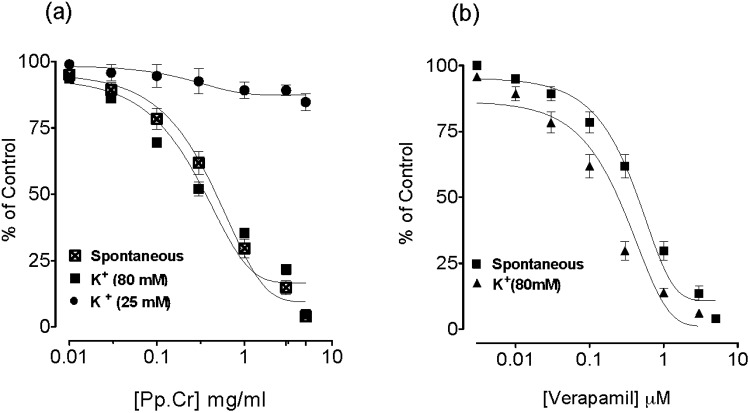
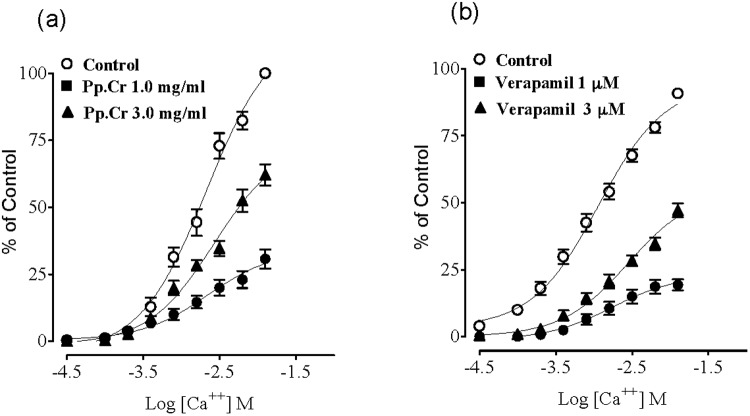
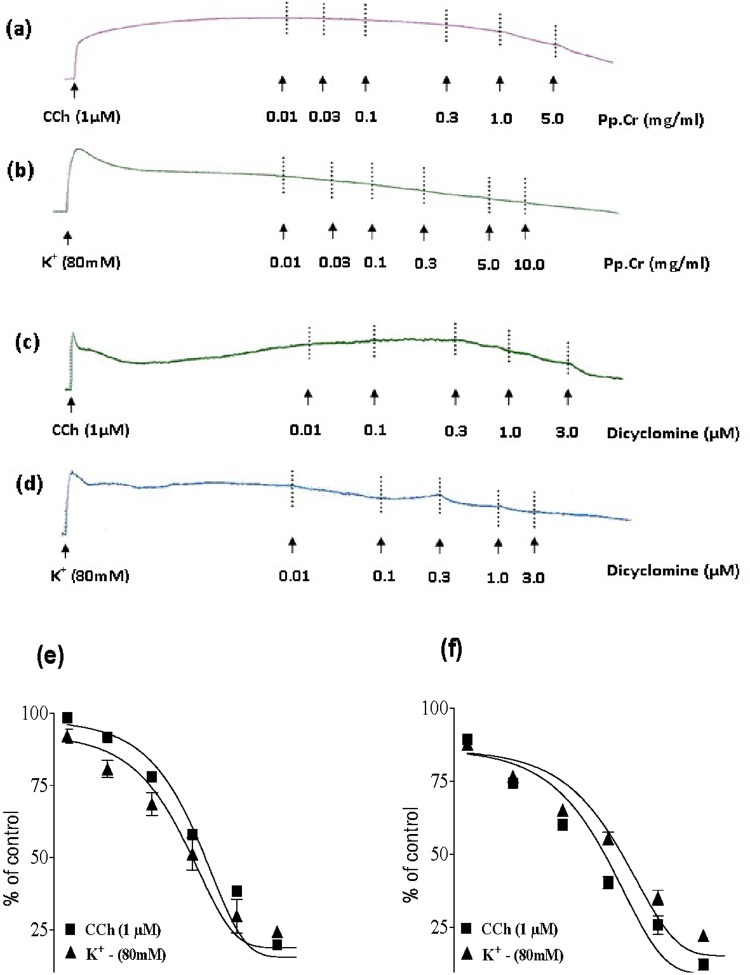
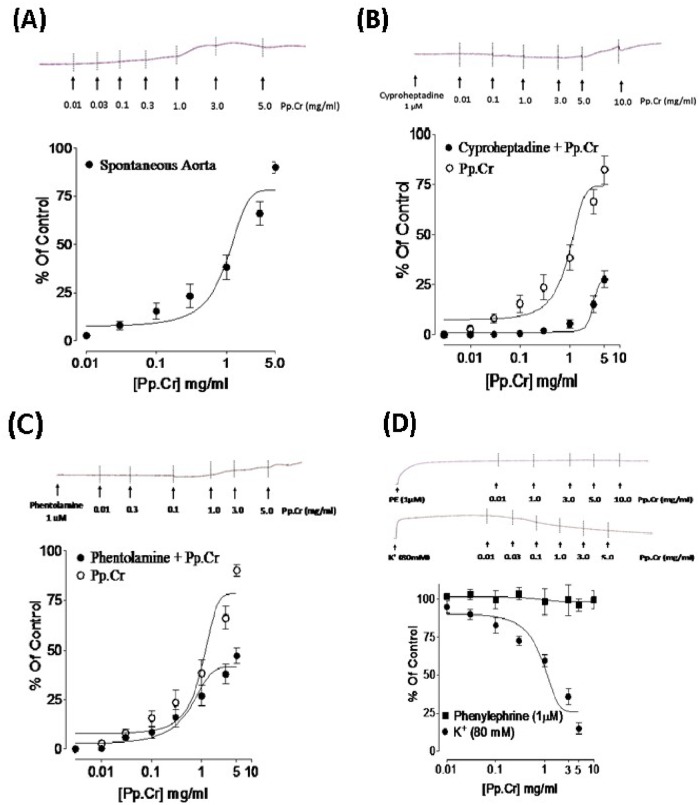
The Pp.Cr on application (0.01-5.0 mg/ml) to isolated rabbit jejunum preparation exhibited relaxation through decrease in magnitude and frequency of spontaneous contractions. The Pp.Cr also exerted a relaxant (0.01-5.0 mg/ml) effect on K+ (80 mM) induced contractions in isolated rabbit jejunum preparations and caused shifting of the Ca2+ curves (1.0-3.0 mg/ml) toward right in a manner similar to that of verapamil (3 μM), possibly suggesting presence of Ca2+ channel blocking activity. Subsequently, Pp.Cr in a concentration-dependent fashion (0.01-10.0 mg/ml) caused relaxation of CCh (1 μM) and K+ (80 mM) induced contractions in isolated rabbit tracheal preparations in a manner comparable to that of dicyclomine, suggesting that the observed relaxant effect is likely to be mediated through antimuscarinic and/or Ca2+ channel blocking activities. Moreover, when evaluated against isolated rabbit aortic preparations, the Pp.Cr in concentrations up to 10 mg/ml exhibited a contractile response that was found to be abolished subsequent to pretreatment of isolated tissue preparation with cyproheptadine (1 μM), phentolamine (1 μM), and losartan (1 μM), suggesting that Pp.Cr may have some α-adrenergic, muscarinic, serotonergic, and angiotensin II activities.
The aqueous ethanolic extract of Pyrus pashia (Pp.Cr) exhibited spasmolytic, bronchodilator, and vaso-constrictive activities possibly through different mechanisms. The spasmolytic and bronchodilator activities are likely to be mediated through blockade of Ca2+ channels, while vasoconstrictive activity may be due to presence of a α-adrenergic, muscarinic, serotonergic, and angiotensin II agonistic component.
喜马拉雅地区的许多社区传统上一直使用川梨(Pyrus pashia Buch.-Ham. ex D. Don.)来治疗胃肠道、呼吸道和血管方面的并发症。在此背景下,开展了本研究以论证科学依据,从而验证川梨(Pyrus pashia Buch.-Ham. ex D. Don.)果实(Pp.Cr)在传统医学体系中的民间药用价值。
对川梨(Pyrus pashia Buch.-Ham. ex D. Don.)果实的粗乙醇提取物(Pp.Cr)进行体外实验,作用于分离的兔空肠、气管和主动脉标本。使用与PowerLab数据采集系统相连的等渗换能器记录组织的反应。
将Pp.Cr(0.01 - 5.0 mg/ml)应用于分离的兔空肠标本时,通过降低自发收缩的幅度和频率表现出舒张作用。Pp.Cr对分离的兔空肠标本中K⁺(80 mM)诱导的收缩也有舒张作用(0.01 - 5.0 mg/ml),并使Ca²⁺曲线(1.0 - 3.0 mg/ml)向右移动,其方式与维拉帕米(3 μM)相似,这可能表明存在Ca²⁺通道阻断活性。随后,Pp.Cr以浓度依赖性方式(0.01 - 10.0 mg/ml)使分离的兔气管标本中CCh(1 μM)和K⁺(80 mM)诱导的收缩舒张,其方式与双环维林相当,这表明观察到的舒张作用可能是通过抗毒蕈碱和/或Ca²⁺通道阻断活性介导的。此外,在对分离的兔主动脉标本进行评估时,浓度高达10 mg/ml的Pp.Cr表现出收缩反应,在用赛庚啶(1 μM)、酚妥拉明(1 μM)和氯沙坦(1 μM)对分离的组织标本进行预处理后,该收缩反应被消除,这表明Pp.Cr可能具有一些α - 肾上腺素能、毒蕈碱能、5 - 羟色胺能和血管紧张素II活性。
川梨(Pp.Cr)的水乙醇提取物可能通过不同机制表现出解痉、支气管扩张和血管收缩活性。解痉和支气管扩张活性可能是通过Ca²⁺通道阻断介导的,而血管收缩活性可能归因于存在α - 肾上腺素能、毒蕈碱能、5 - 羟色胺能和血管紧张素II激动成分。