Aguilera Stacy E, Cole Jennifer, Finkbeiner Elena M, Le Cornu Elodie, Ban Natalie C, Carr Mark H, Cinner Joshua E, Crowder Larry B, Gelcich Stefan, Hicks Christina C, Kittinger John N, Martone Rebecca, Malone Daniel, Pomeroy Carrie, Starr Richard M, Seram Sanah, Zuercher Rachel, Broad Kenneth
Leonard and Jayne Abess Center for Ecosystem Science and Policy, University of Miami, 1365 Memorial Drive, Ungar Building 230M, Coral Gables, FL 33124, United States of America.
Hopkins Marine Station, Stanford University, 120 Oceanview Blvd., Pacific Grove, CA 93950, United States of America.
PLoS One. 2015 Mar 19;10(3):e0118992. doi: 10.1371/journal.pone.0118992. eCollection 2015.
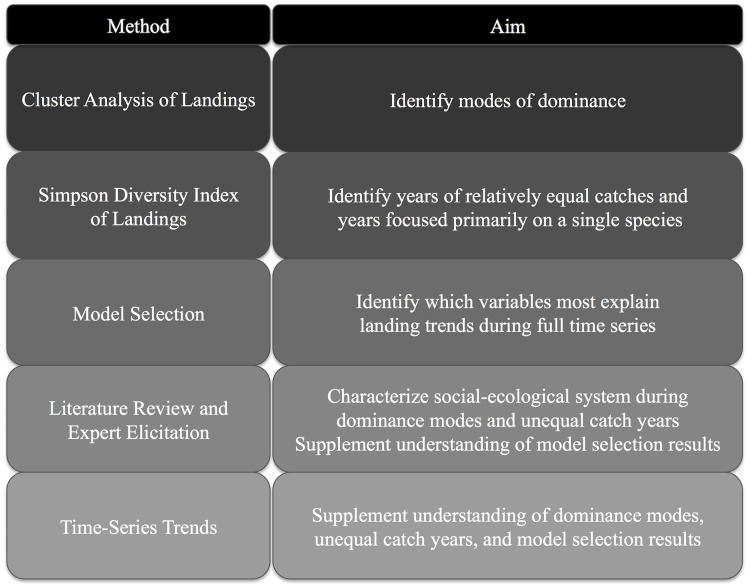
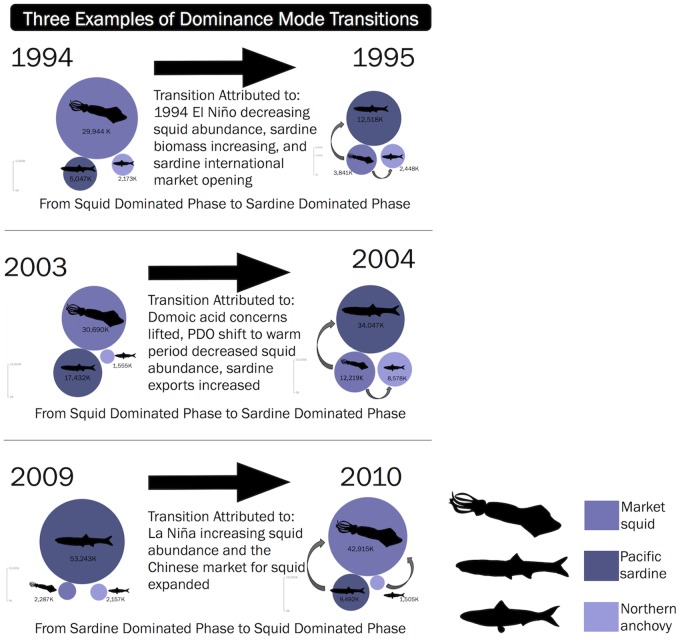
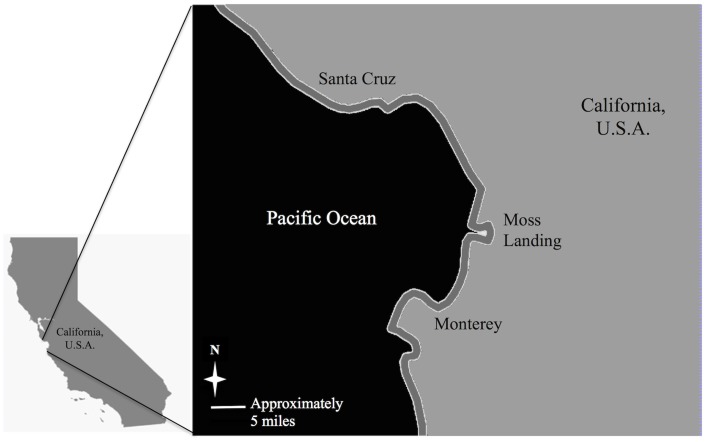
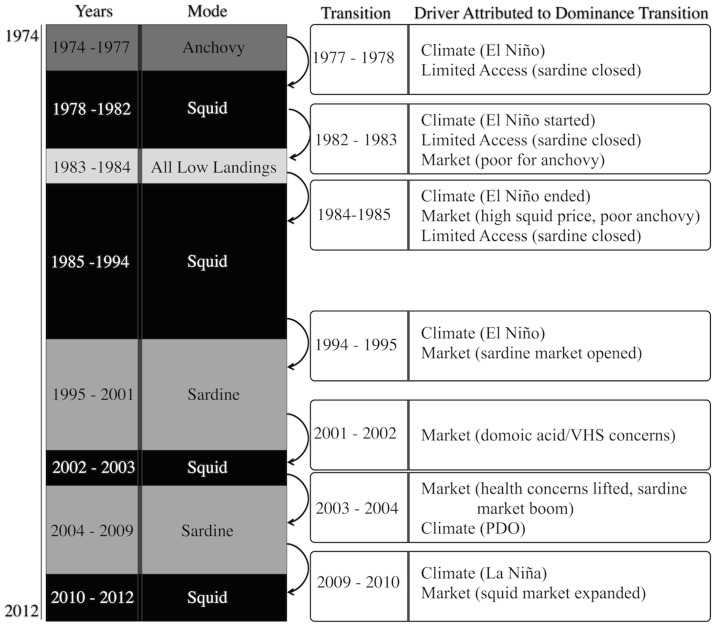
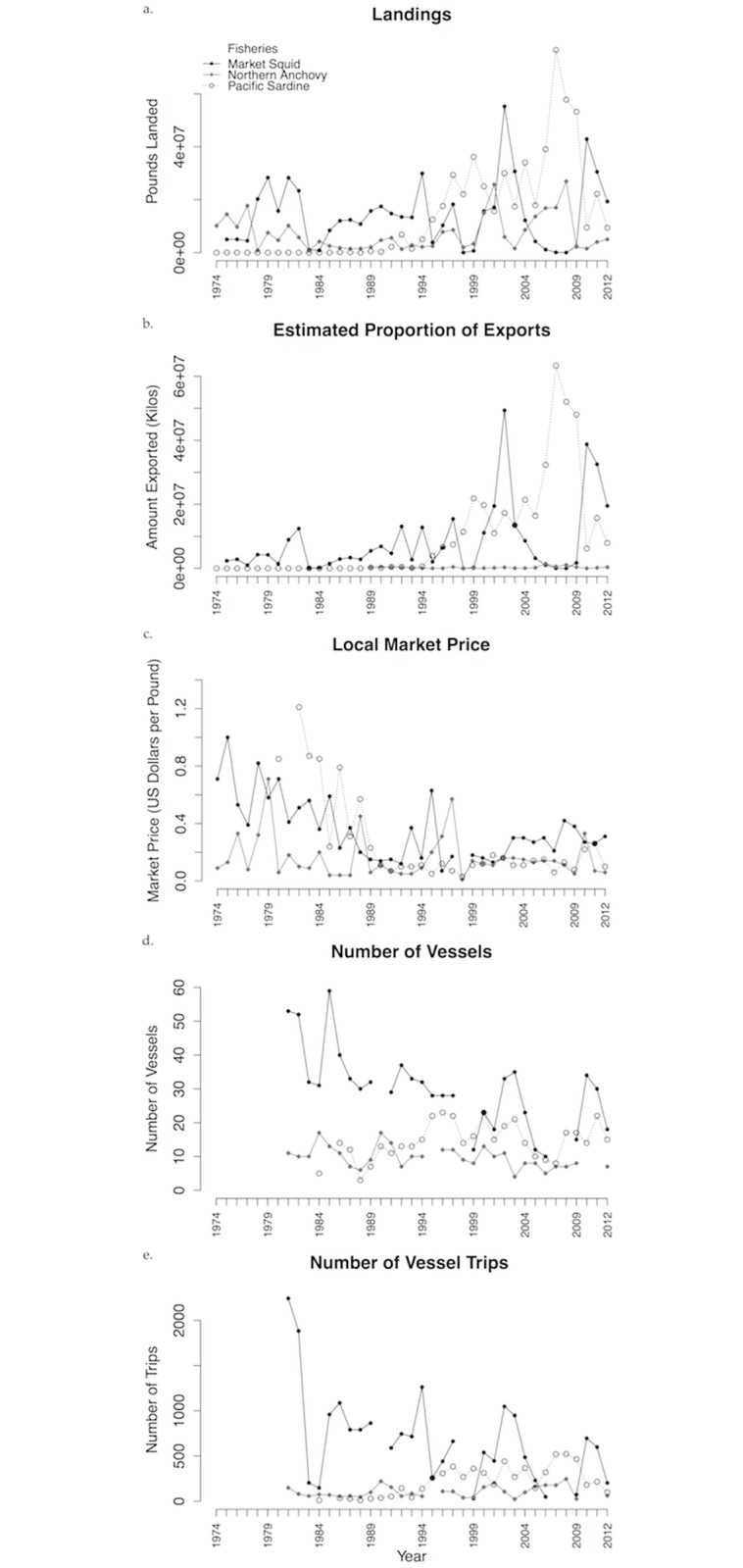
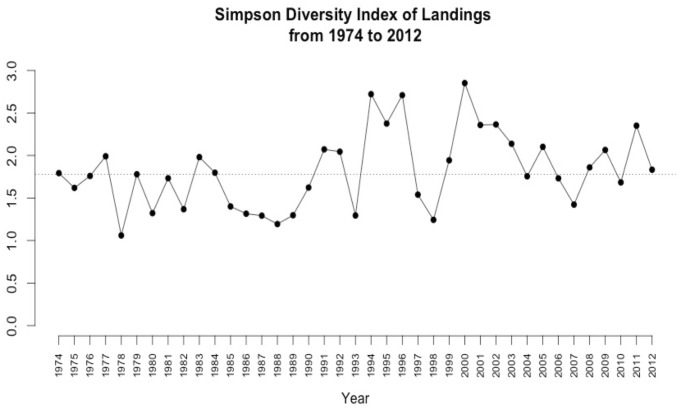
Globally, small-scale fisheries are influenced by dynamic climate, governance, and market drivers, which present social and ecological challenges and opportunities. It is difficult to manage fisheries adaptively for fluctuating drivers, except to allow participants to shift effort among multiple fisheries. Adapting to changing conditions allows small-scale fishery participants to survive economic and environmental disturbances and benefit from optimal conditions. This study explores the relative influence of large-scale drivers on shifts in effort and outcomes among three closely linked fisheries in Monterey Bay since the Magnuson-Stevens Fisheries Conservation and Management Act of 1976. In this region, Pacific sardine (Sardinops sagax), northern anchovy (Engraulis mordax), and market squid (Loligo opalescens) fisheries comprise a tightly linked system where shifting focus among fisheries is a key element to adaptive capacity and reduced social and ecological vulnerability. Using a cluster analysis of landings, we identify four modes from 1974 to 2012 that are dominated (i.e., a given species accounting for the plurality of landings) by squid, sardine, anchovy, or lack any dominance, and seven points of transition among these periods. This approach enables us to determine which drivers are associated with each mode and each transition. Overall, we show that market and climate drivers are predominantly attributed to dominance transitions. Model selection of external drivers indicates that governance phases, reflected as perceived abundance, dictate long-term outcomes. Our findings suggest that globally, small-scale fishery managers should consider enabling shifts in effort among fisheries and retaining existing flexibility, as adaptive capacity is a critical determinant for social and ecological resilience.
在全球范围内,小规模渔业受到动态气候、治理和市场驱动因素的影响,这些因素带来了社会和生态挑战与机遇。除了允许参与者在多种渔业之间转移捕捞力量外,很难针对波动的驱动因素对渔业进行适应性管理。适应不断变化的条件能使小规模渔业参与者在经济和环境干扰中生存下来,并从最佳条件中受益。本研究探讨了自1976年《马格努森-史蒂文斯渔业养护和管理法案》以来,大规模驱动因素对蒙特雷湾三个紧密相连的渔业中捕捞力量转移和成果的相对影响。在该地区,太平洋沙丁鱼(Sardinops sagax)、北鳀(Engraulis mordax)和市场鱿鱼(Loligo opalescens)渔业构成了一个紧密相连的系统,其中在不同渔业之间转移重点是适应能力以及降低社会和生态脆弱性的关键要素。通过对上岸量进行聚类分析,我们确定了1974年至2012年期间的四种模式,这些模式分别以鱿鱼、沙丁鱼、鳀鱼为主导(即某一特定物种占上岸量的多数)或不存在主导物种,以及这些时期之间的七个转变点。这种方法使我们能够确定与每种模式和每次转变相关的驱动因素。总体而言,我们表明市场和气候驱动因素主要归因于主导地位的转变。外部驱动因素的模型选择表明,以感知丰度反映的治理阶段决定了长期结果。我们的研究结果表明,在全球范围内,小规模渔业管理者应考虑允许在不同渔业之间转移捕捞力量并保持现有的灵活性,因为适应能力是社会和生态恢复力的关键决定因素。