Zhang Zhen, Wang Jiaoyu, Chai Rongyao, Qiu Haiping, Jiang Hua, Mao Xueqin, Wang Yanli, Liu Fengquan, Sun Guochang
Department of Plant Pathology, College of Plant Protection, Nanjing Agricultural University, Nanjing, China; State Key Laboratory Breeding Base for Zhejiang Sustainable Pest and Disease Control, Institute of Plant Protection and Microbiology, Zhejiang Academy of Agricultural Sciences, Hangzhou, China.
State Key Laboratory Breeding Base for Zhejiang Sustainable Pest and Disease Control, Institute of Plant Protection and Microbiology, Zhejiang Academy of Agricultural Sciences, Hangzhou, China.
PLoS One. 2015 Mar 20;10(3):e0120627. doi: 10.1371/journal.pone.0120627. eCollection 2015.
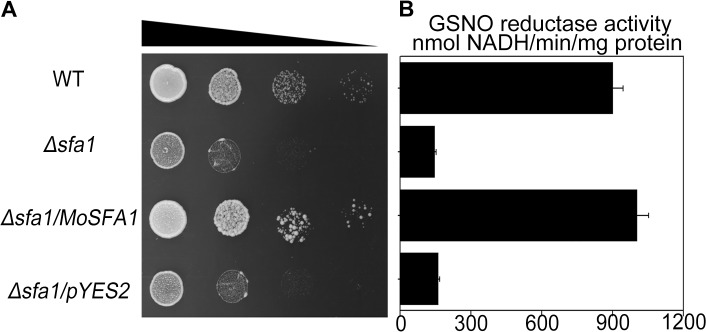
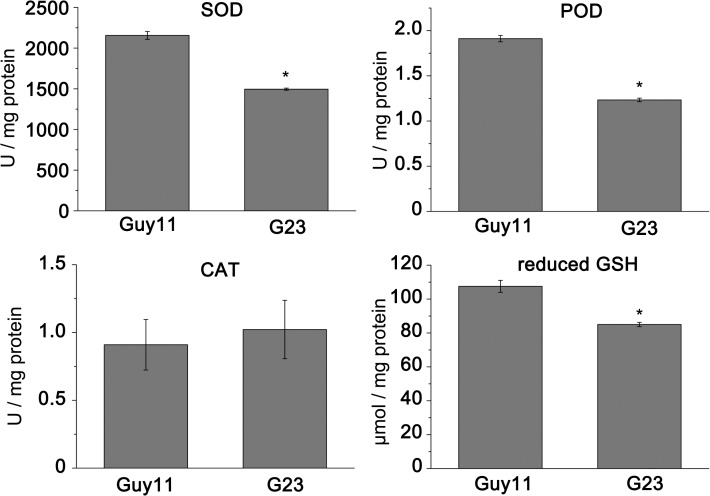
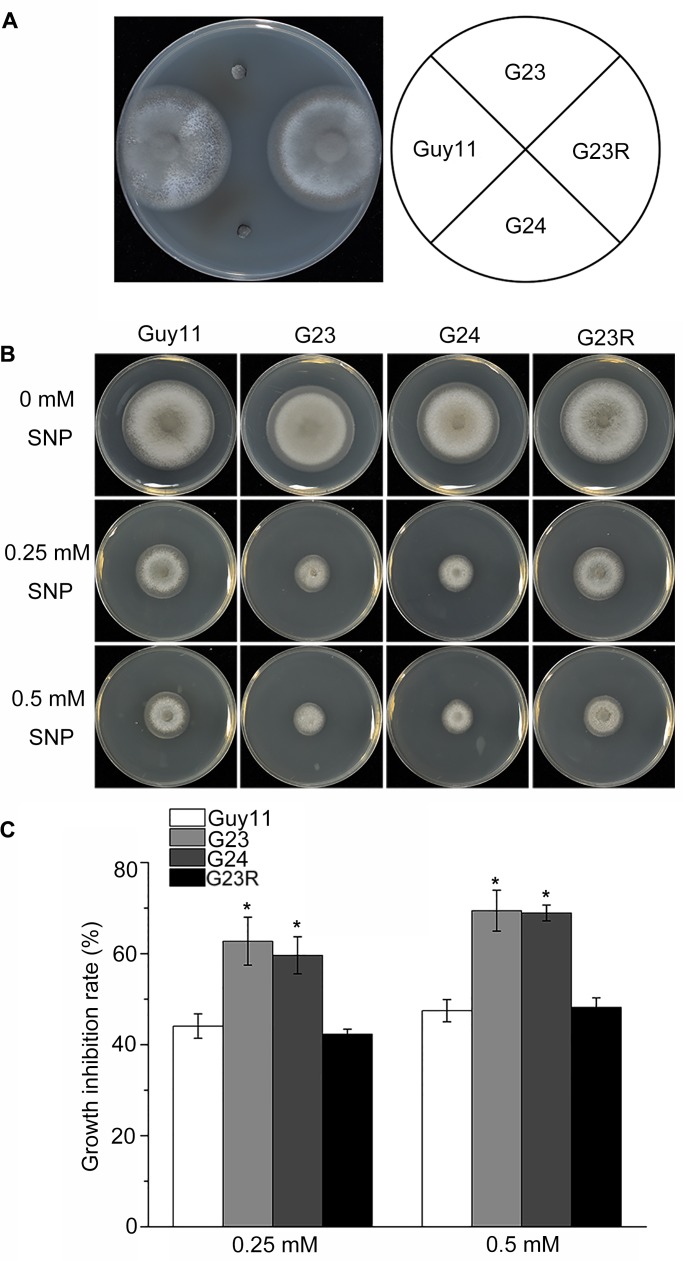
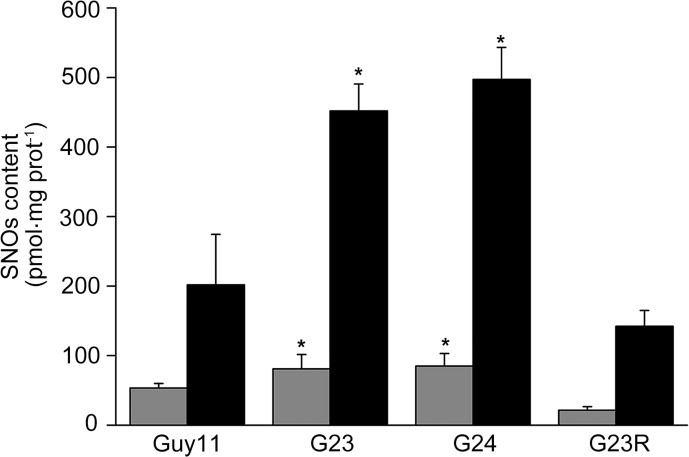
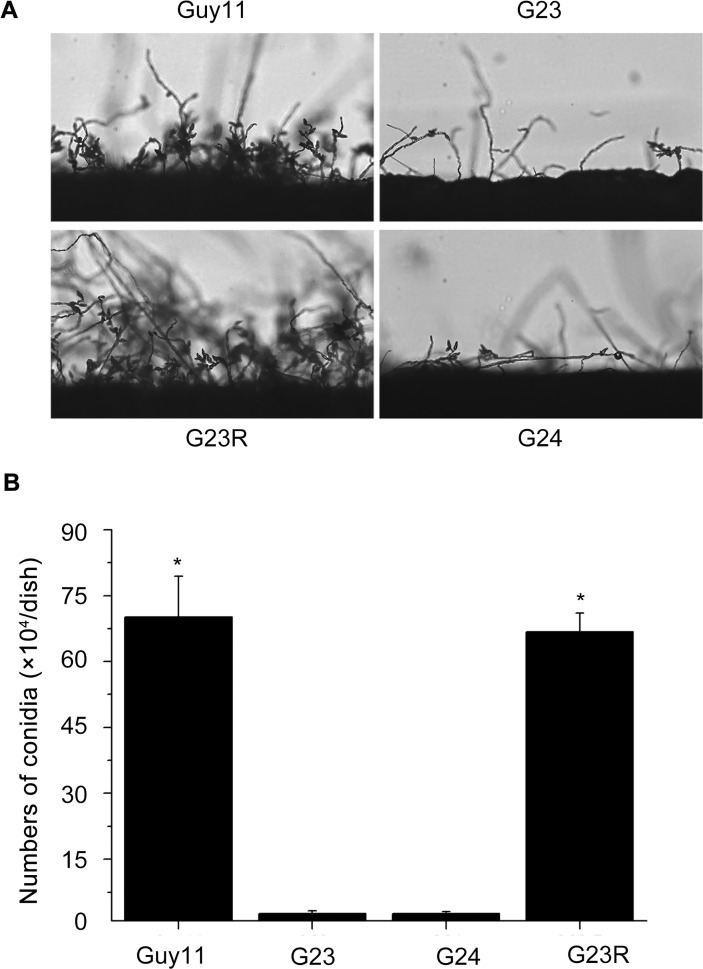
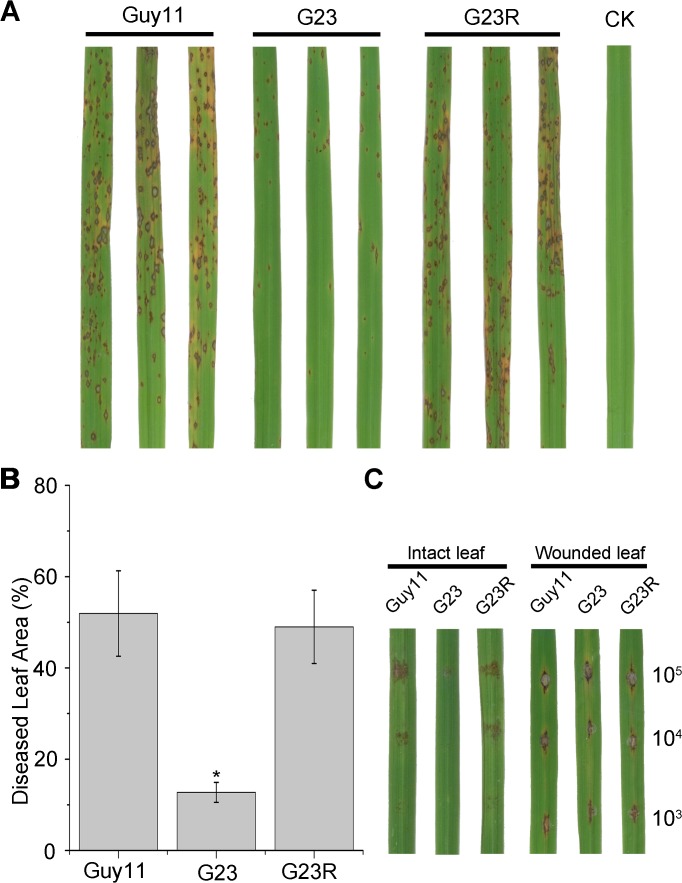
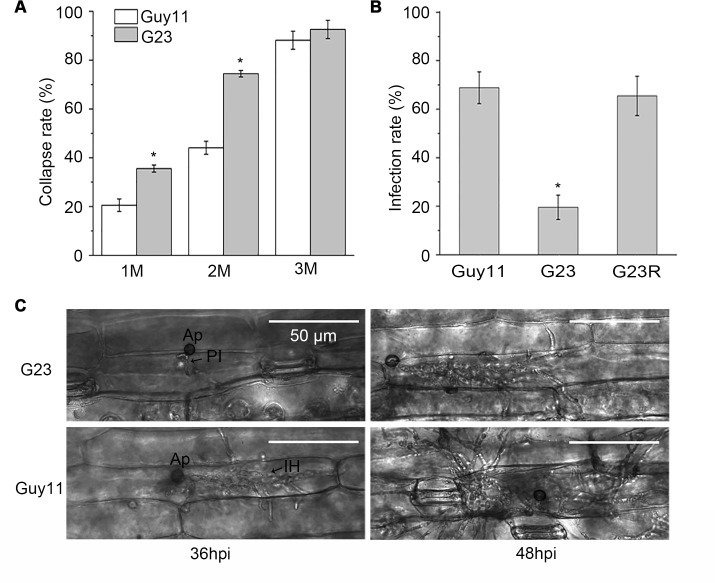
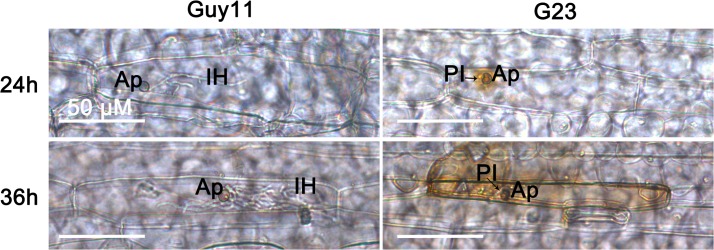
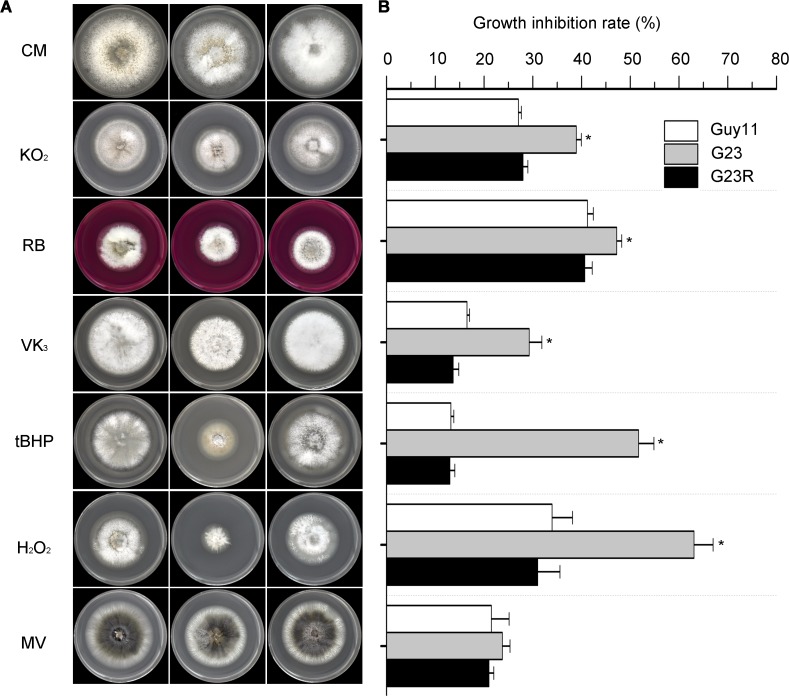
Magnaporthe oryzae is a hemibiotrophic fungal pathogen that causes rice blast disease. A compatible interaction requires overcoming plant defense responses to initiate colonization during the early infection process. Nitric oxide (NO) plays important roles in defense responses during host-pathogen interactions. Microbes generally protect themselves against NO-induced damage by using enzymes. Here, we characterized an S-(hydroxymethyl)-glutathione dehydrogenase gene in M. oryzae, MoSFA1, the homologs of which are involved in NO metabolism by specifically catalyzing the reduction of S-nitrosoglutathione (GSNO) in yeasts and plants. As expected from the activities of S-(hydroxymethyl)glutathione dehydrogenase in formaldehyde detoxification and GSNO reduction, MoSFA1 deletion mutants were lethal in formaldehyde containing medium, sensitive to exogenous NO and exhibited a higher level of S-nitrosothiols (SNOs) than that of the wild type. Notably, the mutants showed severe reduction of conidiation and appressoria turgor pressure, as well as significantly attenuated the virulence on rice cultivar CO-39. However, the virulence of MoSFA1 deletion mutants on wounded rice leaf was not affected. An infection assay on barley leaf further revealed that MoSFA1 deletion mutants exhibited a lower infection rate, and growth of infectious hyphae of the mutants was retarded not only in primary infected cells but also in expansion from cell to cell. Furthermore, barley leaf cell infected by MoSFA1 deletion mutants exhibited a stronger accumulation of H2O2 at 24 and 36 hpi. MoSFA1 deletion mutants displayed hypersensitivity to different oxidants, reduced activities of superoxide dismutases and peroxidases, and lower glutathione content in cells, compared with the wild type. These results imply that MoSFA1-mediated NO metabolism is important in redox homeostasis in response to development and host infection of M. oryzae. Taken together, this work identifies that MoSFA1 is required for conidiation and contributes to virulence in the penetration and biotrophic phases in M. oryzae.
稻瘟病菌是一种半活体营养型真菌病原体,可引发水稻稻瘟病。在早期感染过程中,亲和性互作需要克服植物防御反应以启动定殖。一氧化氮(NO)在宿主-病原体互作的防御反应中发挥重要作用。微生物通常通过酶来保护自身免受NO诱导的损伤。在此,我们对稻瘟病菌中的一个S-(羟甲基)-谷胱甘肽脱氢酶基因MoSFA1进行了表征,其同源物在酵母和植物中通过特异性催化S-亚硝基谷胱甘肽(GSNO)的还原参与NO代谢。正如S-(羟甲基)-谷胱甘肽脱氢酶在甲醛解毒和GSNO还原中的活性所预期的那样,MoSFA1缺失突变体在含有甲醛的培养基中致死,对外源NO敏感,并且与野生型相比表现出更高水平的亚硝基硫醇(SNOs)。值得注意的是,突变体的分生孢子形成和附着胞膨压严重降低,并且对水稻品种CO-39的毒力显著减弱。然而,MoSFA1缺失突变体对受伤水稻叶片的毒力不受影响。对大麦叶片的感染试验进一步表明,MoSFA1缺失突变体的感染率较低,并且突变体的侵染菌丝生长不仅在初次感染的细胞中受到抑制,而且在细胞间扩展时也受到抑制。此外,在感染后24小时和36小时,被MoSFA1缺失突变体感染的大麦叶片细胞表现出更强的H2O2积累。与野生型相比,MoSFA1缺失突变体对不同氧化剂表现出超敏反应,超氧化物歧化酶和过氧化物酶活性降低,细胞内谷胱甘肽含量降低。这些结果表明,MoSFA1介导的NO代谢在稻瘟病菌响应发育和宿主感染的氧化还原稳态中很重要。综上所述,这项工作确定MoSFA1是分生孢子形成所必需的,并有助于稻瘟病菌在穿透和活体营养阶段的毒力。