Taratula Olena, Patel Mehulkumar, Schumann Canan, Naleway Michael A, Pang Addison J, He Huixin, Taratula Oleh
Department of Pharmaceutical Sciences, College of Pharmacy, Oregon State University, Portland, OR, USA.
Department of Chemistry, Rutgers University-Newark, Newark, NJ, USA.
Int J Nanomedicine. 2015 Mar 24;10:2347-62. doi: 10.2147/IJN.S81097. eCollection 2015.
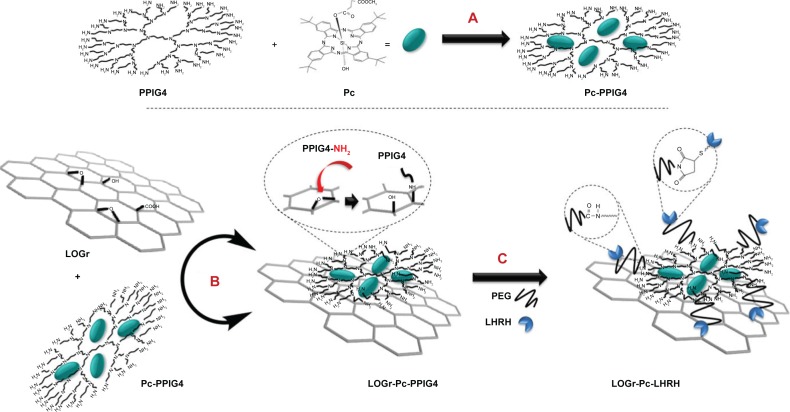
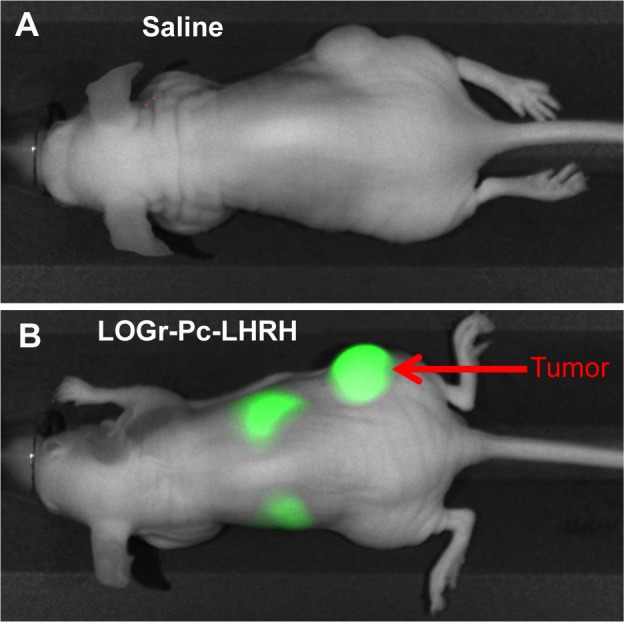
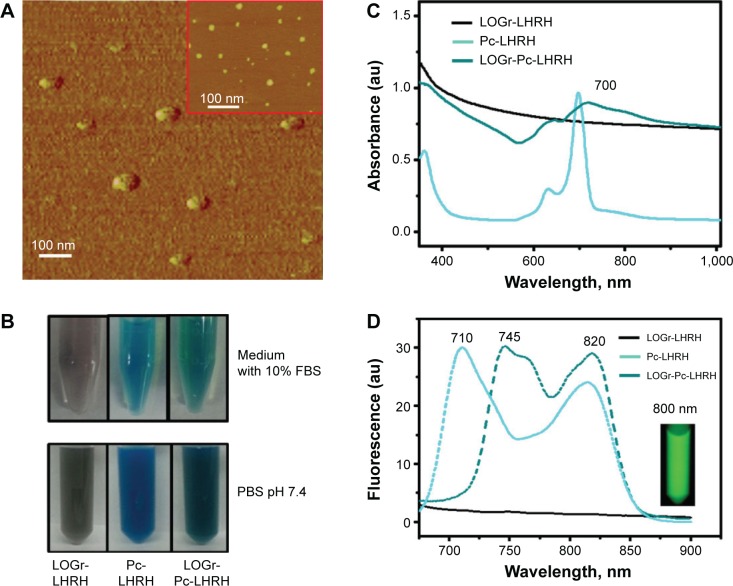
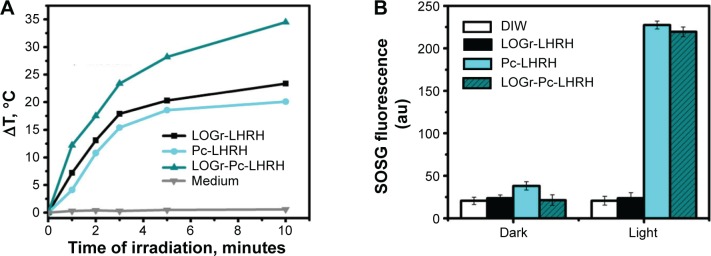
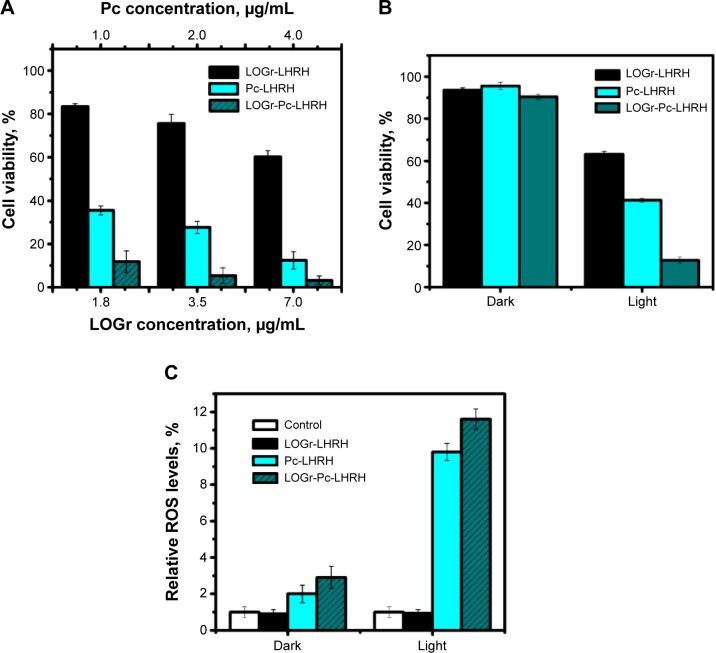
We report a novel cancer-targeted nanomedicine platform for imaging and prospect for future treatment of unresected ovarian cancer tumors by intraoperative multimodal phototherapy. To develop the required theranostic system, novel low-oxygen graphene nanosheets were chemically modified with polypropylenimine dendrimers loaded with phthalocyanine (Pc) as a photosensitizer. Such a molecular design prevents fluorescence quenching of the Pc by graphene nanosheets, providing the possibility of fluorescence imaging. Furthermore, the developed nanoplatform was conjugated with poly(ethylene glycol), to improve biocompatibility, and with luteinizing hormone-releasing hormone (LHRH) peptide, for tumor-targeted delivery. Notably, a low-power near-infrared (NIR) irradiation of single wavelength was used for both heat generation by the graphene nanosheets (photothermal therapy [PTT]) and for reactive oxygen species (ROS)-production by Pc (photodynamic therapy [PDT]). The combinatorial phototherapy resulted in an enhanced destruction of ovarian cancer cells, with a killing efficacy of 90%-95% at low Pc and low-oxygen graphene dosages, presumably conferring cytotoxicity to the synergistic effects of generated ROS and mild hyperthermia. An animal study confirmed that Pc loaded into the nanoplatform can be employed as a NIR fluorescence agent for imaging-guided drug delivery. Hence, the newly developed Pc-graphene nanoplatform has the significant potential as an effective NIR theranostic probe for imaging and combinatorial phototherapy.
我们报道了一种新型的癌症靶向纳米药物平台,用于未切除的卵巢癌肿瘤的成像,并展望术中多模态光疗对其未来治疗的前景。为了开发所需的治疗诊断系统,新型低氧石墨烯纳米片用负载有酞菁(Pc)作为光敏剂的聚丙烯亚胺树枝状大分子进行了化学修饰。这种分子设计可防止石墨烯纳米片对Pc的荧光猝灭,从而提供荧光成像的可能性。此外,所开发的纳米平台与聚乙二醇共轭以提高生物相容性,并与促黄体生成素释放激素(LHRH)肽共轭以实现肿瘤靶向递送。值得注意的是,单波长的低功率近红外(NIR)照射既用于石墨烯纳米片产生热量(光热疗法[PTT]),也用于Pc产生活性氧(ROS)(光动力疗法[PDT])。联合光疗导致卵巢癌细胞的破坏增强,在低Pc和低氧石墨烯剂量下杀伤效率为90%-95%,这可能是由于产生的ROS和轻度热疗的协同作用赋予了细胞毒性。一项动物研究证实,负载在纳米平台中的Pc可作为近红外荧光剂用于成像引导的药物递送。因此,新开发的Pc-石墨烯纳米平台作为一种有效的近红外治疗诊断探针用于成像和联合光疗具有巨大潜力。