Liu Xiaojun, Xiao Junjie, Zhu Han, Wei Xin, Platt Colin, Damilano Federico, Xiao Chunyang, Bezzerides Vassilios, Boström Pontus, Che Lin, Zhang Chunxiang, Spiegelman Bruce M, Rosenzweig Anthony
Cardiovascular Division of the Beth Israel Deaconess Medical Center and Harvard Medical School, Boston, MA 02215, USA.
Regeneration Lab and Experimental Center of Life Sciences, School of Life Science, Shanghai University, Shanghai 200444, China.
Cell Metab. 2015 Apr 7;21(4):584-95. doi: 10.1016/j.cmet.2015.02.014.
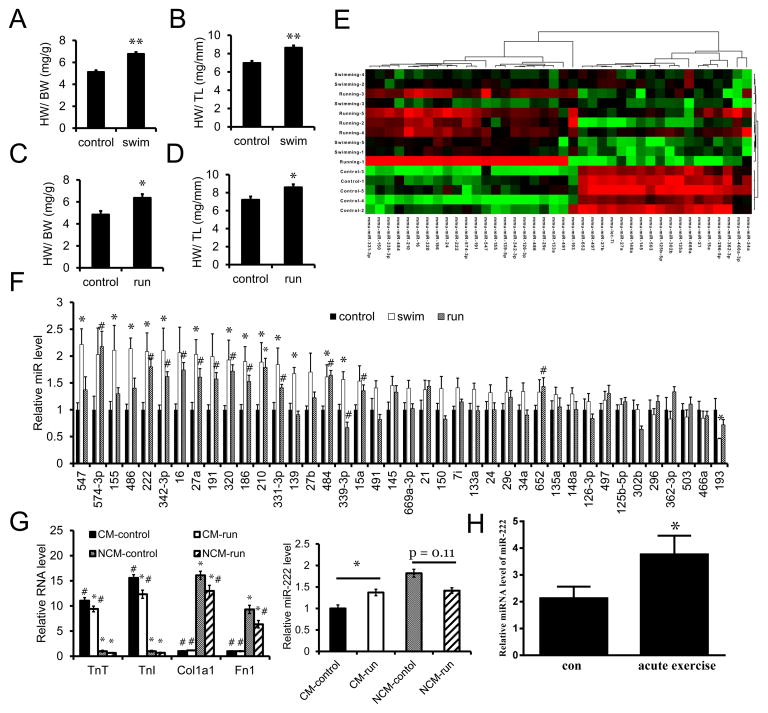
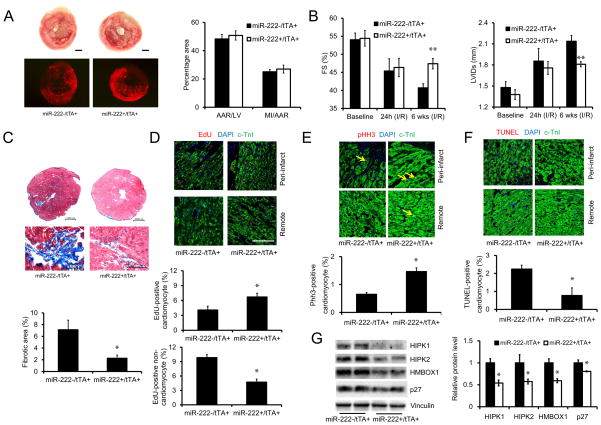
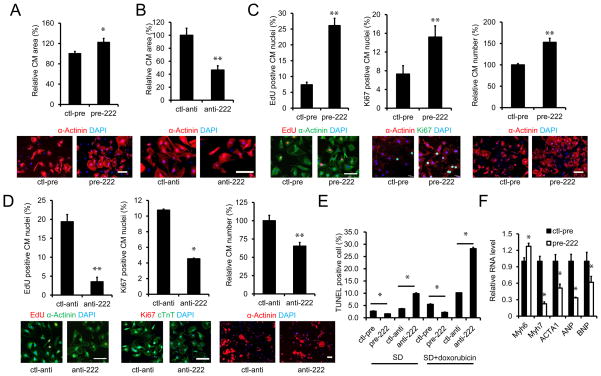
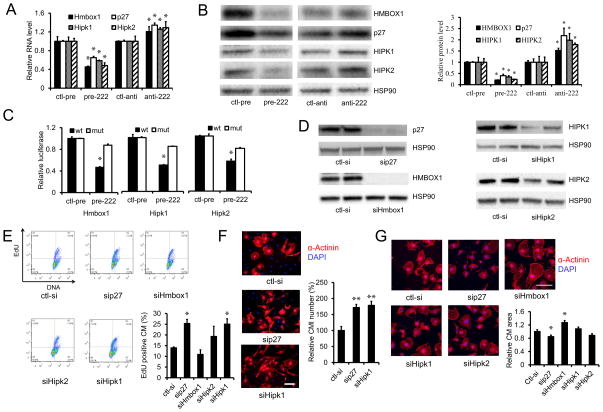
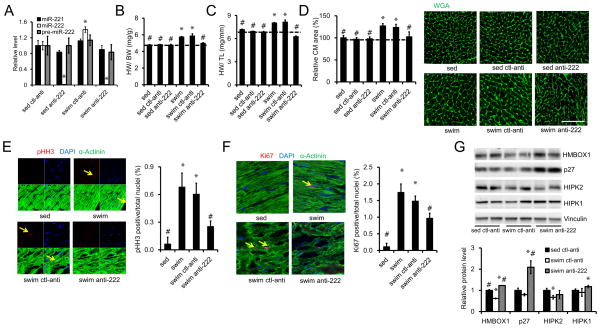
Exercise induces physiological cardiac growth and protects the heart against pathological remodeling. Recent work suggests exercise also enhances the heart's capacity for repair, which could be important for regenerative therapies. While microRNAs are important in certain cardiac pathologies, less is known about their functional roles in exercise-induced cardiac phenotypes. We profiled cardiac microRNA expression in two distinct models of exercise and found microRNA-222 (miR-222) was upregulated in both. Downstream miR-222 targets modulating cardiomyocyte phenotypes were identified, including HIPK1 and HMBOX1. Inhibition of miR-222 in vivo completely blocked cardiac and cardiomyocyte growth in response to exercise while reducing markers of cardiomyocyte proliferation. Importantly, mice with inducible cardiomyocyte miR-222 expression were resistant to adverse cardiac remodeling and dysfunction after ischemic injury. These studies implicate miR-222 as necessary for exercise-induced cardiomyocyte growth and proliferation in the adult mammalian heart and show that it is sufficient to protect the heart against adverse remodeling.
运动可诱导生理性心脏生长,并保护心脏免受病理性重塑的影响。最近的研究表明,运动还能增强心脏的修复能力,这对再生疗法可能具有重要意义。虽然微小RNA在某些心脏疾病中很重要,但它们在运动诱导的心脏表型中的功能作用却鲜为人知。我们在两种不同的运动模型中分析了心脏微小RNA的表达,发现微小RNA-222(miR-222)在两种模型中均上调。确定了调节心肌细胞表型的miR-222下游靶点,包括HIPK1和HMBOX1。体内抑制miR-222完全阻断了运动引起的心脏和心肌细胞生长,同时减少了心肌细胞增殖的标志物。重要的是,可诱导心肌细胞miR-222表达的小鼠在缺血性损伤后对不良心脏重塑和功能障碍具有抗性。这些研究表明,miR-222是成年哺乳动物心脏运动诱导的心肌细胞生长和增殖所必需的,并且表明它足以保护心脏免受不良重塑的影响。