Perrier Erica T, Buendia-Jimenez Inmaculada, Vecchio Mariacristina, Armstrong Lawrence E, Tack Ivan, Klein Alexis
Danone Research, 91767 Palaiseau, France.
Department of Kinesiology, Human Performance Laboratory, University of Connecticut, Storrs, CT 06269, USA.
Dis Markers. 2015;2015:231063. doi: 10.1155/2015/231063. Epub 2015 Mar 18.
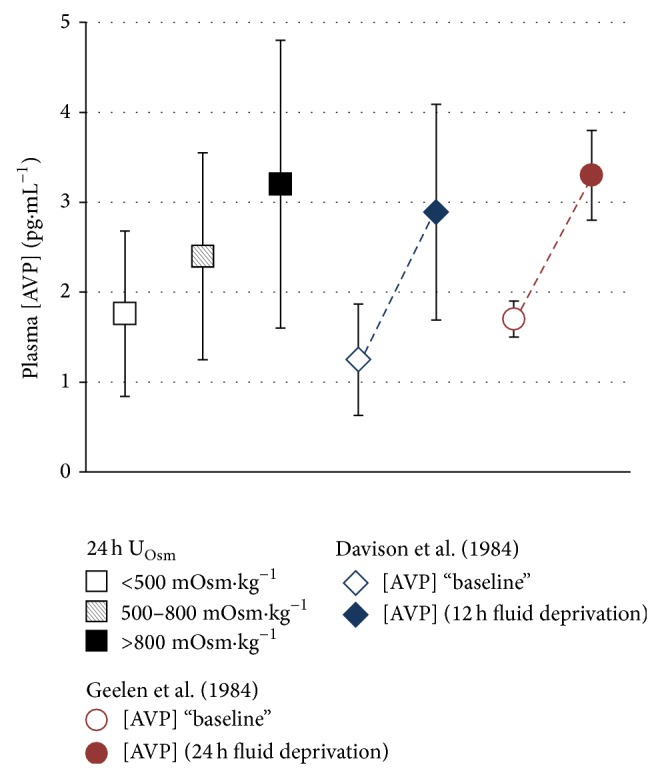
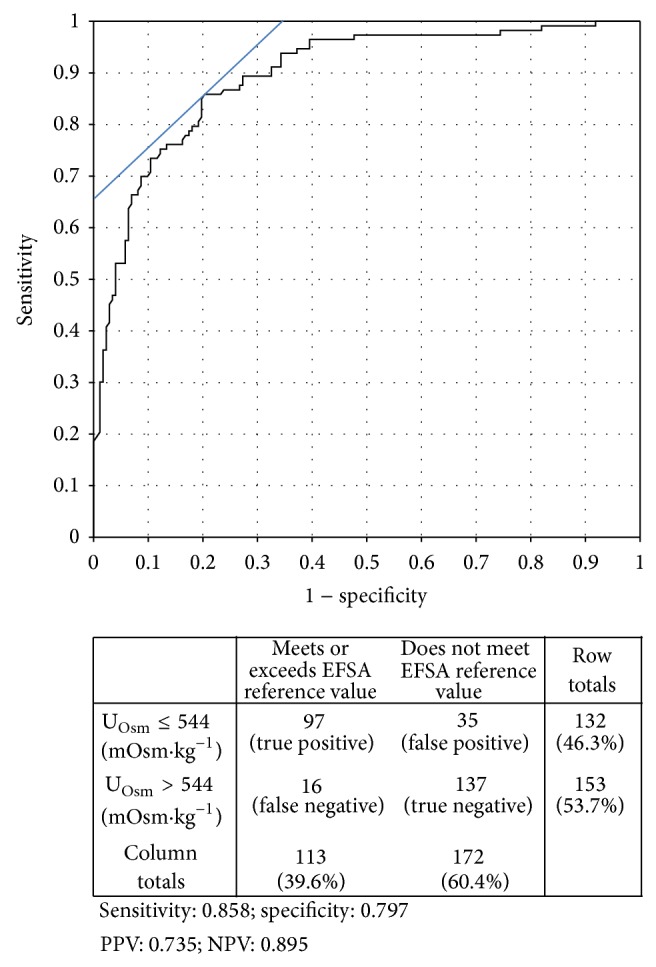
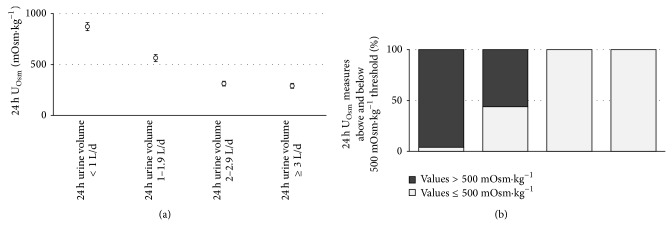
While associations exist between water, hydration, and disease risk, research quantifying the dose-response effect of water on health is limited. Thus, the water intake necessary to maintain optimal hydration from a physiological and health standpoint remains unclear. The aim of this analysis was to derive a 24 h urine osmolality (U(Osm)) threshold that would provide an index of "optimal hydration," sufficient to compensate water losses and also be biologically significant relative to the risk of disease. Ninety-five adults (31.5 ± 4.3 years, 23.2 ± 2.7 kg·m(-2)) collected 24 h urine, provided morning blood samples, and completed food and fluid intake diaries over 3 consecutive weekdays. A U(Osm) threshold was derived using 3 approaches, taking into account European dietary reference values for water; total fluid intake, and urine volumes associated with reduced risk for lithiasis and chronic kidney disease and plasma vasopressin concentration. The aggregate of these approaches suggest that a 24 h urine osmolality ≤500 mOsm·kg(-1) may be a simple indicator of optimal hydration, representing a total daily fluid intake adequate to compensate for daily losses, ensure urinary output sufficient to reduce the risk of urolithiasis and renal function decline, and avoid elevated plasma vasopressin concentrations mediating the increased antidiuretic effort.
虽然水、水合作用与疾病风险之间存在关联,但量化水对健康的剂量反应效应的研究有限。因此,从生理和健康角度来看,维持最佳水合状态所需的水摄入量仍不明确。本分析的目的是得出一个24小时尿渗透压(U(Osm))阈值,该阈值可作为“最佳水合状态”的指标,足以补偿水分流失,并且相对于疾病风险具有生物学意义。95名成年人(年龄31.5±4.3岁,体重指数23.2±2.7kg·m(-2))在连续三个工作日收集24小时尿液,提供清晨血样,并完成食物和液体摄入日记。考虑到欧洲水的膳食参考值、总液体摄入量以及与降低结石病和慢性肾病风险相关的尿量和血浆血管加压素浓度,使用三种方法得出U(Osm)阈值。这些方法的综合结果表明,24小时尿渗透压≤500mOsm·kg(-1)可能是最佳水合状态的一个简单指标,代表每日总液体摄入量足以补偿每日流失量,确保尿量足以降低尿路结石风险和肾功能下降风险,并避免血浆血管加压素浓度升高介导抗利尿作用增强。