Institute of Zoology, Zoological Society of London, Regent's Park, London, NW1 4RY, UK.
Animal and Plant Health Agency (APHA), Weybridge, New Haw, Addlestone, Surrey, KT15 3NB, UK.
BMC Vet Res. 2015 Feb 7;11:20. doi: 10.1186/s12917-015-0329-5.
Avian reoviruses (ARVs) cause a range of disease presentations in domestic, captive and free-living bird species. ARVs have been reported as a cause of significant disease and mortality in free-living corvid species in North America and continental Europe. Until this report, there have been no confirmed cases of ARV-associated disease in British wild birds.
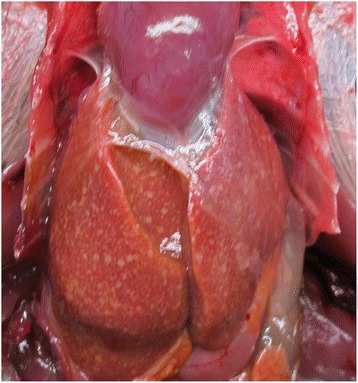
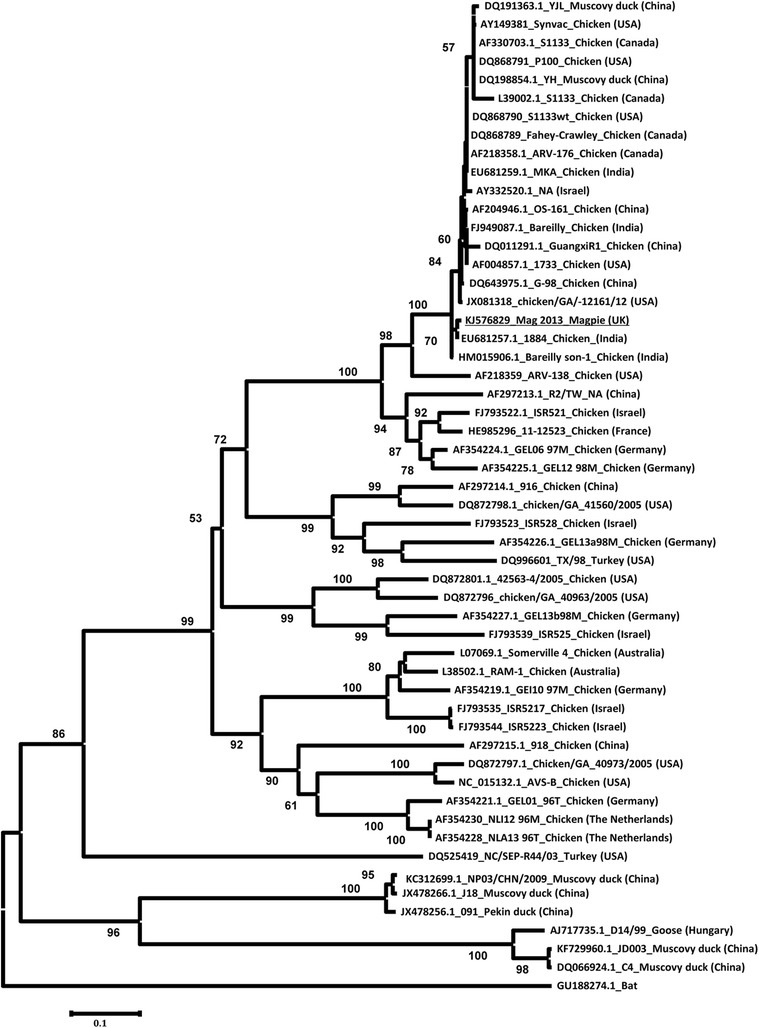
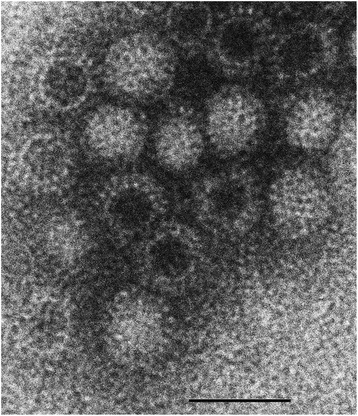
Sporadic individual magpie (Pica pica) mortality was detected at a single site in Buckinghamshire, England, April-September 2013. An adult female magpie was found moribund and subsequently died. Post-mortem examination identified hepatomegaly and splenomegaly as the most severe macroscopic abnormalities. Histopathological examination revealed extensive hepatic and splenic necrosis. Transmission electron microscopy (TEM) identified virions of a size (circa 78 nm diameter) and morphology consistent with ARV in both the liver and the small intestinal (SI) contents. Nucleic acid extracted from pooled liver and spleen was positive on both a pan-reovirus nested PCR targeting the RNA-dependent RNA polymerase gene and a PCR using primers specific to the ARV sigma C protein gene. Virus isolated from the liver and the SI contents was characterised by a syncytial-type cytopathic effect, a reovirus-like appearance on TEM and sequence identical to that from PCR of tissues. In situ hybridisation confirmed co-localisation of ARV with lesions in the liver and spleen, implicating ARV as the causative agent. Splenic lymphoid atrophy and necrotic stomatitis associated with Aspergillus fumigatus infection were consistent with generalised immunosuppression and resultant opportunistic infection.
The pathology and comprehensive virus investigations in this case indicate ARV as the primary pathogen in this magpie, with concurrent secondary infection subsequent to immunosuppression, as has been observed with reoviral infections in other bird species. ARV should be considered as a differential diagnosis for magpie, and potentially other corvid, disease and mortality incidents. This is the first demonstration of ARV-associated mortality in a wild bird in Britain. The prevalence and significance of ARV infection in British wild birds, and its implications for poultry and captive bird health, are currently unknown.
禽呼肠孤病毒(ARV)可引起多种疾病,涉及家养、圈养和野生鸟类。在北美的自由生活的鸦科鸟类和欧洲大陆,ARV 已被报道为导致严重疾病和死亡率的原因。在本报告之前,英国野生鸟类中尚未有 ARV 相关疾病的确诊病例。
2013 年 4 月至 9 月,在英国白金汉郡的一个地点检测到零星的喜鹊(Pica pica)死亡。一只成年雌性喜鹊被发现病危,随后死亡。剖检发现肝脾肿大是最严重的肉眼异常。组织病理学检查显示广泛的肝脾坏死。透射电子显微镜(TEM)鉴定出肝脏和小肠(SI)内容物中的病毒粒子大小(约 78nm 直径)和形态与 ARV 一致。从肝脏和脾脏混合提取的核酸在针对 RNA 依赖性 RNA 聚合酶基因的 pan-reovirus 巢式 PCR 和针对 ARV sigma C 蛋白基因的 PCR 上均呈阳性。从肝脏和 SI 内容物中分离出的病毒表现出合胞体样细胞病变效应,在 TEM 上表现出类呼肠孤病毒的外观,与组织 PCR 的序列完全相同。原位杂交证实 ARV 与肝脏和脾脏病变的共定位,提示 ARV 为致病因子。与烟曲霉感染相关的脾淋巴组织萎缩和坏死性口炎提示普遍的免疫抑制和随后的机会性感染。
本病例的病理学和全面病毒调查表明,ARV 是喜鹊的主要病原体,同时存在继发于免疫抑制的继发感染,这在其他鸟类的呼肠孤病毒感染中也有观察到。ARV 应被视为喜鹊,以及可能其他鸦科鸟类疾病和死亡率事件的鉴别诊断。这是英国首例野生鸟类 ARV 相关死亡的报告。目前尚不清楚 ARV 感染在英国野生鸟类中的流行率和重要性,以及其对家禽和圈养鸟类健康的影响。