Rodrigues S P, Horeman T, Blomjous M S H, Hiemstra E, van den Dobbelsteen J J, Jansen F W
Department of Gynecology, K6-76, Leiden University Medical Center, PO Box 9600, 2300 RC, Leiden, The Netherlands.
Department of BioMechanical Engineering, Delft University of Technology, Delft, The Netherlands.
Surg Endosc. 2016 Jan;30(1):315-22. doi: 10.1007/s00464-015-4211-0. Epub 2015 May 5.
The aim of this study was to examine the influence of training under direct vision prior to training with indirect vision on the learning curve of the laparoscopic suture task.
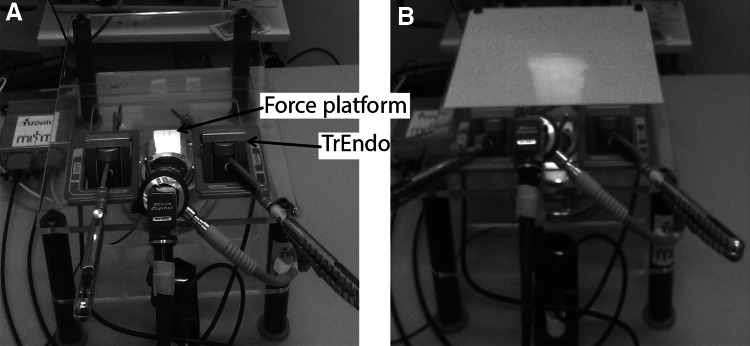
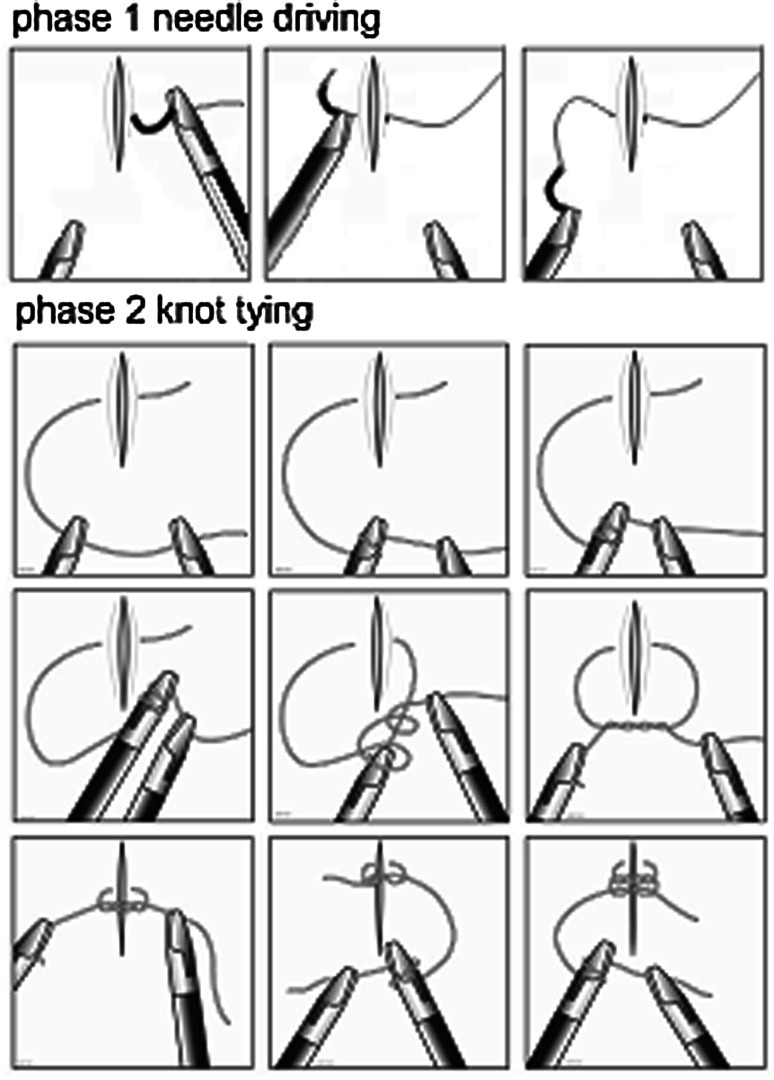
Novices were randomized in two groups. Group 1 performed three suturing tasks in a transparent laparoscopic box trainer under direct vision followed by three suturing tasks in a standard non-transparent laparoscopic box trainer equipped with a 0° laparoscope. Group 2 performed six suturing tasks in a standard laparoscopic box trainer. Performance time, motion analysis parameters (economy of movements) and interaction force parameters (tissue handling) were measured. Participants completed a questionnaire assessing: self-perceived dexterity before and after the training, their experienced frustration and the difficulty of the training.
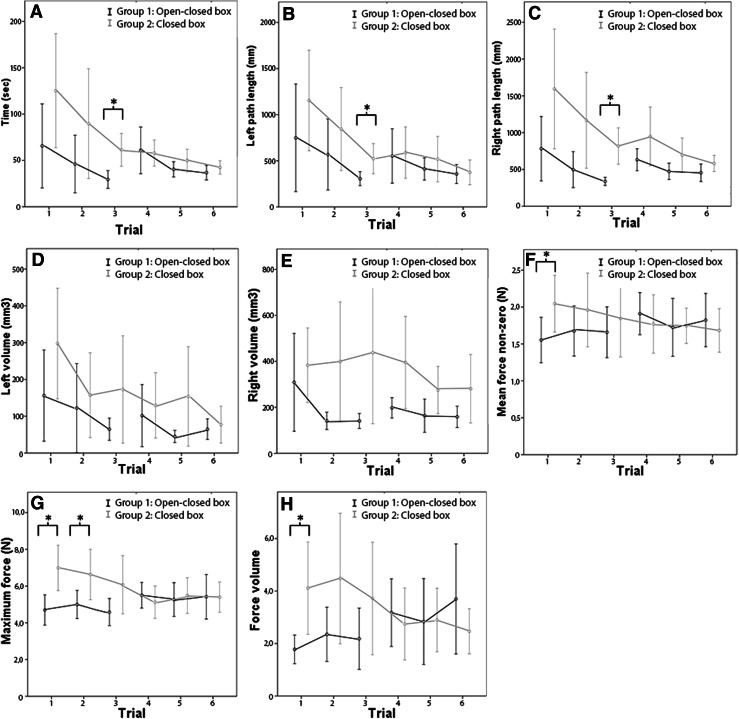
A total of 34 participants were included, one was excluded because of incomplete training. Group 1 used significantly less time to complete the total of six tasks (27 %). At the end of the training, there were no differences in motion or force parameters between the two groups. Group 2 rated their self-perceived dexterity after the training significantly lower than before the training and also reported significantly higher levels of frustration compared to group 1. Both groups rated the difficulty of the training similar.
Novices benefit from starting their training of difficult basic laparoscopic skills, e.g., suturing, in a transparent box trainer without camera. It takes less time to complete the tasks, and they get less frustrated by the training with the same results on their economy of movements and tissue handling skills.
本研究旨在探讨在间接视觉训练之前进行直接视觉训练对腹腔镜缝合任务学习曲线的影响。
新手被随机分为两组。第1组在透明腹腔镜箱式训练器中进行直接视觉下的三项缝合任务,随后在配备0°腹腔镜的标准不透明腹腔镜箱式训练器中进行三项缝合任务。第2组在标准腹腔镜箱式训练器中进行六项缝合任务。测量了操作时间、运动分析参数(动作经济性)和相互作用力参数(组织操作)。参与者完成了一份问卷,评估:训练前后的自我感知灵巧性、他们所经历的挫折感以及训练的难度。
共纳入34名参与者,1名因训练不完整被排除。第1组完成总共六项任务所用时间显著更少(27%)。在训练结束时,两组之间的运动或力参数没有差异。第2组在训练后对自我感知灵巧性的评分显著低于训练前,并且与第1组相比,报告的挫折感水平也显著更高。两组对训练难度的评分相似。
新手在没有摄像头的透明箱式训练器中开始训练困难的基本腹腔镜技能(如缝合)会受益。完成任务所需时间更少,并且他们在训练中较少受挫,在动作经济性和组织操作技能方面能取得相同的结果。