Anderson James L, Anderson Christopher M, Chu Jingjie, Meredith Jennifer, Asche Frank, Sylvia Gil, Smith Martin D, Anggraeni Dessy, Arthur Robert, Guttormsen Atle, McCluney Jessica K, Ward Tim, Akpalu Wisdom, Eggert Håkan, Flores Jimely, Freeman Matthew A, Holland Daniel S, Knapp Gunnar, Kobayashi Mimako, Larkin Sherry, MacLauchlin Kari, Schnier Kurt, Soboil Mark, Tveteras Sigbjorn, Uchida Hirotsugu, Valderrama Diego
Institute for Global Food Systems, University of Florida, PO Box 110240, Gainesville, FL 32611, United States of America.
School of Aquatic and Fishery Sciences, University of Washington, Box 355020, Seattle, WA 98105, United States of America.
PLoS One. 2015 May 6;10(5):e0122809. doi: 10.1371/journal.pone.0122809. eCollection 2015.
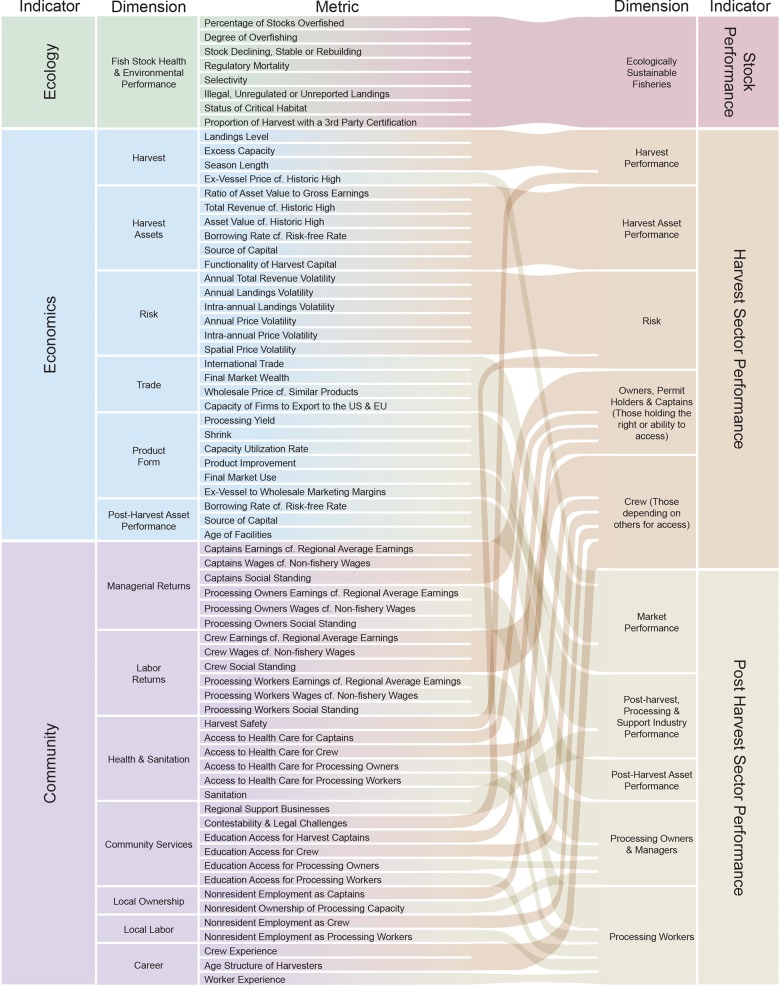
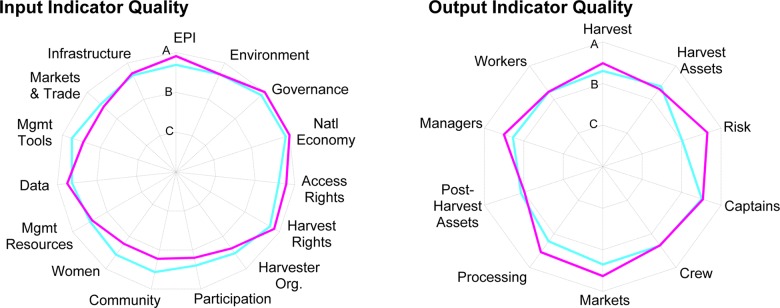
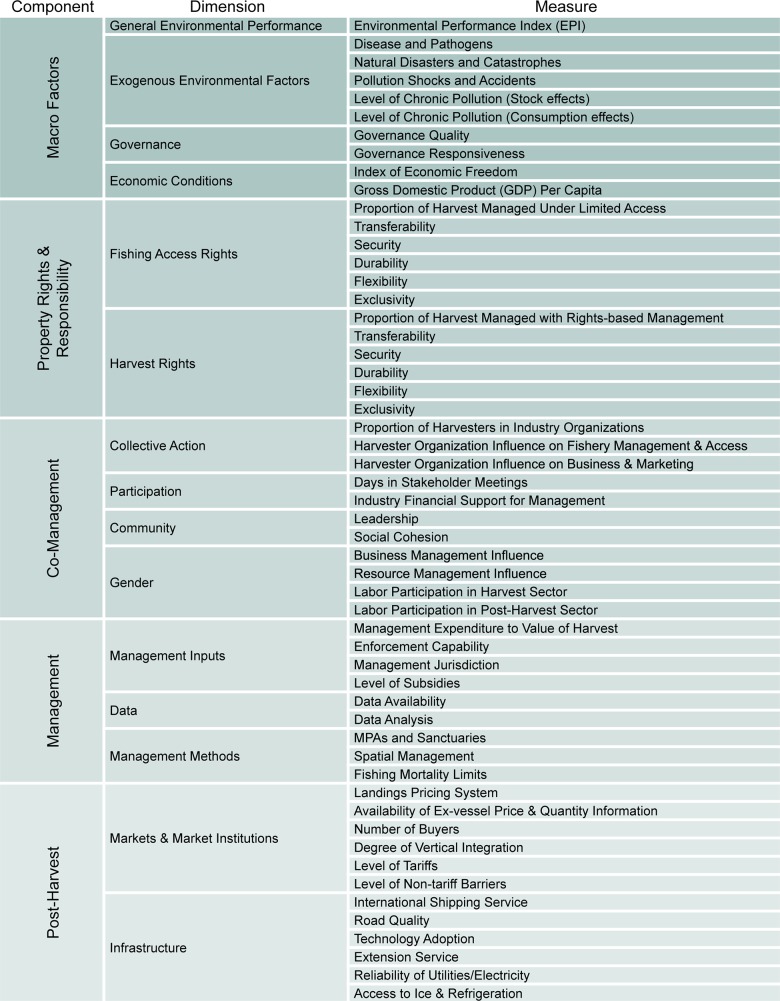
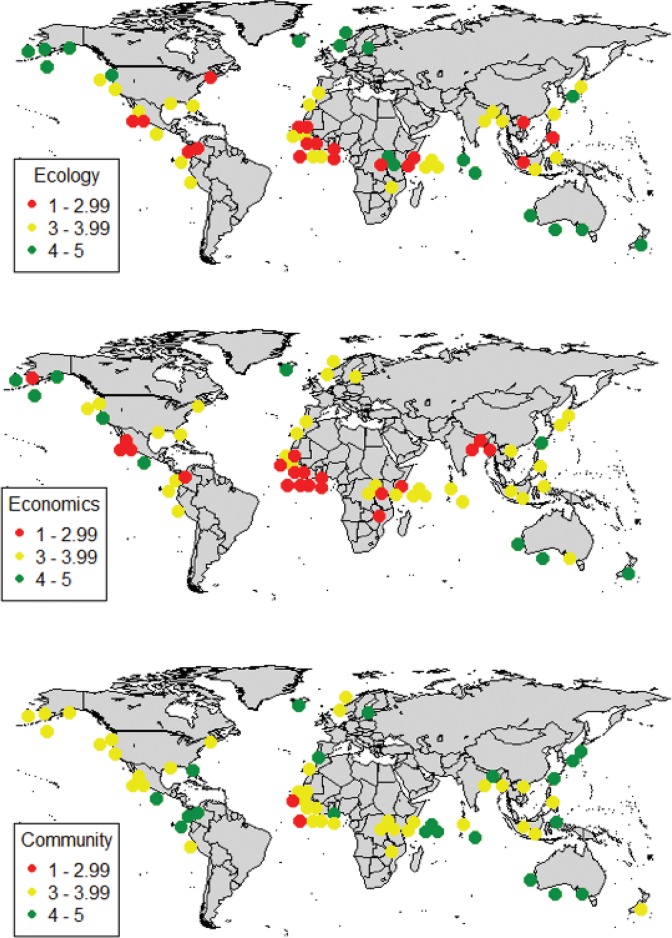
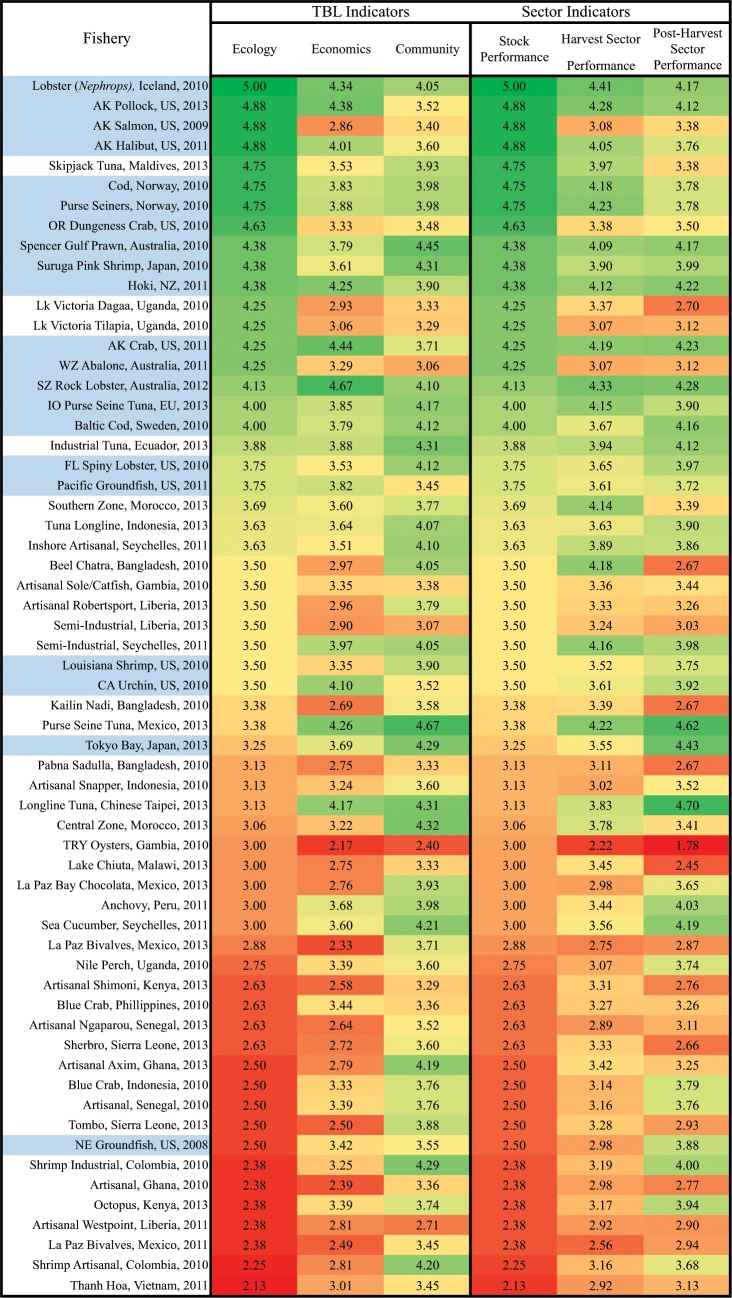
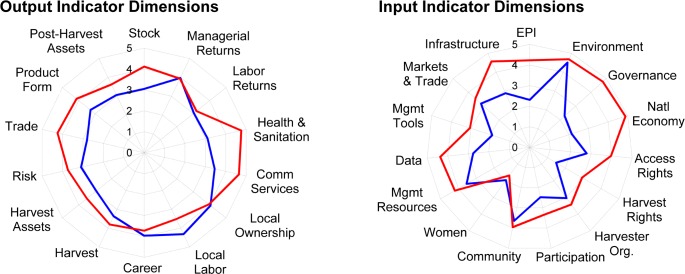
Pursuit of the triple bottom line of economic, community and ecological sustainability has increased the complexity of fishery management; fisheries assessments require new types of data and analysis to guide science-based policy in addition to traditional biological information and modeling. We introduce the Fishery Performance Indicators (FPIs), a broadly applicable and flexible tool for assessing performance in individual fisheries, and for establishing cross-sectional links between enabling conditions, management strategies and triple bottom line outcomes. Conceptually separating measures of performance, the FPIs use 68 individual outcome metrics--coded on a 1 to 5 scale based on expert assessment to facilitate application to data poor fisheries and sectors--that can be partitioned into sector-based or triple-bottom-line sustainability-based interpretative indicators. Variation among outcomes is explained with 54 similarly structured metrics of inputs, management approaches and enabling conditions. Using 61 initial fishery case studies drawn from industrial and developing countries around the world, we demonstrate the inferential importance of tracking economic and community outcomes, in addition to resource status.
追求经济、社区和生态可持续性的三重底线增加了渔业管理的复杂性;除了传统的生物信息和建模外,渔业评估还需要新型数据和分析来指导基于科学的政策。我们引入了渔业绩效指标(FPI),这是一种广泛适用且灵活的工具,用于评估单个渔业的绩效,并在有利条件、管理策略和三重底线结果之间建立横断面联系。从概念上区分绩效衡量标准,FPI使用68个个体结果指标——基于专家评估按1至5级编码,以便于应用于数据匮乏的渔业和部门——这些指标可分为基于部门或基于三重底线可持续性的解释性指标。结果之间的差异通过54个结构类似的投入、管理方法和有利条件指标来解释。利用来自世界各国工业和发展中国家的61个初始渔业案例研究,我们证明了除资源状况外,跟踪经济和社区结果的推断重要性。