Danielsen Anne Kjaergaard, Pommergaard Hans-Christian, Burcharth Jakob, Angenete Eva, Rosenberg Jacob
Department of Nursing, Faculty of Health and Technology, Metropolitan University College, Copenhagen, Denmark.
Department of Surgery, Herlev Hospital, University of Copenhagen, Herlev, Denmark.
PLoS One. 2015 May 12;10(5):e0127050. doi: 10.1371/journal.pone.0127050. eCollection 2015.
There is growing awareness of the need to explore patient reported outcomes in clinical trials. In the Scandinavian Surgical Outcomes Research Group we are conducting several clinical trials in cooperation between Danish and Swedish surgical researchers, and we use questionnaires aimed at patients from both countries. In relation to this and similar international cooperation, the validity and reliability of translated questionnaires are central aspects.
The purpose of this study was to explore which methodological measures were used in studies reporting translation of questionnaires. Furthermore, we wanted to make some methodological suggestions for clinical researchers who are faced with having to translate a questionnaire.
We designed a research study based on a survey of the literature and extracted data from published studies reporting the methodological process when translating questionnaires on health related quality of life for different diseases.
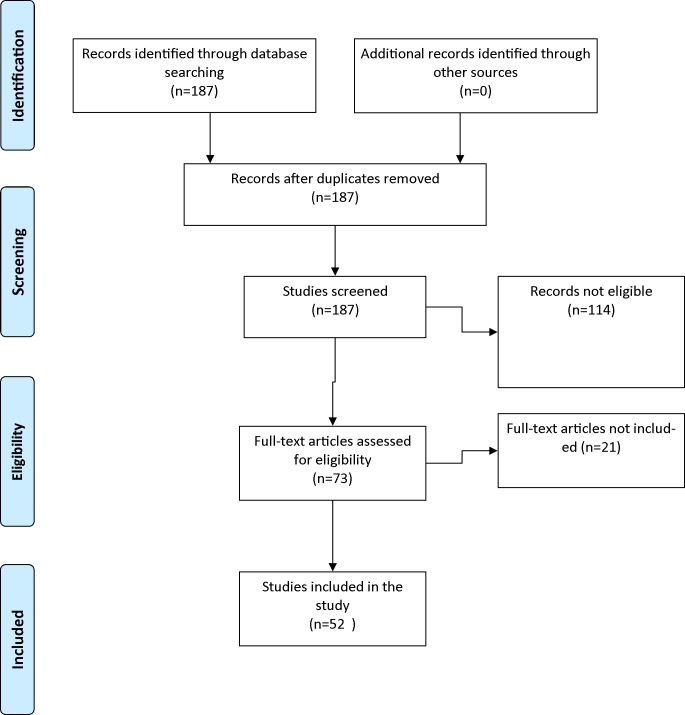
We retrieved 187 studies and out of theses we included 52 studies. The psychometric properties of the translated versions were validated using different tests. The focus was on internal validity (96%), reliability (67%) criterion validity (81%), and construct validity (62%). For internal validity Cronbach's alpha was used in 94% of the studies.
This study shows that there seems to be a consensus regarding the translation process (especially for internal validity) although most researchers did not use a translation guide. Moreover, we recommended that clinical researchers should consider three steps covering the process of translation, the qualitative validation as well as the quantitative validation.
人们越来越意识到在临床试验中探索患者报告结局的必要性。在斯堪的纳维亚外科手术结局研究小组中,丹麦和瑞典的外科研究人员正在合作开展多项临床试验,我们使用针对两国患者的问卷。与此及类似的国际合作相关,翻译后问卷的有效性和可靠性是核心问题。
本研究的目的是探究在报告问卷翻译的研究中使用了哪些方法学措施。此外,我们想为不得不翻译问卷的临床研究人员提出一些方法学建议。
我们基于文献调查设计了一项研究,并从已发表的研究中提取数据,这些研究报告了针对不同疾病翻译与健康相关生活质量问卷时的方法学过程。
我们检索到187项研究,其中纳入了52项研究。翻译版本的心理测量特性通过不同测试进行了验证。重点在于内部效度(96%)、信度(67%)、效标效度(81%)和结构效度(62%)。对于内部效度,94%的研究使用了Cronbach's alpha。
本研究表明,尽管大多数研究人员未使用翻译指南,但在翻译过程(尤其是内部效度方面)似乎存在共识。此外,我们建议临床研究人员应考虑涵盖翻译过程、定性验证以及定量验证的三个步骤。