Lopez Juan Pablo, Diallo Alpha, Cruceanu Cristiana, Fiori Laura M, Laboissiere Sylvie, Guillet Isabelle, Fontaine Joelle, Ragoussis Jiannis, Benes Vladimir, Turecki Gustavo, Ernst Carl
McGill Group for Suicide Studies (MGSS), Douglas Mental Health University Institute, McGill University, Frank B Common Pavilion, Room F-2101.2, 6875 LaSalle Boulevard, Montreal, QC, H4H 1R3, Canada.
Department of Human Genetics, McGill University, Montreal, QC, Canada.
BMC Med Genomics. 2015 Jul 1;8:35. doi: 10.1186/s12920-015-0109-x.
Small ncRNAs (sncRNAs) offer great hope as biomarkers of disease and response to treatment. This has been highlighted in the context of several medical conditions such as cancer, liver disease, cardiovascular disease, and central nervous system disorders, among many others. Here we assessed several steps involved in the development of an ncRNA biomarker discovery pipeline, ranging from sample preparation to bioinformatic processing of small RNA sequencing data.
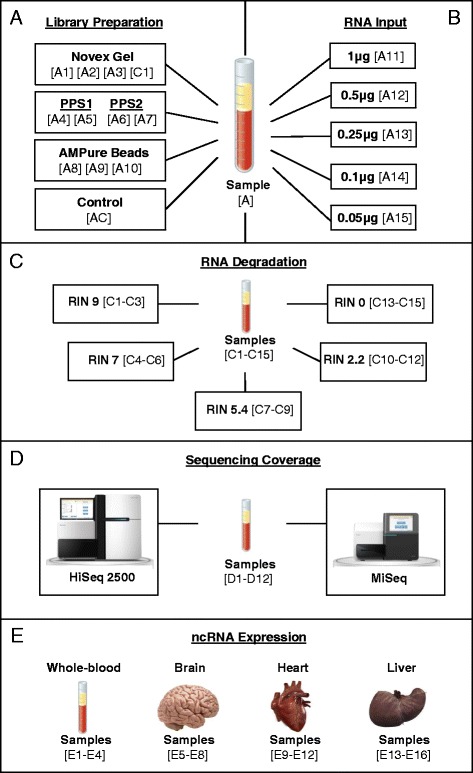
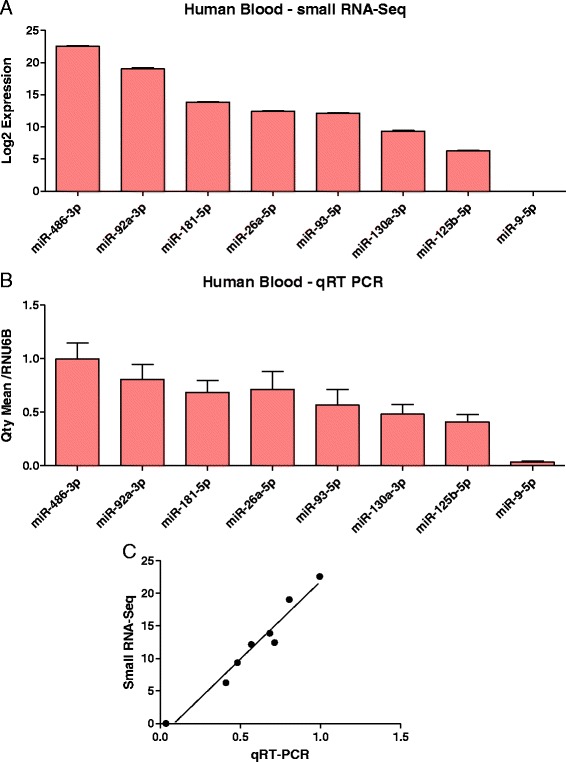
A total of 45 biological samples were included in the present study. All libraries were prepared using the Illumina TruSeq Small RNA protocol and sequenced using the HiSeq2500 or MiSeq Illumina sequencers. Small RNA sequencing data was validated using qRT-PCR. At each stage, we evaluated the pros and cons of different techniques that may be suitable for different experimental designs. Evaluation methods included quality of data output in relation to hands-on laboratory time, cost, and efficiency of processing.
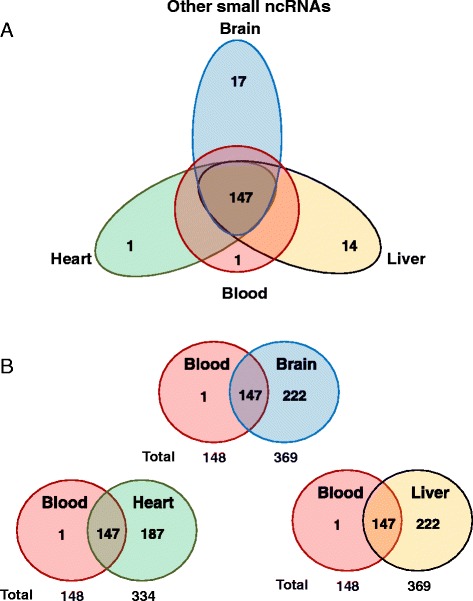
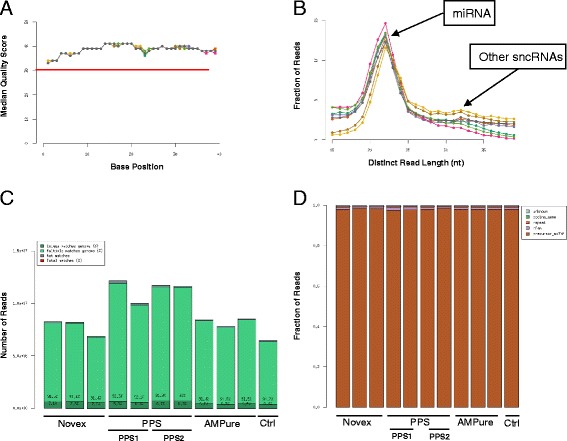
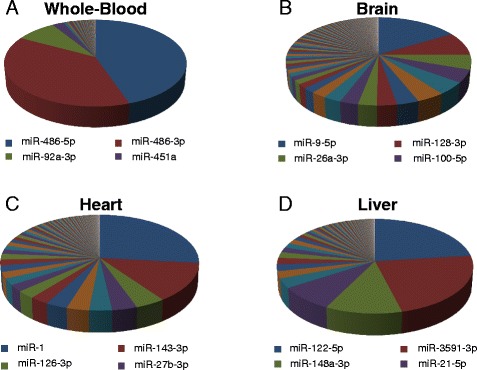
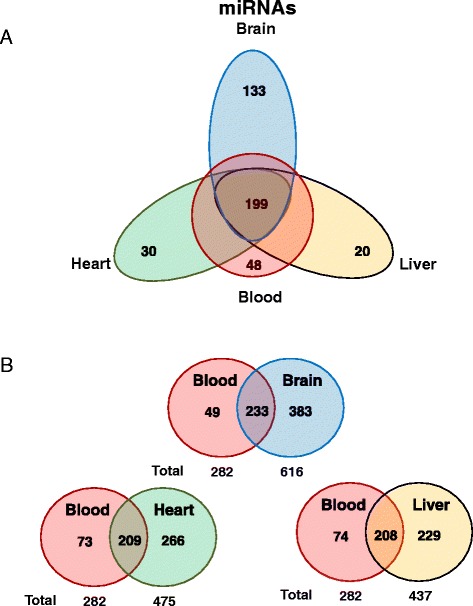
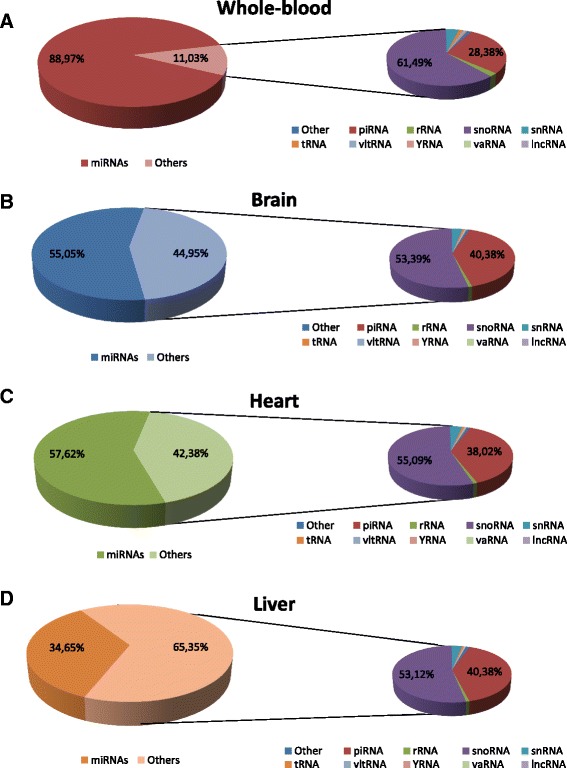
Our results show that good quality sequencing libraries can be prepared from small amounts of total RNA and that varying degradation levels in the samples do not have a significant effect on the overall quantification of sncRNAs via NGS. In addition, we describe the strengths and limitations of three commercially available library preparation methods: (1) Novex TBE PAGE gel; (2) Pippin Prep automated gel system; and (3) AMPure XP beads. We describe our bioinformatics pipeline, provide recommendations for sequencing coverage, and describe in detail the expression and distribution of all sncRNAs in four human tissues: whole-blood, brain, heart and liver.
Ultimately this study provides tools and outcome metrics that will aid researchers and clinicians in choosing an appropriate and effective high-throughput sequencing quantification method for various study designs, and overall generating valuable information that can contribute to our understanding of small ncRNAs as potential biomarkers and mediators of biological functions and disease.
小非编码RNA(sncRNAs)作为疾病生物标志物和治疗反应指标,带来了巨大希望。在多种医学病症中,如癌症、肝病、心血管疾病和中枢神经系统疾病等,这一点已得到凸显。在此,我们评估了非编码RNA生物标志物发现流程开发中涉及的几个步骤,从样本制备到小RNA测序数据的生物信息学处理。
本研究共纳入45个生物样本。所有文库均使用Illumina TruSeq Small RNA方案制备,并使用HiSeq2500或MiSeq Illumina测序仪进行测序。小RNA测序数据通过qRT-PCR进行验证。在每个阶段,我们评估了可能适用于不同实验设计的不同技术的优缺点。评估方法包括与实际操作实验室时间、成本和处理效率相关的数据输出质量。
我们的结果表明,可以从少量总RNA制备高质量的测序文库,并且样本中不同程度的降解对通过NGS进行的sncRNAs总体定量没有显著影响。此外,我们描述了三种市售文库制备方法的优缺点:(1)Novex TBE PAGE凝胶;(2)Pippin Prep自动凝胶系统;(3)AMPure XP磁珠。我们描述了我们的生物信息学流程,提供了测序覆盖度的建议,并详细描述了四种人体组织(全血、脑、心脏和肝脏)中所有sncRNAs的表达和分布。
最终,本研究提供了工具和结果指标,将有助于研究人员和临床医生为各种研究设计选择合适且有效的高通量测序定量方法,并总体上生成有价值的信息,有助于我们理解小非编码RNA作为潜在生物标志物以及生物功能和疾病的介质。