Forcales Sonia-V
Genetics and Epigenetics of Cancer, Institute of Predictive and Personalized Medicine of Cancer Barcelona, Spain.
Front Aging Neurosci. 2015 Jul 13;7:123. doi: 10.3389/fnagi.2015.00123. eCollection 2015.
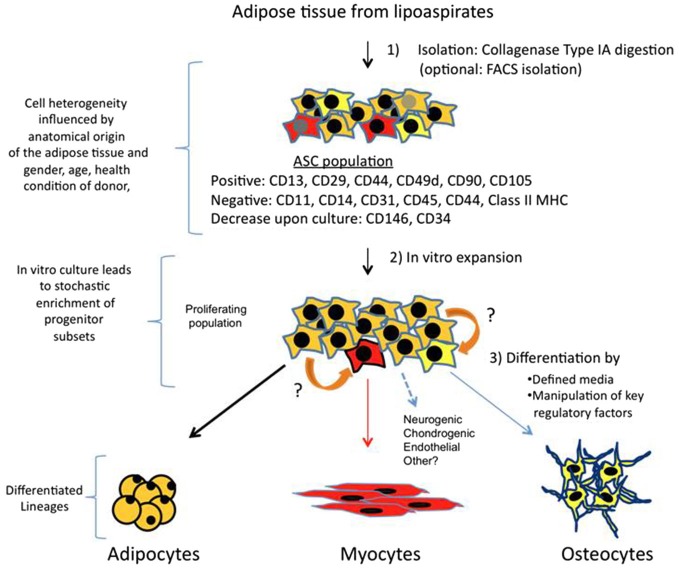
Regenerative capacity of skeletal muscles resides in satellite cells, a self-renewing population of muscle cells. Several studies are investigating epigenetic mechanisms that control myogenic proliferation and differentiation to find new approaches that could boost regeneration of endogenous myogenic progenitor populations. In recent years, a lot of effort has been applied to purify, expand and manipulate adult stem cells from muscle tissue. However, this population of endogenous myogenic progenitors in adults is limited and their access is difficult and invasive. Therefore, other sources of stem cells with potential to regenerate muscles need to be examined. An excellent candidate could be a population of adult stromal cells within fat characterized by mesenchymal properties, which have been termed adipose-derived stem cells (ASCs). These progenitor adult stem cells have been successfully differentiated in vitro to osteogenic, chondrogenic, neurogenic and myogenic lineages. Autologous ASCs are multipotent and can be harvested with low morbidity; thus, they hold promise for a range of therapeutic applications. This review will summarize the use of ASCs in muscle regenerative approaches.
骨骼肌的再生能力存在于卫星细胞中,卫星细胞是一类能够自我更新的肌肉细胞群体。多项研究正在探究控制肌源性增殖和分化的表观遗传机制,以寻找能够促进内源性肌源性祖细胞群体再生的新方法。近年来,人们付出了诸多努力来纯化、扩增和操控来自肌肉组织的成体干细胞。然而,成人体内的这一内源性肌源性祖细胞群体数量有限,获取它们既困难又具有侵入性。因此,需要研究其他具有肌肉再生潜力的干细胞来源。一个绝佳的候选细胞群体可能是脂肪组织内具有间充质特性的成体基质细胞,它们被称为脂肪来源干细胞(ASCs)。这些祖成性成体干细胞已在体外成功分化为成骨、成软骨、成神经和肌源性谱系。自体脂肪来源干细胞具有多能性,且获取时发病率较低;因此,它们在一系列治疗应用中具有广阔前景。本综述将总结脂肪来源干细胞在肌肉再生方法中的应用。