Anwar Khurshid, Shaikh Abdul A, Sajid Muhammad R, Cahusac Peter, Alarifi Norah A, Al Shedoukhy Ahlam
Department of Pathology, College of Medicine, Alfaisal University, Riyadh, Saudi Arabia;
Department of Physiology, College of Medicine, Alfaisal University, Riyadh, Saudi Arabia.
Med Educ Online. 2015 Jul 30;20:28461. doi: 10.3402/meo.v20.28461. eCollection 2015.
Traditionally, neurosciences is perceived as a difficult course in undergraduate medical education with literature suggesting use of the term "Neurophobia" (fear of neurology among medical students). Instructional strategies employed for the teaching of neurosciences in undergraduate curricula traditionally include a combination of lectures, demonstrations, practical classes, problem-based learning and clinico-pathological conferences. Recently, team-based learning (TBL), a student-centered instructional strategy, has increasingly been regarded by many undergraduate medical courses as an effective method to assist student learning.
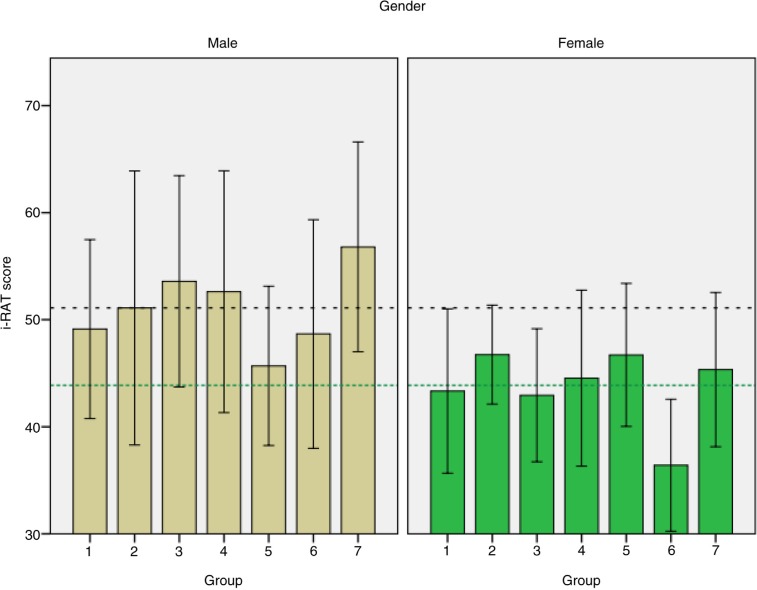
In this study, 156 students of year-three neuroscience block were divided into seven male and seven female groups, comprising 11-12 students in each group. TBL was introduced during the 6 weeks of this block, and a total of eight TBL sessions were conducted during this duration. We evaluated the effect of TBL on student learning and correlated it with the student's performance in summative assessment. Moreover, the students' perceptions regarding the process of TBL was assessed by online survey.
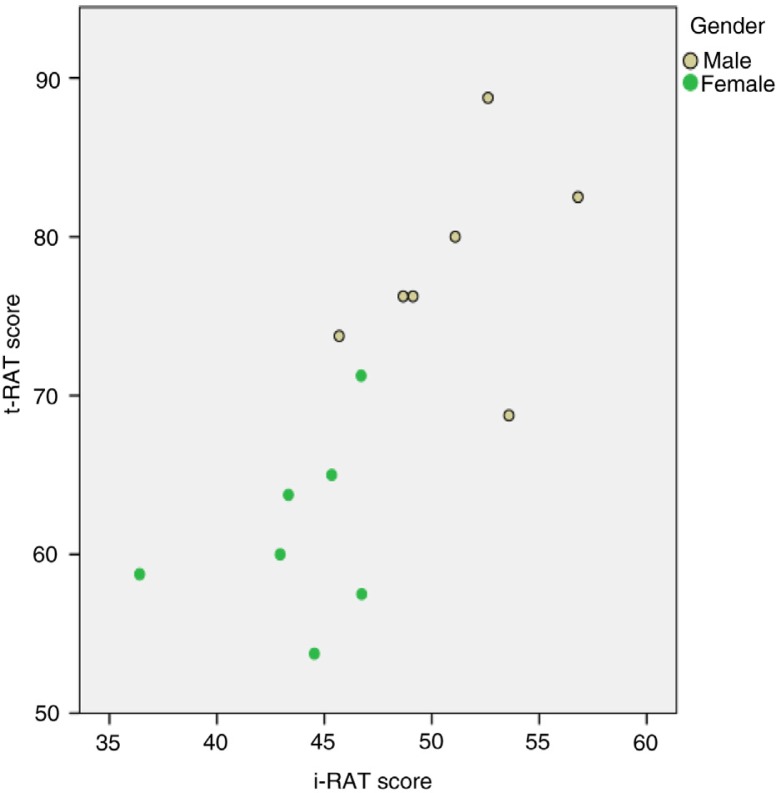
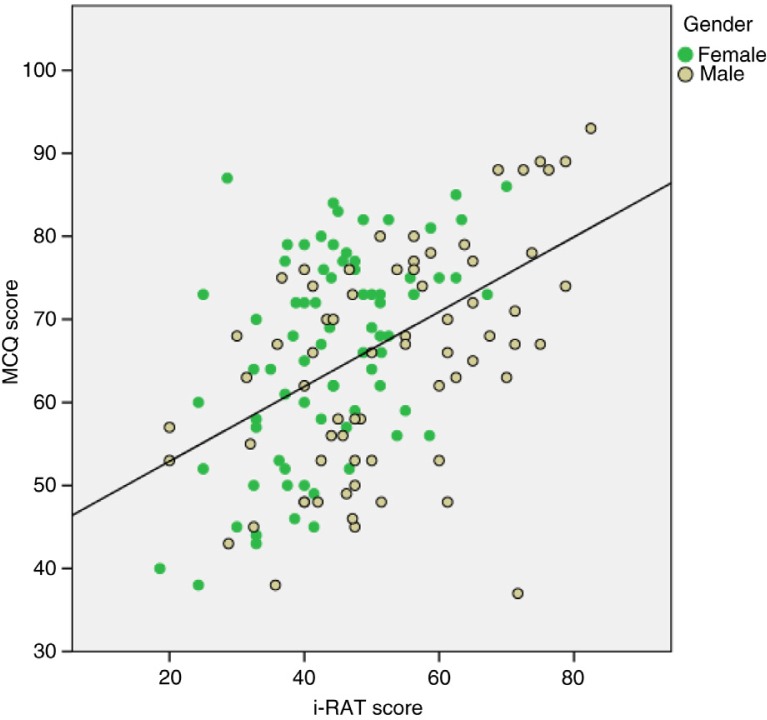
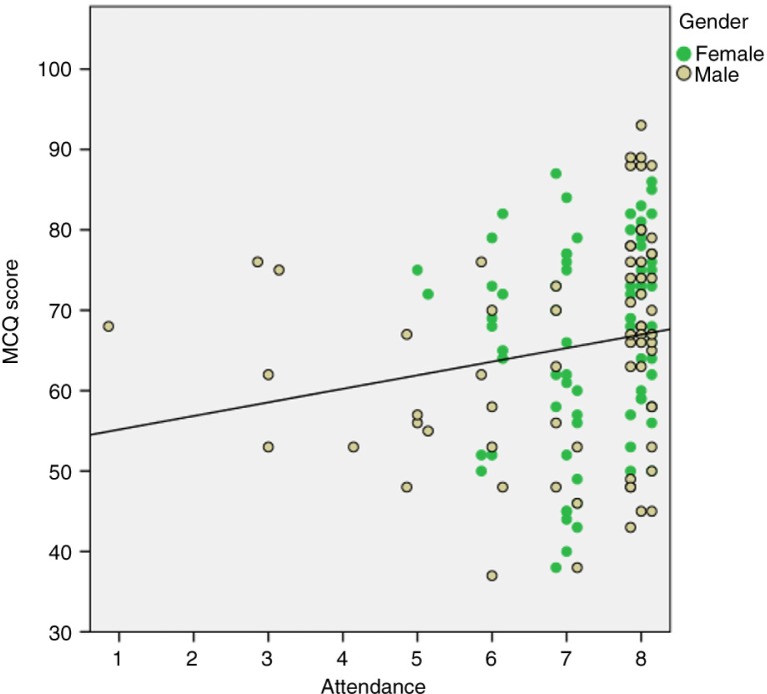
We found that students who attended TBL sessions performed better in the summative examinations as compared to those who did not. Furthermore, students performed better in team activities compared to individual testing, with male students performing better with a more favorable impact on their grades in the summative examination. There was an increase in the number of students achieving higher grades (grade B and above) in this block when compared to the previous block (51.7% vs. 25%). Moreover, the number of students at risk for lower grades (Grade B- and below) decreased in this block when compared to the previous block (30.6% vs. 55%). Students generally elicited a favorable response regarding the TBL process, as well as expressed satisfaction with the content covered and felt that such activities led to improvement in communication and interpersonal skills.
We conclude that implementing TBL strategy increased students' responsibility for their own learning and helped the students in bridging the gap in their cognitive knowledge to tackle 'neurophobia' in a difficult neurosciences block evidenced by their improved performance in the summative assessment.
传统上,神经科学在本科医学教育中被视为一门难学的课程,文献中提到了“神经恐惧症”(医学生对神经学的恐惧)这一术语。本科课程中传统上用于神经科学教学的教学策略包括讲座、演示、实践课、基于问题的学习和临床病理讨论会的组合。最近,基于团队的学习(TBL),一种以学生为中心的教学策略,越来越被许多本科医学课程视为帮助学生学习的有效方法。
在本研究中,156名三年级神经科学课程的学生被分为7个男生组和7个女生组,每组11 - 12名学生。在该课程的6周内引入了TBL,在此期间共进行了8次TBL课程。我们评估了TBL对学生学习的影响,并将其与学生在总结性评估中的表现相关联。此外,通过在线调查评估了学生对TBL过程的看法。
我们发现参加TBL课程的学生在总结性考试中的表现优于未参加的学生。此外,学生在团队活动中的表现优于个人测试,男生表现更好,对他们在总结性考试中的成绩有更有利的影响。与上一个课程相比,本课程中获得更高成绩(B级及以上)的学生数量有所增加(51.7%对25%)。此外,与上一个课程相比,本课程中成绩较低风险(B -级及以下)的学生数量减少了(30.6%对55%)。学生们对TBL过程普遍给出了积极的反馈,对所涵盖的内容表示满意,并认为此类活动有助于提高沟通和人际交往能力。
我们得出结论,实施TBL策略增加了学生对自身学习的责任感,并帮助学生弥合了认知知识差距,以应对难学的神经科学课程中的“神经恐惧症”,这在他们总结性评估中的表现提高中得到了证明。