Kadipasaoglu Cihan M, Forseth Kiefer, Whaley Meagan, Conner Christopher R, Rollo Matthew J, Baboyan Vatche G, Tandon Nitin
Vivian Smith Department of Neurosurgery, University of Texas Health Science Center at Houston Houston, TX, USA.
Vivian Smith Department of Neurosurgery, University of Texas Health Science Center at Houston Houston, TX, USA ; Department of Computational and Applied Mathematics, Rice University Houston, TX, USA.
Front Psychol. 2015 Jul 21;6:1008. doi: 10.3389/fpsyg.2015.01008. eCollection 2015.
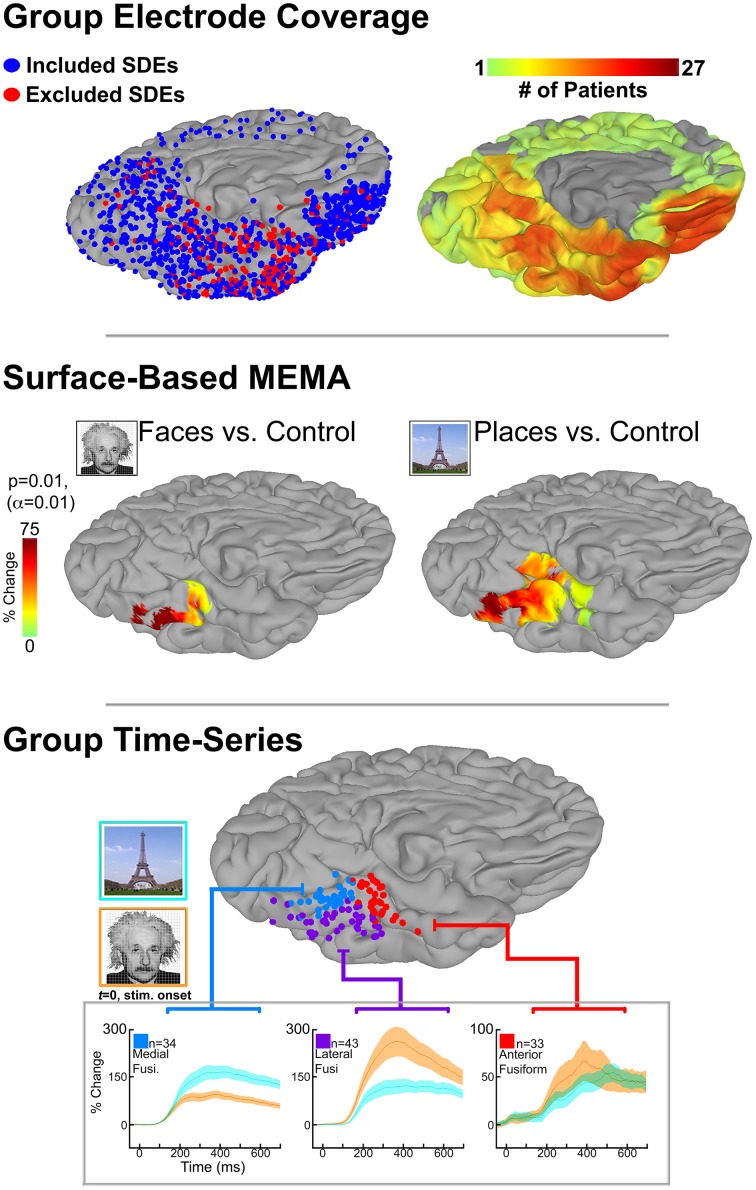
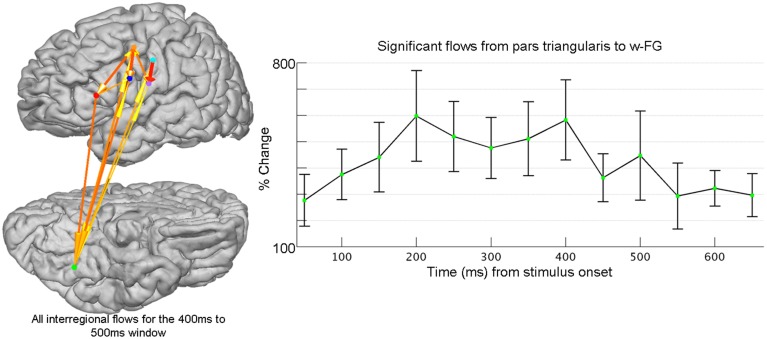
Invasive intracranial EEG (icEEG) offers a unique opportunity to study human cognitive networks at an unmatched spatiotemporal resolution. To date, the contributions of icEEG have been limited to the individual-level analyses or cohorts whose data are not integrated in any way. Here we discuss how grouped approaches to icEEG overcome challenges related to sparse-sampling, correct for individual variations in response and provide statistically valid models of brain activity in a population. By the generation of whole-brain activity maps, grouped icEEG enables the study of intra and interregional dynamics between distributed cortical substrates exhibiting task-dependent activity. In this fashion, grouped icEEG analyses can provide significant advances in understanding the mechanisms by which cortical networks give rise to cognitive functions.
有创性颅内脑电图(icEEG)为以无与伦比的时空分辨率研究人类认知网络提供了独特的机会。迄今为止,icEEG的贡献仅限于个体水平分析或未以任何方式整合数据的队列研究。在这里,我们讨论icEEG的分组方法如何克服与稀疏采样相关的挑战,校正个体反应差异,并提供群体大脑活动的统计有效模型。通过生成全脑活动图,分组icEEG能够研究表现出任务依赖性活动的分布式皮质底物之间的区域内和区域间动态。通过这种方式,分组icEEG分析可以在理解皮质网络产生认知功能的机制方面取得重大进展。