da Cunha Marisa Gonzaga, Batista Anna Luiza Fonseca, Macedo Marzia Silva, Machado Filho Carlos D'Aparecida Santos, Fonseca Fernando Luiz Affonso
Dermatology Department, Faculdade de Medicina do ABC (FMABC), Santo André, São Paulo, Brazil.
Biological Sciences Department, Universidade Federal de São Paulo (UNIFESP), Diadema, São Paulo, Brazil.
Clin Cosmet Investig Dermatol. 2015 Aug 17;8:449-54. doi: 10.2147/CCID.S83248. eCollection 2015.
The aim of this study was to establish the lipid profile of female patients with acne in the Acne-in-Adult-Women Ambulatory Care Clinic in order to observe the prevalence of dyslipidemia in those patients.
This is a retrospective transversal study that evaluated the medical records of 416 patients who attended at the Acne-in-Adult-Women Ambulatory Care Clinic, at the Dermatology Department, Faculdade de Medicina do ABC, Santo André, São Paulo, Brazil, in the year 2012. Relevant data included age and clinical classification of acne. The lipid profile was analyzed according to the results of laboratory tests ordered during outpatient visits, which included total and fractionated cholesterol levels and triglycerides.
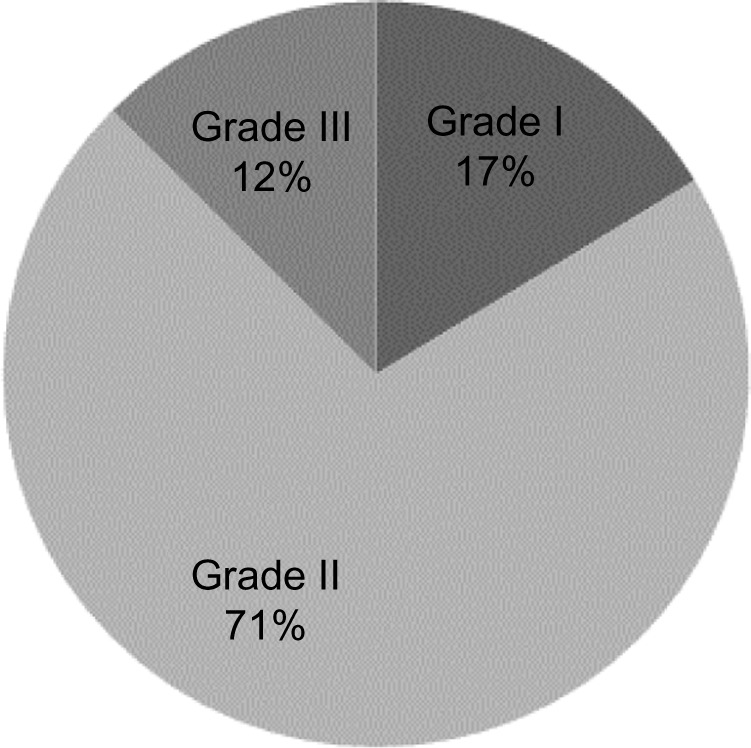
The epidemiological study sample was of 219 patients, with ages ranging from 21 to 61 years (mean of 32.23 years). The predominant clinical grade was papule-pustule acne (grade II) with 156 patients (71%). Regarding the lipid profile of the patients, there was a high increase in total cholesterol levels in 17.35% of the cases. High-density lipoprotein levels were low in 11.42% of the patients, with normal prevalence in 194 subjects. Low-density lipoprotein levels were normal in most patients (60.27%). Very-low-density lipoprotein values were normal in almost all patients (94.06%) and increased in only 13 patients (5.94%). Only 18 patients presented high levels of triglycerides (8.22%).
The conclusion was that patients with grades II and III acne are more likely to have total cholesterol and low-density lipoprotein altered. A correct and early diagnosis can be an important measure for the prevention of the metabolic syndrome in these patients.
本研究旨在确定成人女性痤疮门诊中女性痤疮患者的血脂情况,以观察这些患者中血脂异常的患病率。
这是一项回顾性横断面研究,评估了2012年在巴西圣保罗圣安德烈市ABC医学院皮肤科成人女性痤疮门诊就诊的416例患者的病历。相关数据包括年龄和痤疮的临床分类。根据门诊期间所做实验室检查结果分析血脂情况,检查项目包括总胆固醇、胆固醇各组分水平以及甘油三酯。
流行病学研究样本为219例患者,年龄在21岁至61岁之间(平均32.23岁)。主要临床分级为丘疹脓疱型痤疮(II级),有156例患者(71%)。关于患者的血脂情况,17.35%的病例总胆固醇水平大幅升高。11.42%的患者高密度脂蛋白水平较低,194名患者患病率正常。大多数患者(60.27%)的低密度脂蛋白水平正常。几乎所有患者(94.06%)的极低密度脂蛋白值正常,仅13例患者(5.94%)升高。只有18例患者甘油三酯水平较高(8.22%)。
结论是II级和III级痤疮患者更有可能出现总胆固醇和低密度脂蛋白异常。正确且早期的诊断对于预防这些患者的代谢综合征可能是一项重要措施。