Pele Laetitia C, Thoree Vinay, Bruggraber Sylvaine F A, Koller Dagmar, Thompson Richard P H, Lomer Miranda C, Powell Jonathan J
Medical Research Council Human Nutrition Research, Elsie Widdowson Laboratory, Fulbourn Road, Cambridge, CB1 9NL, UK.
Department of Gastroenterology, Guys and St Thomas' NHS Foundation Trust, St Thomas' Hospital, London, SE1 7EH, UK.
Part Fibre Toxicol. 2015 Sep 2;12:26. doi: 10.1186/s12989-015-0101-9.
Exposure to persistent engineered nano and micro particles via the oral route is well established. Animal studies have demonstrated that, once ingested, a small proportion of such particles translocate from the gastrointestinal tract to other tissues. Exposure to titanium dioxide is widespread via the oral route, but only one study has provided indirect evidence (total titanium analyses) of absorption into the blood stream in humans. We sought to replicate these observations and to provide additional evidence for particulate uptake.
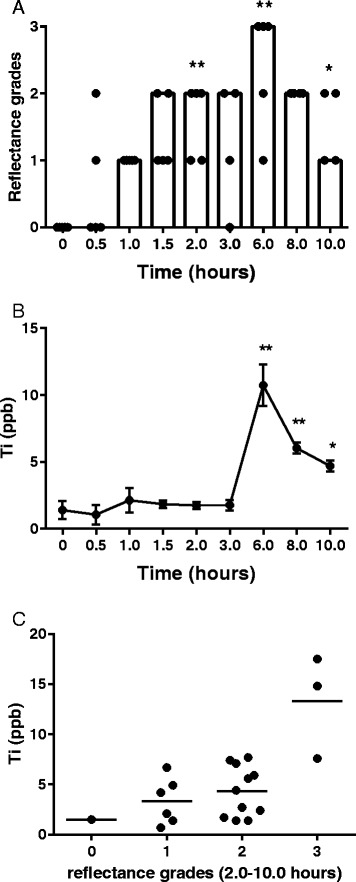
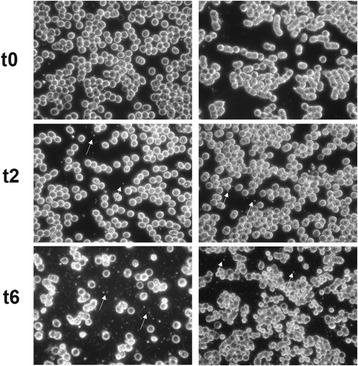
Human volunteers with normal intestinal permeability were orally administered 100 mg pharmaceutical/food grade titanium dioxide. Blood samples were collected from 0.5 to 10 h post ingestion and analysed for the presence of reflectant bodies (particles) by dark field microscopy, and for total titanium by inductively coupled plasma mass spectrometry (ICP-MS). Blood film analyses implied early absorption of particles (2 h) with a peak maximum at 6 h following ingestion. The presence of these reflectant particles in blood roughly mirrored the levels of total titanium by ICP-MS, providing good evidence for the latter being a measure of whole particle (titanium dioxide) absorption.
This study shows that a fraction of pharmaceutical/food grade titanium dioxide is absorbed systemically by humans following ingestion. It confirms that at least two routes of particle uptake may exist in the human gut- one proximal and one distal. Further work should quantify human exposure and uptake of such persistent particles.
经口途径接触持久性工程纳米和微粒已得到充分证实。动物研究表明,一旦摄入,此类颗粒中有一小部分会从胃肠道转移至其他组织。经口途径接触二氧化钛的情况很普遍,但仅有一项研究提供了人体吸收进入血流的间接证据(总钛分析)。我们试图重复这些观察结果,并为颗粒摄取提供更多证据。
对肠道通透性正常的人类志愿者口服给予100毫克药用/食品级二氧化钛。在摄入后0.5至10小时采集血样,通过暗视野显微镜分析反光体(颗粒)的存在情况,并通过电感耦合等离子体质谱法(ICP-MS)分析总钛含量。血膜分析表明颗粒在摄入后2小时开始早期吸收,在6小时达到最大峰值。血液中这些反光颗粒的存在情况大致反映了ICP-MS检测的总钛水平,为后者作为全颗粒(二氧化钛)吸收的指标提供了有力证据。
本研究表明,药用/食品级二氧化钛的一部分在人类摄入后会被全身吸收。它证实了人类肠道中可能存在至少两条颗粒摄取途径——一条在近端,一条在远端。进一步的工作应量化人类对此类持久性颗粒的暴露和摄取情况。