Kelly David, Coen Robert F, Akuffo Kwadwo Owusu, Beatty Stephen, Dennison Jessica, Moran Rachel, Stack Jim, Howard Alan N, Mulcahy Riona, Nolan John M
Macular Pigment Research Group, Department of Chemical and Life Sciences, Waterford Institute of Technology, Waterford, Ireland.
Memory Clinic, Mercers Institute for Research on Ageing, St. James's Hospital, Dublin, Ireland.
J Alzheimers Dis. 2015;48(1):261-77. doi: 10.3233/JAD-150199.
Macular pigment (MP) levels correlate with brain concentrations of lutein (L) and zeaxanthin (Z), and have also been shown to correlate with cognitive performance in the young and elderly.
To investigate the relationship between MP, serum concentrations of L and Z, and cognitive function in subjects free of retinal disease with low MP (Group 1, n = 105) and in subjects with AMD (Group 2, n = 121).
MP was measured using customized heterochromatic flicker photometry and dual-wavelength autofluorescence; cognitive function was assessed using a battery of validated cognition tests; serum L and Z concentrations were determined by HPLC.
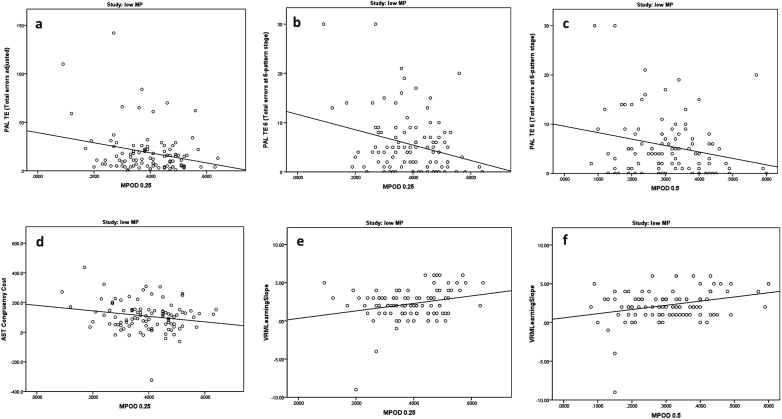
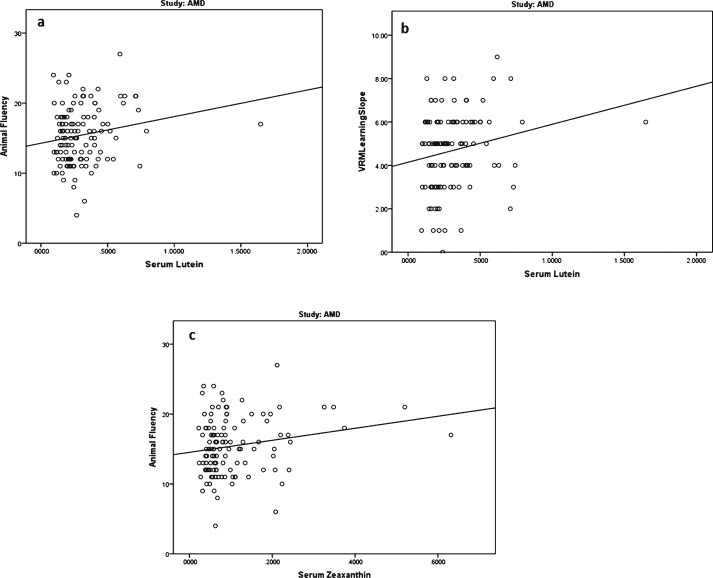
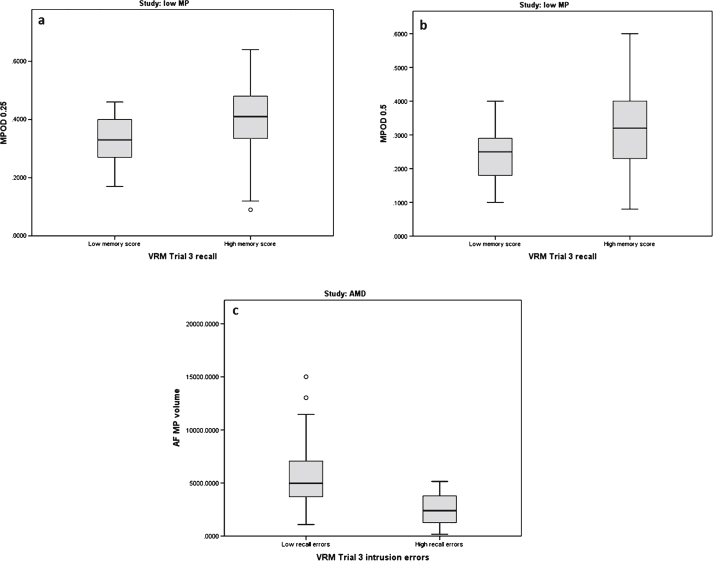
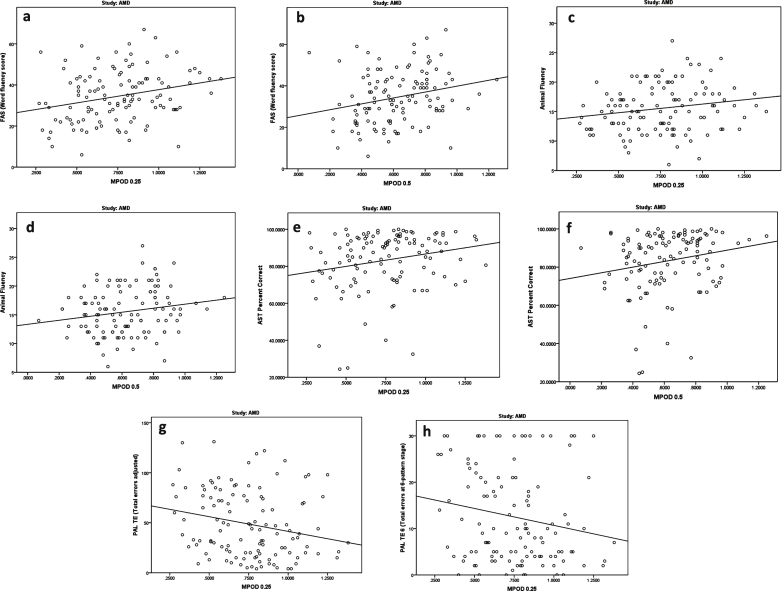
Significant correlations were evident between MP and various measures of cognitive function in both groups (r = -0.273 to 0.261, p≤0.05, for all). Both serum L and Z concentrations correlated significantly (r = 0.187, p≤0.05 and r = 0.197, p≤0.05, respectively) with semantic (animal) fluency cognitive scores in Group 2 (the AMD study group), while serum L concentrations also correlated significantly with Verbal Recognition Memory learning slope scores in the AMD study group (r = 0.200, p = 0.031). Most of the correlations with MP, but not serum L or Z, remained significant after controlling for age, gender, diet, and education level.
MP offers potential as a non-invasive clinical biomarker of cognitive health, and appears more successful in this role than serum concentrations of L or Z.
黄斑色素(MP)水平与大脑中叶黄素(L)和玉米黄质(Z)的浓度相关,并且也已显示与年轻人和老年人的认知表现相关。
研究无视网膜疾病且MP水平较低的受试者(第1组,n = 105)和患有年龄相关性黄斑变性(AMD)的受试者(第2组,n = 121)中MP、血清L和Z浓度与认知功能之间的关系。
使用定制的异色闪烁光度法和双波长自发荧光测量MP;使用一系列经过验证的认知测试评估认知功能;通过高效液相色谱法测定血清L和Z浓度。
两组中MP与各种认知功能指标之间均存在显著相关性(所有r = -0.273至0.261,p≤0.05)。在第2组(AMD研究组)中,血清L和Z浓度均与语义(动物)流畅性认知得分显著相关(分别为r = 0.187,p≤0.05和r = 0.197,p≤0.05),而在AMD研究组中血清L浓度也与言语识别记忆学习斜率得分显著相关(r = 0.200,p = 0.031)。在控制年龄、性别、饮食和教育水平后,与MP的大多数相关性仍然显著,但与血清L或Z的相关性则不然。
MP有潜力作为认知健康的非侵入性临床生物标志物,并且在这一作用上似乎比血清L或Z浓度更成功。